Portuguese
 Spanish


Work at the Parque Novo Mundo wastewater treatment plant is expected to raise treatment capacity from 2,500 to 6,200 liters per second by 2027. Dutch technology will allow the plant to expand operations without taking up more space in northern São Paulo.
Sabesp is investing approximately R$1 billion to transform the Parque Novo Mundo Wastewater Treatment Plant in northern São Paulo into a facility capable of processing nearly two and a half times its current wastewater volume.
The project faces a notable challenge: increasing capacity without expanding the plant site, which is surrounded by a densely urbanized area. The upgrade is expected to benefit about 3 million residents of São Paulo and Guarulhos.
The solution involves new tanks, imported equipment and technology that uses microorganisms to treat more wastewater in less space. All this work must take place while the plant remains operational.
-
USP study uses slab tests to understand bridge failures amidst increasing vehicle weight considerations

-
University of São Paulo evaluates soil-cement bricks with quartzite tailings from Minas Gerais for strength and absorption
-
A 338-meter tunnel is linked beneath a São José dos Campos neighborhood using a trenchless method, but the drainage project still requires lining and finishing work
-
Renovation and expansion advance across 40.82 kilometers of two Paraná highways, with 9.56 kilometers of additional passing lanes planned as investment already applied nears R$30 million



How can a wastewater treatment plant expand without taking up more land?
The Parque Novo Mundo Wastewater Treatment Plant opened in 1998 and occupies about 190,000 square meters near the Tietê River. In an area with little room for major expansion, increasing the facility’s footprint using traditional methods would be a considerable challenge.
Sabesp’s solution was to invest in a technological overhaul, making use of some existing facilities and building structures that can consolidate more stages of the treatment process.
The plant’s 190,000 square meters remain unchanged. What changes is the amount of wastewater that can be processed in that space.
The São Paulo state government reports that current capacity is 2.5 cubic meters per second, equivalent to 2,500 liters. After the expansion, capacity is expected to reach 6.2 cubic meters per second, or 6,200 liters.
That represents an increase of about 148%, without adding new land to the complex.
The modernization starts before the biological treatment stage. Equipment weighing a combined 76 metric tons and brought from Germany is among the additions intended to improve the removal of solid waste, sand and other materials mixed in with the wastewater.
This initial stage is essential to protect pumps, pipes and other equipment. The more effectively this waste is separated, the lower the risk of blockages and operational interruptions.
Dutch technology allows more wastewater to be treated in less space
The project’s main distinguishing feature is its use of Nereda technology, developed from research at Delft University of Technology in the Netherlands.
Instead of relying on large, separate structures for different stages of treatment, the system uses small granules formed by communities of microorganisms.
These granules function as biological treatment units. They help break down organic matter in the wastewater and remove nitrogen and phosphorus compounds in a single tank.
Because the granules also settle quickly to the bottom, the process eliminates the large secondary clarifiers required by conventional methods.
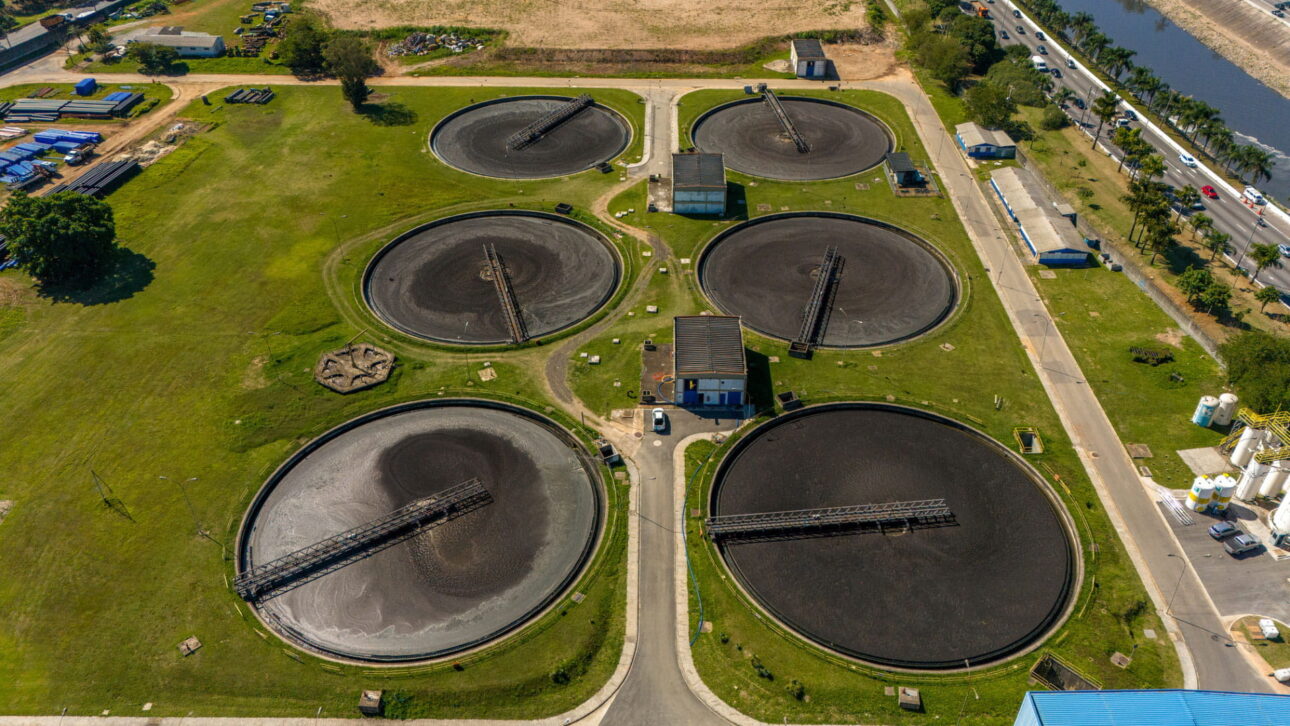
This feature makes the technology especially attractive for urban facilities. The plant will be able to treat a much larger volume of wastewater without requiring more land.
According to information presented to O Empreiteiro magazine by a Sabesp engineer, the project includes 16 Nereda reactors. Of these, 12 are new circular structures, while the other four reuse old aeration tanks.
In addition to reducing the space required, the technology has the potential to lower energy consumption, chemical use and the amount of residual sludge generated during treatment.
Parque Novo Mundo will be the first of Sabesp’s wastewater treatment plants to use the Nereda system.
Building new tanks requires precision engineering and construction while the plant remains operational
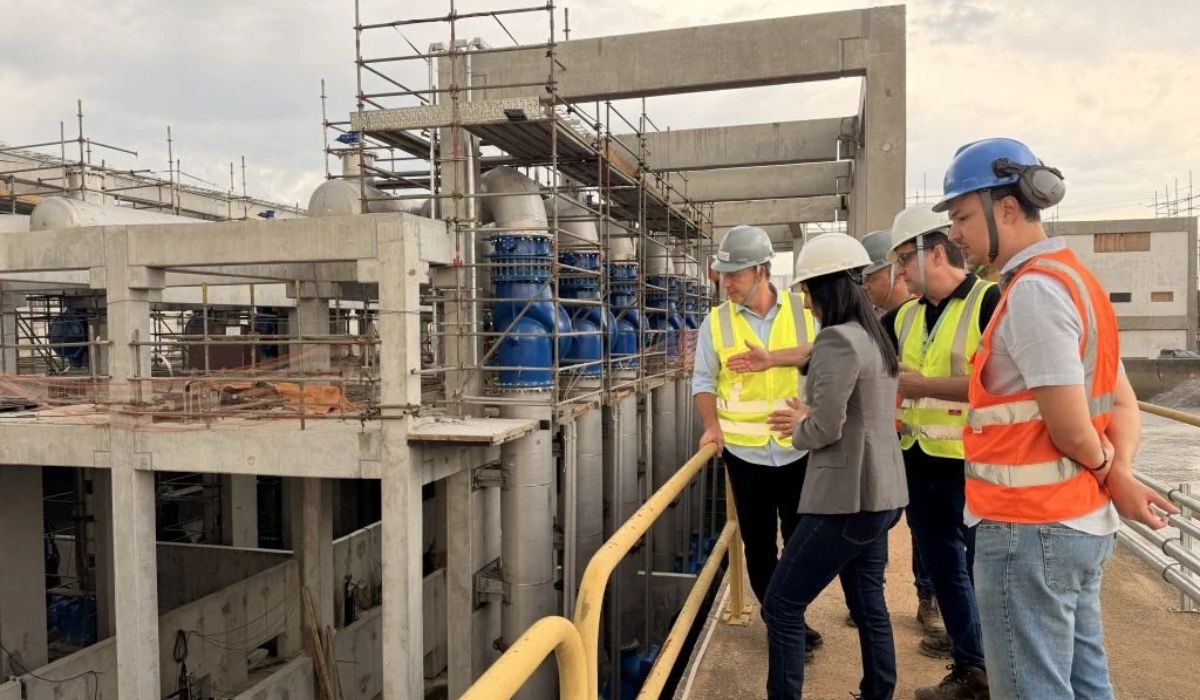
The modernization involves more than installing advanced equipment. The project also includes large concrete structures, pumping systems, pipelines and modifications to existing plant facilities.
One of the biggest challenges is expanding the Wastewater Treatment Plant while it continues to operate. The facility receives wastewater every day from neighborhoods in São Paulo and from Guarulhos, and the expansion must proceed without disrupting that service.
To speed up the work, the construction consortium is using precast components and industrialized assembly methods.
For the new reactors, for example, the project used precast, prestressed concrete walls. Technical information released during a visit by O Empreiteiro magazine said it took about 10 days to assemble the walls of each reactor.
The project also required major concrete-pouring operations. In one phase documented by contractor Passarelli, work on the bottom slab of a tank used more than 1,000 cubic meters of concrete.
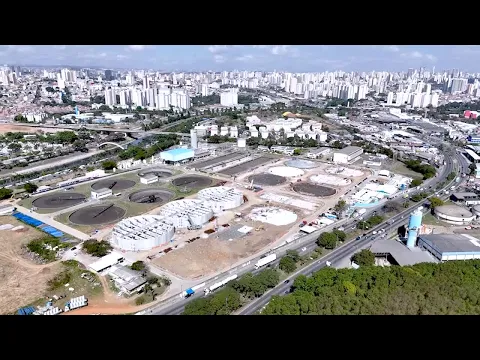

The project is being carried out by a consortium formed by Passarelli, Consbem, Engeform and Enfil.
The São Paulo state government expects the new capacity to be available in the first quarter of 2027. Until then, the work includes modernizing existing structures, installing new reactors and upgrading operating systems.
Expansion is expected to benefit São Paulo and Guarulhos and support the Tietê River’s recovery
The changes will extend beyond the treatment plant itself. The state government says the Parque Novo Mundo Wastewater Treatment Plant serves about 2 million people, and the expansion is expected to increase that figure to approximately 3 million.
The areas covered include the neighborhoods of Água Rasa, Artur Alvim, Belém and Belenzinho in the city of São Paulo, as well as Bela Vista, Bom Clima, Cabuçu, Cocaia and Gopoúva in Guarulhos.
The project is part of the Integra Tietê program, which brings together investments in wastewater collection, transport and treatment, as well as environmental restoration and dredging efforts.
The link to the river is direct: expanding treatment of collected wastewater helps reduce the pollutant load reaching the Tietê and its tributaries. That also depends, however, on infrastructure that can carry the effluent to treatment plants.
On Thursday, November 19, the state government reported progress on construction of the Caracol Interceptor in Guarulhos. With an investment of R$47 million, the new structure will be approximately 1.2 kilometers long and will transport wastewater to the Parque Novo Mundo Wastewater Treatment Plant.
The project is scheduled for completion in December 2026 and is expected to benefit about 408,000 people, according to the Secretariat for the Environment, Infrastructure and Logistics.
With the new collectors and the plant expansion, Sabesp aims to increase the amount of wastewater sent for treatment in the metropolitan region. The projected total capacity of the Parque Novo Mundo Wastewater Treatment Plant is 6,200 liters per second in 2027.