






 Portuguese
  Spanish


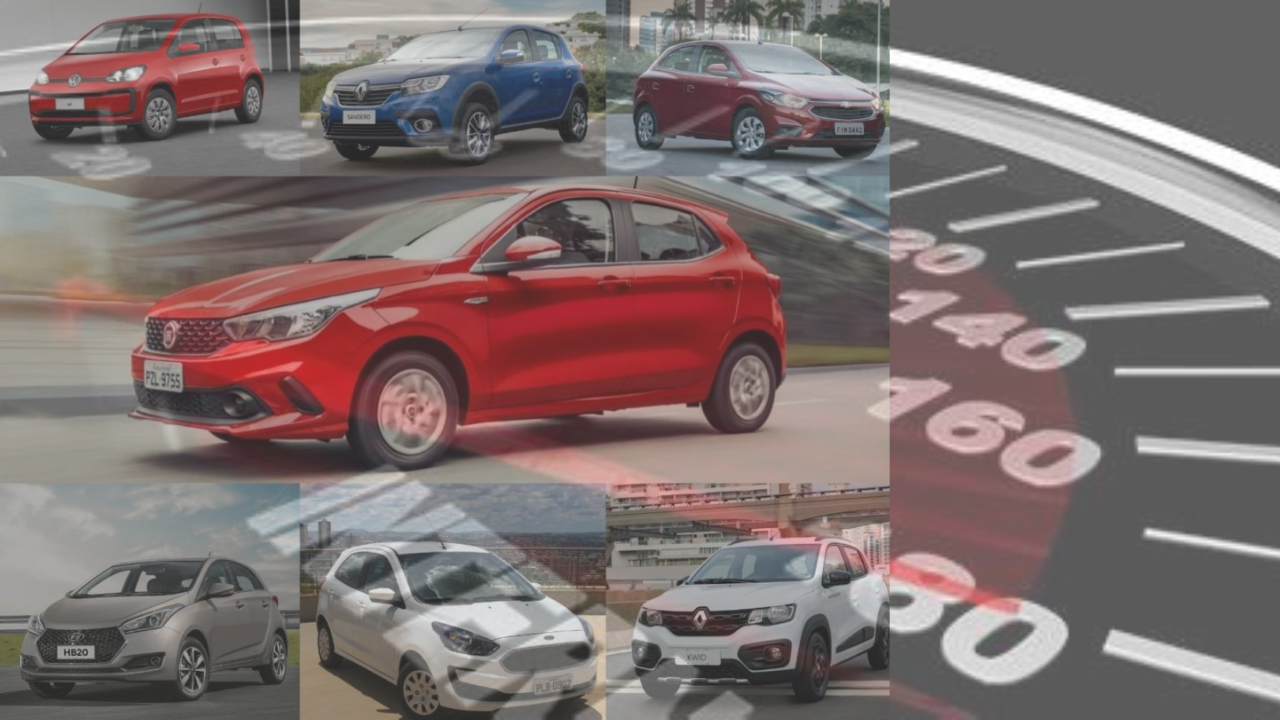


Speeding in Cars Increases in Brazil, Raising Risks on Highways. Understand the Debate About Limits and Possible Solutions.
Speeding Violations Increase on Brazilian Highways
The increase in speeding on Brazilian highways has become a growing concern. According to the Federal Highway Police, violations caused by exceeding the speed limit have risen by 132% in 2023.
Besides being the leading cause of accidents in the country, the issue raises a debate: why are cars sold in Brazil still capable of exceeding 120 km/h, the maximum speed allowed on national highways?
Cars Without Speed Limiters Increase Risks on Highways
The main reason cars are still manufactured without speed limiters lies in the market and legislation.
-
How to Prevent Brown Recluse Spider Bites: Common Hiding Spots and Free Tips to Reduce Risks

-
Natto: The Unusual Japanese Superfood Gaining Popularity on Social Media and Driving Record Exports
-
Brazilian Mayor Goes Undercover as Homeless for 24 Hours to Assess Public Services

-
15-Year-Old Entrepreneur Malu Lira Publishes 20 Children’s Books on Financial Education, Earns $500,000, and Expands Her Project to the Amazon Rainforest




There is no law that requires manufacturers to install devices that limit vehicle speed.
If automakers voluntarily adopted this measure, it could negatively impact sales, as many consumers would not want to buy a car with speed restrictions.
Researchers from Lund University in Sweden conducted a study in which drivers tested cars with limited speed.
The study found that while driving on highways, these drivers often experienced psychological discomfort similar to claustrophobia when seeing other vehicles overtaking them.
Additionally, drivers of cars without limiters frequently displayed impatience, honking and pressuring those respecting the speed limit.
Sports Cars and the Influence of Speed in Marketing
Speed also has a strong impact on automotive marketing, especially when it comes to sports cars.
A Brazilian automotive engineer, who preferred to remain anonymous, explained that performance is one of the main attractions of this segment.
According to him, a sports car with a very low speed limit could lose its appeal for consumers seeking power and excitement while driving.
European Union Adopts Speed Control System for Cars
While Brazil still lacks regulations to limit car speeds, the European Union has already taken measures to address the issue.
Since 2022, all new cars sold in the European bloc must be equipped with a system called ISA (Intelligent Speed Assistance).
The ISA uses cameras and GPS data to detect the maximum speed allowed on each highway.
If the driver exceeds the limit, the system emits audible, visual, or physical alerts, such as vibrations in the steering wheel or accelerator pedal.
However, the system does not automatically reduce the car’s speed, as there are situations where exceeding the limit may be necessary, such as overtaking on single-lane highways or emergencies.
European studies indicate that for every 1 km/h reduced, accidents decrease by 5%.
However, the adoption of the ISA has sparked debates, as many drivers have come to believe that driving within the speed limit automatically guarantees safety, which is not always true.
Brazil Has Tried to Limit Car Speed
Although Brazil does not yet have legislation similar to that of the European Union, the topic has already been debated in the National Congress.
In 2010, federal deputy Pompeo de Mattos (PDT-RS) proposed a bill to require all national cars to leave the factory with a maximum limit of 140 km/h.
The proposal argued that this could reduce traffic fatalities by up to 60%, but the project was shelved without progress.
Despite the lack of regulation, some automakers already impose speed limits on their vehicles.
Volvo, for example, decided to limit all its models to 180 km/h as a safety measure.
BMW has implemented similar limits on some of its electric cars, primarily to optimize battery range.
The Importance of the Debate About Car Speed on Highways
The increase in speeding violations in Brazil shows that the topic needs urgent attention.
While measures like ISA are being adopted in other countries, market resistance and lack of legislation hinder the implementation of effective solutions.
In the meantime, drivers must be aware of the dangers of driving above the speed limit on highways.
After all, reducing speed is not just a matter of obeying the law, but of preserving lives and making traffic safer for everyone.







