






 Portuguese
  Spanish
  2 min of reading
  0 comments


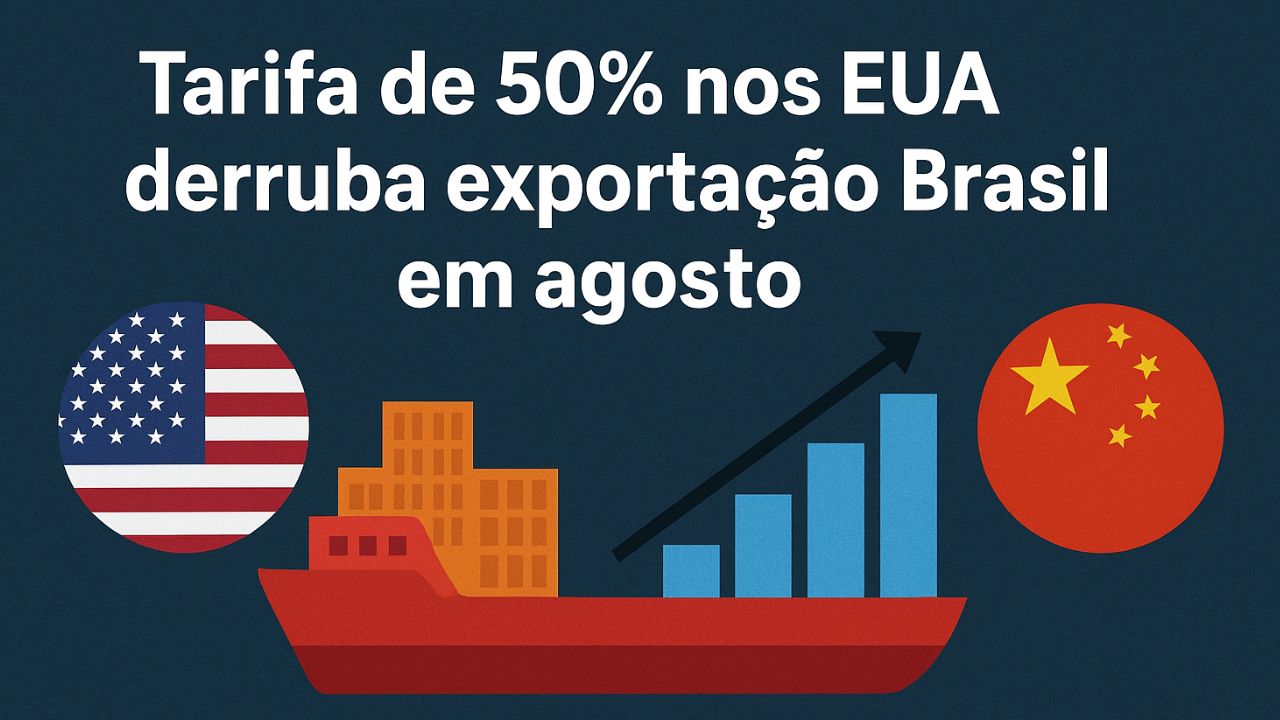
With 50% Tariff in the USA, Brazil’s Exports Drop 18% in August, while Sales to China and Mexico Soar, Boosting the Trade Balance.
Brazilian exports to the United States fell by 18.5% in August, directly impacted by the 50% tariff announced by Donald Trump’s government, which went into effect on August 6, 2025.
This information was released this Thursday (04/09/2025) by the Secretariat of Foreign Trade of MDIC (Ministry of Development, Industry, Trade and Services).
The impact of the so-called “tariff hike” was felt in several strategic sectors, including iron ore, sugar, aircraft, and fresh beef.
-
Brazilian Joins Homeownership Consortium, Faces Decade of Dual Payments Totaling $141,000, Surpassing Traditional Mortgage

-
Land Rover to Halt Production in July, Putting 371 Jobs at Risk, as Chinese Automaker Negotiates to Convert Factory to 100,000 Vehicles Annually by 2027

-
Mexican Pest Threatens U.S. Cattle Herds at Historic Lows, Potentially Boosting Brazilian Beef Exports as Burger Prices Soar

-
Brazilian Freight Bill Progresses in Congress with $5,000 Minimum Wage, 70% Advance Payment, and Fines Up to $1 Million, as Agriculture and Industry Warn of Rising Costs and Legal Uncertainty


“The reduction stems from the advance sales movement made by sectors in July, since the list of exceptions, with more than 700 products, was only published after the tariff announcement,” reported MDIC.
Main Products Affected by the Tariff Hike
Among the products that recorded the largest declines are:
Iron Ore: -100%;
Sugars: -88.4%;
Aircraft: -84.9%;
Fresh Beef: -46.2%;
Fuel Oils: -37%;
Semi-finished Iron or Steel Products: -23.4%.
It is worth noting that some categories, such as aircraft, oil, and iron ore, were not affected by the 50% surcharge, yet still recorded reductions due to the anticipation of shipments before the tariff implementation.
China and Mexico as Market Alternatives
Meanwhile, Brazil’s exports to other destinations are growing significantly. China, the country’s main trading partner, recorded a 29.9% increase in August, establishing itself as a strategic alternative to the American market.
Mexico also significantly increased its purchases, with a growth of 43.8% in the same period.
This movement shows that the country is seeking to diversify destinations and reduce dependence on the US market in light of tariff barriers.
Brazilian Trade Balance Maintains Surplus
Despite the drop in sales to the USA, the Brazilian trade balance recorded a surplus of US$ 6.133 billion in August 2025, representing a growth of 35.8% compared to the same month last year, when the balance was US$ 4.5 billion.
The result is a consequence of the difference between exports and imports. Exports totaled US$ 29.861 billion, while imports amounted to US$ 23.728 billion, generating a trade flow of US$ 53.589 billion for the month.
Impact of Tariffs on the Brazilian Economy
Experts warn that the impact of the 50% tariff in the USA goes beyond the statistics of August. “The tariff hike alters the planning of exporting companies, which need to seek alternative markets and adapt production to maintain competitiveness,” states an economic analyst.
Furthermore, the movement highlights the strategic importance of China and other partners, such as Mexico, for the diversification of Brazil’s exports and the stability of the trade balance amid tariff tensions with the United States.





-

-

-

10 people reacted to this.