






 Portuguese
  Spanish
  4 min of reading
  0 comments


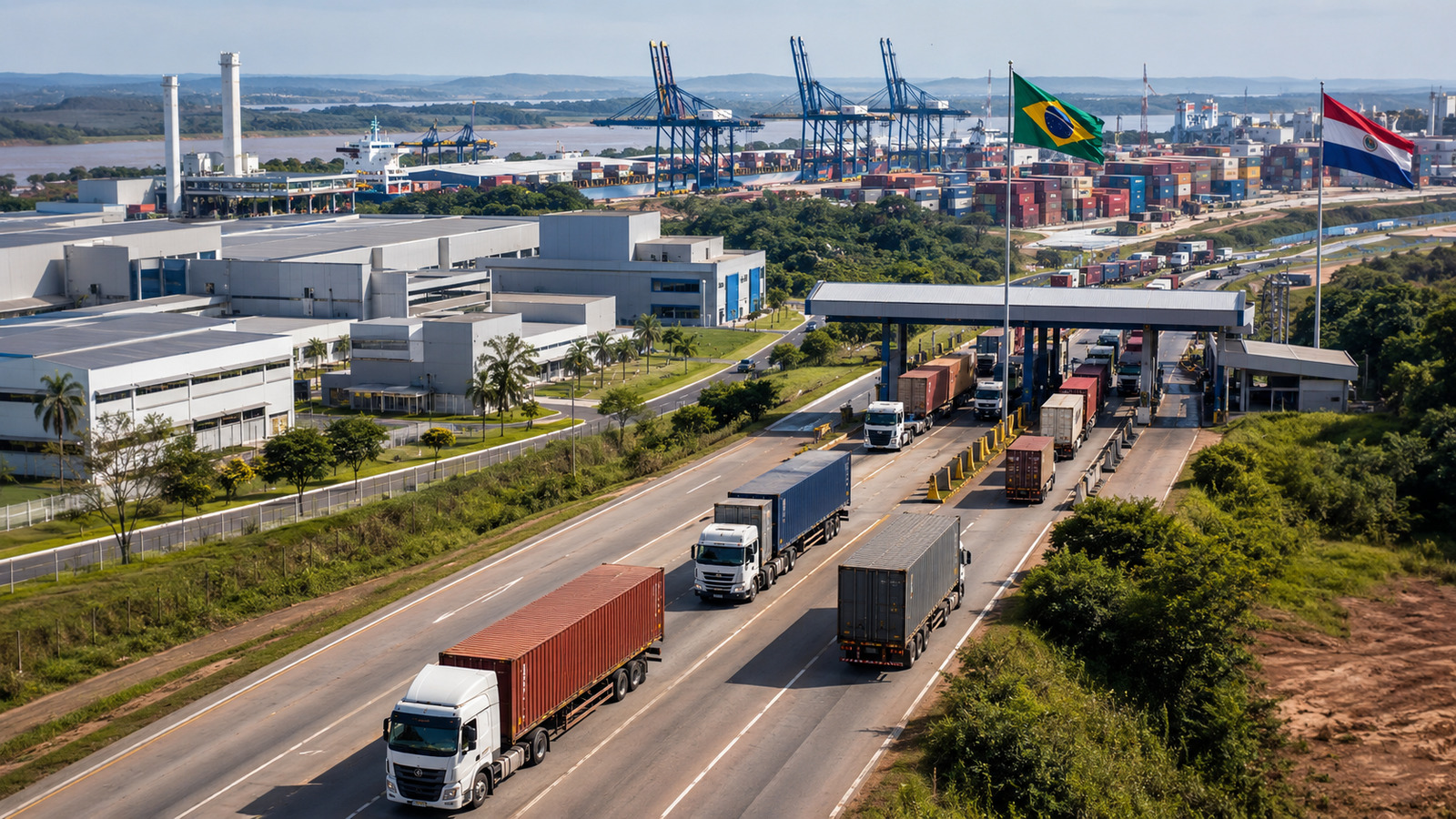
With 223 Brazilian industries under the maquila regime in 2024, Paraguay expands exports, shifts logistics flows, pressures BR-277, and increases competition among southern ports for international cargo
The advancement of maquila in Paraguay, with 223 Brazilian industries among the 332 companies under the regime in 2024, is already changing the logistics of southern Brazil. The growth of factories installed in the neighboring country increases the flow of cargo at the border, pressures BR-277, and heightens the competition among ports like Paranaguá, Itajaí, Navegantes, and Itapoá.


Maquila in Paraguay attracts Brazilian companies and changes cargo flow
Paraguay has consolidated itself in recent years as a destination for Brazilian companies interested in reducing tax costs, operational expenses, and bureaucracy.
This movement occurs mainly through the maquila regime, an industrial model created to attract foreign companies with fiscal and operational incentives.
-
Mexican Pest Threatens U.S. Cattle Herds at Historic Lows, Potentially Boosting Brazilian Beef Exports as Burger Prices Soar

-
Brazilian Freight Bill Progresses in Congress with $5,000 Minimum Wage, 70% Advance Payment, and Fines Up to $1 Million, as Agriculture and Industry Warn of Rising Costs and Legal Uncertainty

-
High Interest Rates and Record Defaults Lead to Surge in Vehicle Repossessions and Crowded Car Auctions in Brazil by 2026

-
São Paulo Offers Over 13,000 Job Openings: Opportunities in Industry, Logistics, and More Across the State


In practice, the system allows the importation of inputs, components, and raw materials with reduced or suspended taxation. Then, industrialization is carried out in Paraguay, and the finished products are exported.
The model has attracted companies from the auto parts, textile, electronics, food, and consumer goods sectors.
According to data from the Ministry of Industry and Commerce of Paraguay, 223 of the 332 industries under the regime in 2024 are of Brazilian origin, equivalent to 69% of the total.
The impact is also evident in exports. The regime recorded a historic record in 2025, surpassing US$ 1.3 billion.
Brazil absorbed 67% of the program’s external sales, which reinforces the direct link between Paraguayan industrial expansion and Brazilian logistics.

BR-277 becomes central axis and concentrates bottlenecks in Paraná
The increase in operations related to maquila in Paraguay has expanded the demand for routes between the neighboring country, the border, and the southern ports.
The BR-277 appears as the main corridor of this flow, as it connects the Port of Paranaguá to the border with Paraguay.
The highway, however, faces problems at a time of increased circulation of heavy vehicles. Data from the CNT Road Survey 2025 shows that 42.5% of Paraná’s roads are in regular condition and 8.3% were classified as poor.
According to the CNT, the conditions of the roads increase the operational cost of freight in Paraná by 24%. The problem directly affects the competitiveness of operations that depend on road transport, predictable deadlines, and efficient access to ports.
A survey by SETCEPAR indicates that the BR-277 concentrated 28% of accidents and 25% of deaths recorded on federal highways in Paraná in 2025.
For Jean Carlos Rocha, CEO of ELO, a logistics company based in Itajaí, the BR-277 is one of the main arteries of this corridor, but it already operates with significant limitations.
He cites bottlenecks in urban stretches, restrictions during periods of high demand, and structural wear caused by the intense flow of heavy vehicles.
Southern ports enter the competition for Paraguayan cargo
The reorganization of routes also increases competition among the southern ports of the country. With more cargo linked to Paraguay, terminals with greater operational efficiency and better road connections tend to gain importance.
In Rocha’s assessment, Itajaí can benefit from its location and agility. Navegantes and Itapoá also gain relevance due to operational efficiency and strong performance in the container segment.
Paranaguá, in turn, maintains a strategic position due to operational scale and its connection with agribusiness and foreign trade.
The BR-277 corridor reinforces this role but also exposes the dependence on road infrastructure to maintain a competitive flow.
For the executive, a competitive port today does not depend solely on the quay. Efficiency involves the entire logistics chain, with predictability, speed, and the ability to meet the new regional dynamics.
This scenario also reinforces the importance of bioceanic corridors and South American logistics integration in operations aimed at the Pacific and the Asian market.
Carriers expand international and customs operations
The growth of Paraguayan maquilas changes the strategy of Brazilian carriers operating in the South. Companies in the sector are expanding operations related to international road transport, storage, and regional distribution.
Logistics operators also observe an increase in demand for customs services and structures aimed at foreign trade.
The advancement of cross-border operations leads companies to strengthen their presence near the border and to review transportation and distribution methods.
Rocha states that logistics is no longer just national and becomes more regionally integrated. This requires planning, operational intelligence, and greater coordination among Mercosur countries.
According to him, lines at toll plazas, accidents, and stoppages have immediate impacts on the entire chain. On more pressured routes, any interruption can affect deadlines, costs, and predictability.
Industrial loss raises alert about competitiveness
The industrial advancement of Paraguay also exposes difficulties in the Brazilian business environment. In Rocha’s assessment, companies consider tax burden, energy cost, bureaucracy, labor legislation, and predictability before investing.
Besides the tax burden, sector operators point to lower energy costs and greater regulatory predictability as factors that increase Paraguay’s attractiveness.
For the CEO of ELO, the loss of industrial operations reduces logistics movement, jobs, and competitiveness.
The relocation of factories also shifts strategic flows of transportation, storage, distribution, and foreign trade.
The executive advocates for investments in road infrastructure, port access, and the digitalization of logistics and customs processes. According to him, expensive logistics reduce the competitiveness of the entire economy.
This article was prepared based on information from the Ministry of Industry and Commerce of Paraguay, the CNT Road Survey 2025, SETCEPAR, and statements by Jean Carlos Rocha, CEO of ELO, with data, numbers, and statements preserved as per the consulted material.







Be the first to react!