Portuguese
  Spanish


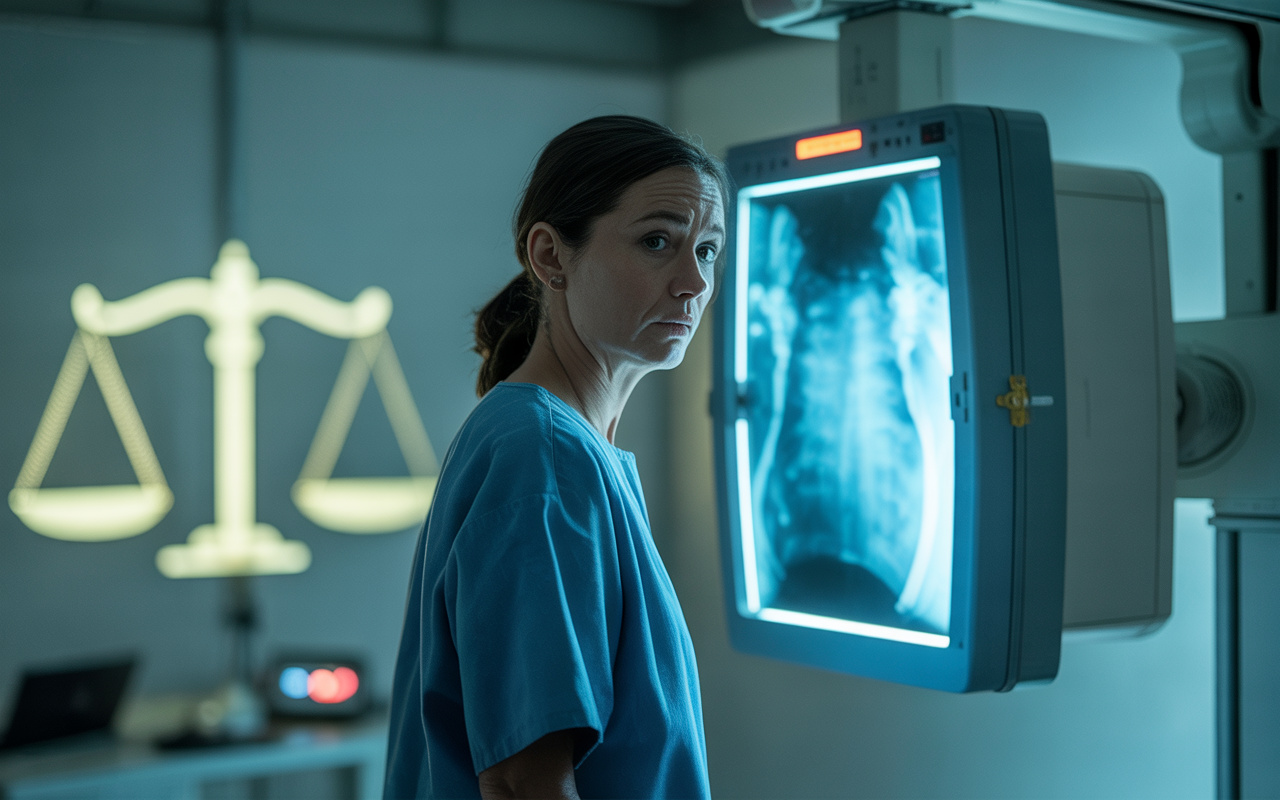

Professionals Exposed to X-Ray Radiation Without Protection Are Entitled to Additional Hazard Pay; Court Confirms Compensation in Clinics and Hospitals.
Ionizing radiation is a silent enemy. Invisible to the naked eye, it can cause serious health damage when there is no adequate protection. In clinics, hospitals, and laboratories, workers often face this risk daily without receiving the proper financial compensation provided by labor laws.
Recent court decisions have confirmed that professionals exposed to X-ray machines without protective equipment are entitled to hazard pay, as well as compensation for moral damages in more severe cases.
What Does the Legislation Say About Hazard Pay
The Consolidation of Labor Laws (CLT), in Article 189, states that activities exposing workers to harmful agents are considered hazardous and must be compensated with a specific additional pay.
-
Dismissing a retired worker or one eligible for retirement constitutes ageism and creates a duty to compensate: a unanimous decision by the TRT mandates reinstatement to employment, payment of back wages, and upholds compensation of R$ 15,000 for discrimination.

-
Work less and produce more? Nobel Prize in Economics explains why shorter workdays can increase productivity

-
Unions are growing again in Brazil after more than a decade, but they face an urgent challenge to win back digital workers and maintain relevance.
-
From the typewriter to the home office: how work has changed and why new generations think differently




The regulation is found in Regulatory Standard No. 15 (NR-15), from the Ministry of Labor, which includes ionizing radiation among hazardous agents. The additional pay can vary from 10% to 40% of the minimum wage, depending on the level of risk.
In the case of X-ray radiation, the classification is of maximum hazard, that is, 40%.
The Position of the Courts
The Superior Labor Court (TST) has already consolidated the understanding: professionals exposed to radiation without adequate protection are entitled to the additional pay.
- In recent decisions, radiology technicians and even administrative assistants who remained in areas close to X-ray machines without adequate shielding have been compensated.
- Some courts have also recognized the right to moral damages when the exposure was considered an employer abuse.
These precedents show that not only those who directly operate the machines are entitled, but also those who work in risk areas without adequate barriers.
Who Can Be Benefited
The decision is not limited to radiology technicians. Various categories may be entitled to the additional pay and salary review, such as:
- Nurses and nursing technicians who assist in examinations.
- Clinic assistants who circulate in X-ray areas.
- Receptionists and attendants positioned near examination rooms without adequate shielding.
- Maintenance professionals who work with operating equipment.
The central criterion is habitual and permanent exposure without effective protection.
The Financial Impact on Workers
The additional hazard pay at the maximum level can represent 40% more than the current minimum wage.
Practical example:
- Considering the minimum wage of R$ 1,412 in 2025, the additional pay is R$ 564.80 per month.
- In one year, the amount exceeds R$ 6,700.
- In five years, it surpasses R$ 33,000, not accounting for adjustments and interest.
When it comes to retroactive review, the total may be even greater, reaching figures that can change a worker’s life.
How to Prove Hazard Pay
To be entitled to the additional pay, the worker needs to prove the exposure. This usually occurs through:
- Technical examination determined by the Labor Court, which evaluates the environment and risks.
- Occupational reports (LTCAT, PPRA, PCMSO) prepared by the company itself.
- Witnesses who confirm presence in risk areas without protection.
If the company does not provide adequate personal protective equipment (PPE) — such as lead aprons, dosimeters, or barriers — the responsibility for payment is immediate.
The Duty of Companies
The legislation not only guarantees the additional pay but also imposes on companies the obligation to eliminate or neutralize risks.
Among the required measures are:
- Proper shielding of X-ray rooms.
- Provision of certified PPE.
- Periodic monitoring of exposure through individual dosimeters.
- Training of professionals on risks and protective measures.
When these measures are not fulfilled, in addition to the pay, the company may be ordered to pay compensation for moral and material damages.
Cases that Reached the Courts
Among the recent cases judged by the TST and regional TRTs, the following stand out:
- Nursing technician who worked in the emergency room and constantly circulated in the X-ray area without protection received retroactive hazard pay for five years.
- Clinic receptionist who stood at the door of the examination room without shielding obtained the right to maximum additional pay, even without operating the equipment.
- Maintenance professional exposed during repairs on operating equipment obtained compensation for moral damages, recognizing the company’s negligence.
What Workers Should Do
Those who suspect they are entitled should:
Check if they receive additional pay: many exposed professionals have never had this payment included in their paycheck.
Seek documentation: occupational health reports or PPRA can prove the risk.
Consult a union or labor lawyer: to assess if it is viable to file a lawsuit.
Be aware of the prescription period: it is possible to claim retroactive amounts for the last five years.
Justice Reaffirms: Worker Health Is a Priority
The recognition of hazard pay for professionals exposed to radiation is more than a financial right: it is the confirmation that worker health must be protected.
By requiring companies to pay more — or to compensate when they do not comply with the rules — the justice system sends a clear message: the cost of risk cannot be placed on the employee’s shoulders.
For thousands of healthcare professionals and private clinics, this decision represents not only a salary increase but also recognition of dignity in high-risk work environments.