Portuguese
  Spanish


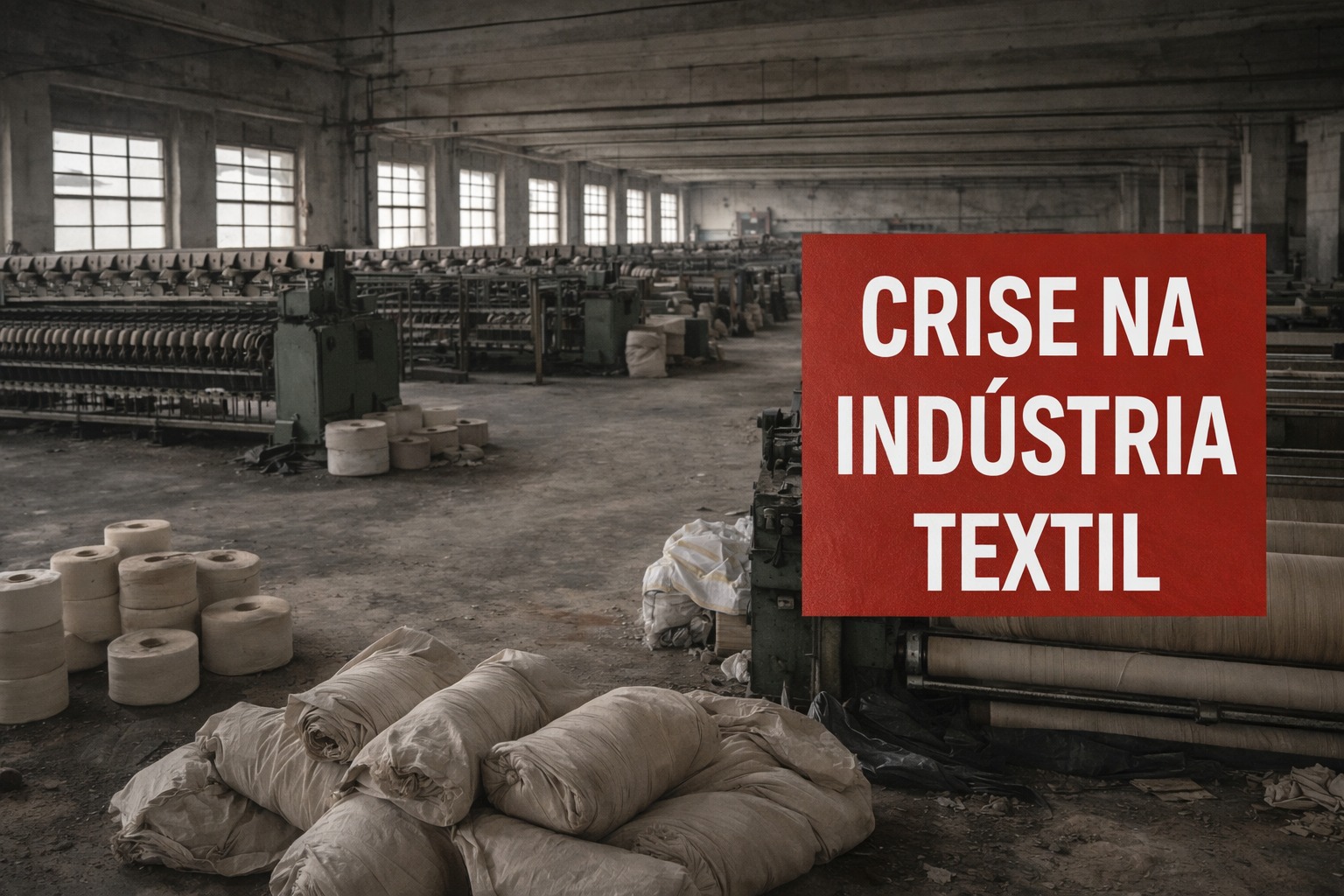


Closure of Alal SAFICI Textile Factory in Corrientes and Chaco Lays Off 260 Workers and Exposes Structural Crisis of the Argentinian Textile Industry in 2026
The closure of the Argentinian textile industry has taken a new turn with the definitive closure of Alal SAFICI in Corrientes and Chaco, resulting in the layoff of 260 workers and reigniting the debate over imports, smuggling, internal costs, and competitiveness in the sector.
Why the Closure of Alal SAFICI Exposes the Crisis of the Argentinian Textile Industry
According to E.M.Foco, the owner attributed the shutdown to a combination of import openings and an increase in textile product smuggling, which began to dominate the market with foreign goods sold at significantly lower prices.
Even producing higher value-added threads and fabrics, the company stated it could not maintain competitiveness.
-
Major Appliance Manufacturer Closes Factory in Argentina, Shifts Production to Brazil, and Restructures in Latin America with Mexico Closure, Investing Up to $165 Million

-
China to Revive $3.6 Billion Mega-Dam Project in Myanmar, Stalled Since 2011, Promising 6 GW Capacity and Completion in Eight Years

-
Foreign Company Wins Auction for Brazil’s First Immersed Tunnel, a $1.3 Billion Project with $14 Million Contract Under Federal Investigation

-
China’s Century Megaproject Wows the World: Massive Water Transfer Network Moves Water from Wet South to Arid North, with Ambitious Plans in the Tibetan Plateau Involving Giant Tunnels at Altitudes up to 4,000 Meters



Profit margins have been compressed over time, making it unfeasible to sustain industrial operations.
The company also pointed to high financial costs, with expensive credit and a strong need for working capital.
Labor, energy, and tax expenses have been considered high, along with the so-called exchange rate delay, which increased local production costs compared to imported goods.
This combination of factors created an environment deemed hostile for the continuation of a traditional manufacturing structure, further pressuring the Argentinian textile industry in 2026.
Immediate Impacts for Workers and Cities of Goya and Villa Ángela
The end of operations left 260 employees without formal work, directly affecting hundreds of families in Goya and Villa Ángela. In regions with a limited supply of industrial jobs, reemployment tends to be slow.
The loss of income pressures the regional labor market and amplifies economic and social insecurity in the short term. Communities dependent on manufacturing now face a scenario of instability.
Labor compensation has rapidly become the center of discussions. There are reports that the company is only willing to pay part of the legal amounts, which has triggered protests and mobilization from former employees and their families.
While authorities monitor negotiations and adopt emergency measures, such as food deliveries, the main demand remains the full payment of accrued rights over years of service.
What the Case Reveals About the Structure of the Argentinian Textile Industry in 2026
The closure of the centennial factory is presented as a symptom of the structural difficulties faced by the Argentinian textile industry.
The sector lives with fluctuations in domestic demand, changes in the population’s income, and a high sensitivity to exchange rates.
When high internal costs combine with an unfavorable exchange rate for prolonged periods, it becomes difficult to finance investments, modernize machinery, and maintain competitive inventories.
The case also reinforces the need for effective policies against illegal imports and smuggling, which distort prices and affect formal companies. To survive, medium and large factories tend to adopt coordinated strategies.
These include focusing on higher value-added products, investing in energy efficiency, automation and digitalization, logistical improvements, seeking external markets when the exchange rate favors exports, and partnerships with public incentive policies.
Without these measures, the sector risks worsening the situation and jeopardizing entire production chains linked to the Argentinian textile industry.
Responses from Communities and Possible Paths in Light of the Closure
In situations of definitive closure, communities often coordinate quick responses to reduce immediate impacts. Coordination between workers, governments, unions, and business entities is considered crucial.
Among the actions discussed are the rigorous negotiation of labor rights, emergency support for affected families, and the creation of job and income alternatives.
Professional qualification programs, attracting new investments to occupy idle structures, and even forming cooperatives of former employees are mentioned as alternatives to preserve accumulated productive knowledge.
Future of the Argentinian Textile Industry After the Alal SAFICI Case
The closure exposes the conflict between trade openness, high internal costs, and protection of formal employment. The sector involves cotton farmers, transporters, maintenance workshops, and the supply trade.
Each plant that ceases operations disrupts that chain and leaves an economic and symbolic void in the cities formed around the factories.
To prevent further closures and a silent deindustrialization, governments, entrepreneurs, and workers advocate for consistent policies, combating smuggling, and strategies for innovation and qualification.
Delaying decisions can mean more lost jobs and more cities exposed to a prolonged crisis.
Information from E.M.Foco.