






 Portuguese
  Spanish


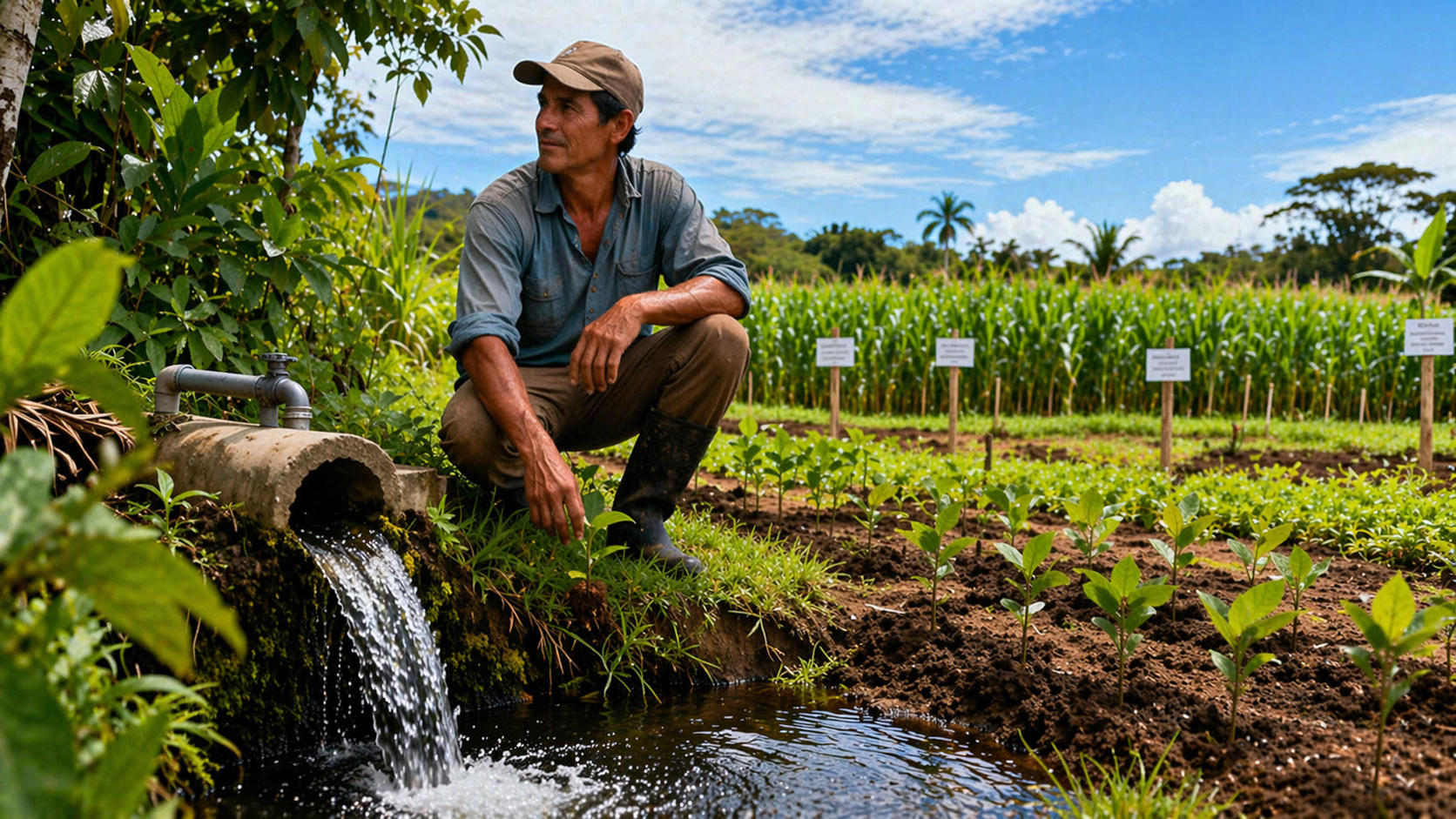

Sustainable project in Cacoal transforms dry springs into sources with more than one meter of depth and ensures a reduction of up to 60% in water and energy consumption in the field
The water scarcity in the field has led farmers in Cacoal to face a critical situation, with springs almost dry and production threatened. The lack of water compromised supply and put rural activities at risk.
With the implementation of a sustainable project focused on the recovery of springs, the reality began to change. In addition to the return of water, producers began to record reductions of up to 60% in water and energy consumption, bringing more security and savings.
Pirarara Waters Project recovers degraded areas and strengthens agriculture
The transformation occurs in the micro basin of the Pirarara River, where environmental recovery has begun to walk hand in hand with agricultural production. The focus is on the reconstitution of native vegetation and the correct use of the soil.
-
9-year-old boy who could only hold a plank for 6 minutes in physical education class trained alone for 6 months, without needing encouragement from his parents, until he broke the world children’s record with 61 minutes and 5 seconds.

-
It’s not madness: ‘talking to yourself’ has an important function for the brain, science reveals

-
Federal Government formalizes pilgrimage route with more than 70 cities between Minas Gerais and São Paulo, and the path inspired by Santiago de Compostela ends at the Sanctuary of Aparecida.
-
A Brazilian street cleaner built a machine to recycle PET bottles in the hinterlands of Paraíba, transforming the trash he swept from the streets into threads, brooms, and equipment sold even outside Brazil, and began earning about R$ 7,500 per month with his own invention.


The report was published by Ecoporé, a civil society organization focused on environmental conservation. The entity conducts the project with the support of the Public Ministry of Rondônia through the Fund for the Reconstitution of Damaged Assets.

In addition to the recovery of the areas, the project offers technical support and encourages sustainable practices, ensuring that farmers can produce without harming natural resources.
Almost dry springs regain volume and depth
Before the actions, some properties faced an extreme scenario. The springs had only a few centimeters of depth, which made production difficult.
With environmental recovery, the results appeared quickly. Vegetation began to grow again, and the springs started to regain volume.
In some areas, the water already forms wells with more than one meter of depth, in addition to favoring the return of biodiversity and improving the balance of the environment.
Sustainable production reduces water and energy consumption
The reorganization of activities in the field has brought significant gains. One of the main results was the reduction of about 60% in water and energy consumption.
The water used in coffee processing has started to be reused within the properties. This reuse prevents waste and reduces costs.
Another important point was the use of coffee husks as an energy source for drying the next harvest, creating a more efficient and economical system.
The project has already benefited dozens of farmers and recovered hectares
The results of the project are already reflected in concrete numbers. Between 2022 and 2023, 32 family farmers were benefited by the actions.
During this period, about 48 thousand seedlings were distributed and more than 33 hectares of degraded areas were recovered, expanding the positive environmental impact.
Public Ministry of Rondônia, an agency of the state justice system, participates in the initiative through the Fund for the Reconstitution of Damaged Assets, strengthening institutional support for the project.

Environmental recovery ensures the future of production in the field
The initiative shows that it is possible to combine agricultural production and environmental preservation without compromising results. The model ensures more water, improves the soil, and strengthens rural activity.
The recovery of springs directly contributes to water security and helps maintain production over time, benefiting future generations.
This type of action also serves as an example for other regions facing similar problems with water scarcity.
Sustainable project changes reality and paves the way for new solutions
The recovery of springs and resource savings show that sustainable practices can transform the countryside in a concrete and rapid way.
With positive results, the initiative reinforces the importance of caring for the environment to ensure productivity and quality of life in the countryside.
Do you believe that projects like this can solve the water crisis in other regions of Brazil? Share your opinion in the comments and say if this solution would work in your city.


