






 Portuguese
  Spanish
 4 min of reading
  3 comments


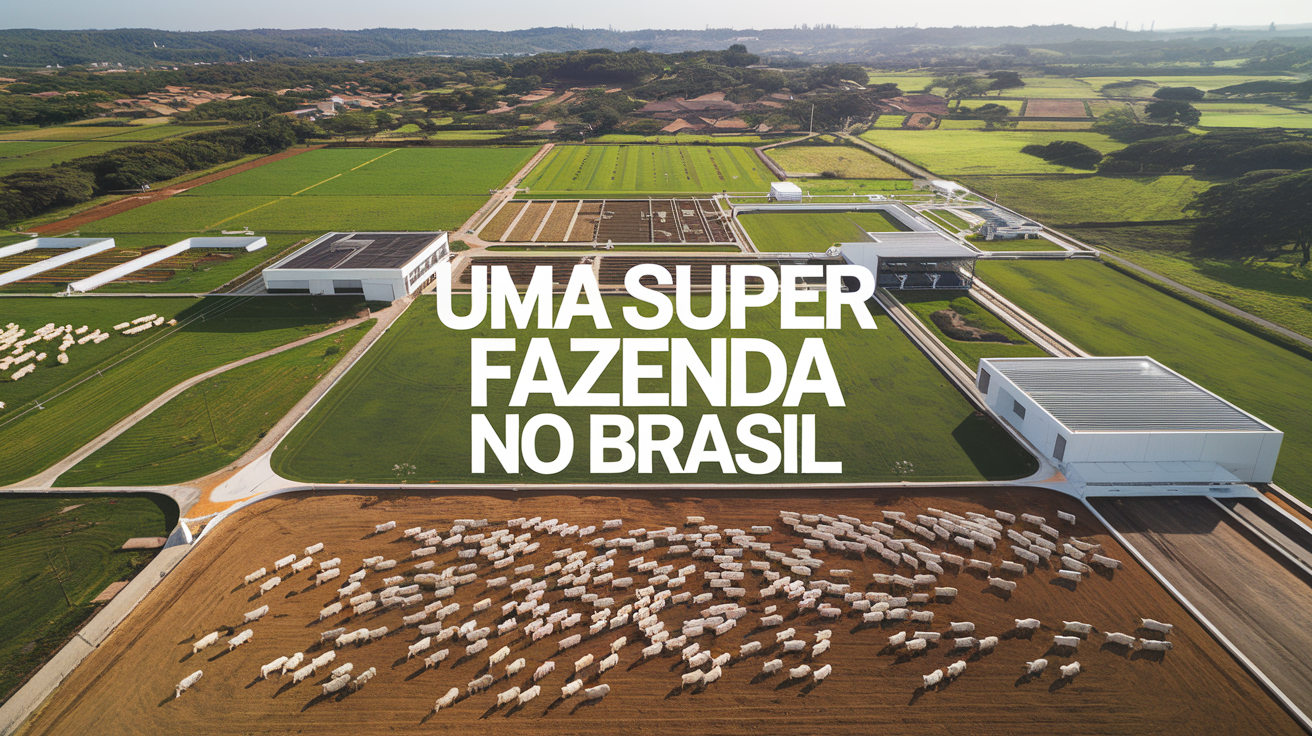


In The Heart Of Brazil, A Farm Impresses With Its More Than 200 Thousand Hectares, Surpassing The Size Of Cities Like New York. With State-Of-The-Art Infrastructure, Including 970 Km Of Internal Roads And A Village For 600 Residents, The Property Is A Reference In Sustainability And Innovation In The National Agriculture.
In Brazil’s vast territory, some rural properties stand out not only for their size but also for the infrastructure and innovative practices they implement.
Among them, Fazenda Nova Piratininga, located in São Miguel do Araguaia, Goiás, emerges as a remarkable example of how the national agriculture can combine territorial grandeur with technological advancements and sustainability.
An Impressive Area and Giant Potential
With an impressive area of over 200 thousand hectares, Fazenda Nova Piratininga surpasses the size of several nations and even metropolises like New York, which has approximately 78 thousand hectares.
-
Survivor of 1966 SS Daniel J. Morrell Shipwreck in Lake Huron Recounts 38-Hour Ordeal in Extreme Cold

-
The Greatest Hoax in World Cup History? The Film That Denied Brazil’s 1958 Victory and Exposed How Fake Evidence Can Seem Convincing on TV
-
Fake South Korean Online Stores Offer Shopping Thrill Without Spending Money or Receiving Products
-
Brazilian Joins Homeownership Consortium, Faces Decade of Dual Payments Totaling $141,000, Surpassing Traditional Mortgage


This extraordinary dimension allows the property to be one of the largest in Brazil, consolidating itself as one of the pillars of national agriculture.
Founded in 2010, the property quickly became a reference in the Brazilian livestock sector, combining efficient management practices with a solid commitment to environmental sustainability.
To get an idea of the magnitude of Nova Piratininga, its territorial extension is equivalent to approximately 135 thousand soccer fields.
This vastness is fundamental for cattle production and other large-scale agricultural activities.
State-of-the-Art Infrastructure: A City Within The Farm
The grandeur of Nova Piratininga is not limited to its territorial extension.
The farm boasts infrastructure worthy of a small city, ensuring production efficiency and quality of life for its workers.
The property has an internal network of 970 kilometers of roads, facilitating the transport of supplies, machinery, and livestock.
These internal roads are essential to ensure efficient logistics within the farm, reducing costs and optimizing operations.
In addition, Fazenda Nova Piratininga houses a structured rural village to accommodate its more than 600 residents, including workers and their families.
The village has schools, health posts, markets, mechanical workshops, leisure spaces, and even a private airport.
This infrastructure provides differentiated working conditions for employees, who can live comfortably within the property without constantly needing to travel to neighboring towns.
This robust organizational structure makes Fazenda Nova Piratininga a model to be followed within the Brazilian livestock sector.
Investment in infrastructure not only improves productivity but also ensures employee well-being, providing a more efficient and satisfying work environment.
Commitment to Sustainability and Environmental Preservation
Environmental management is one of Nova Piratininga’s pillars.
The farm has water reserves totaling 10.6 billion liters, essential for supply and the preservation of local natural resources.
The concern for sustainability is evident, and various measures are adopted to minimize the environmental impact of agricultural activities.
Practices such as soil conservation, proper pasture management, and reforestation of strategic areas are adopted to ensure environmental balance.
In addition, the property heavily invests in water capture and reuse, reducing waste and ensuring rational use of water resources.
Another highlight of the farm is the pasture rotation system, which prevents soil degradation and improves the quality of livestock feed.
These initiatives not only protect the environment but also increase the farm’s productive efficiency, resulting in a sustainable and economically viable business model.
Excellence in Livestock: A High-Standard Herd
If the infrastructure and concern for the environment draw attention, the livestock production of Fazenda Nova Piratininga is equally impressive.
The farm houses one of the largest herds in Brazil, with over 105 thousand cattle, predominantly of the Nelore breed, as well as crosses with Angus.
The focus on meat quality ensures that the property constantly invests in genetic improvement.
Advanced breeding techniques, balanced nutrition, and careful management ensure a healthy and productive herd.
The result is high-quality meat that meets both the domestic and international market.
Additionally, the farm adopts tracking technologies to monitor the health and performance of the animals.
Sensors and chips enable detailed control of feeding, movement, and even the body temperature of the cattle.
This technological approach reduces losses, improves productivity, and ensures a high-quality final product.
Innovative Management and Technology in Agriculture
Under the leadership of Igor Nogueira Alves de Melo, Nova Piratininga stands out for its use of cutting-edge technology in its daily operations.
Automated monitoring systems, pasture optimization, and data analysis are some of the tools used to increase efficiency and reduce costs.
The farm also invests in modern machinery, drones for aerial monitoring, and artificial intelligence for productivity analysis.
These innovations allow precise control over every aspect of production, ensuring that the farm operates with maximum efficiency.
Another important point is the integration of livestock with agriculture. The production of grains within the farm helps to reduce cattle feeding costs, creating a sustainable and highly efficient system.
A Reference in Brazilian Agriculture
Fazenda Nova Piratininga exemplifies how it is possible to combine large-scale production with sustainable practices and efficient management.
Its robust infrastructure, commitment to employee well-being, and continuous investment in technology position it as a reference in the livestock sector.
In a country where agriculture plays a crucial role in the economy, initiatives like those of Nova Piratininga stand out for pointing the way toward innovative and responsible approaches to the future of rural production.
The farm is a true example of how Brazil can be a world leader in food production without compromising sustainability and respect for the environment.
To learn more about the structure and practices of Fazenda Nova Piratininga, check out the video below:





É complicado pois no agro está tão difícil de se mexer pois os lucros são pequenos e não dá para fazer investimento eu também acho que possa ter dinheiro público aí.
Faz o L.
Que fazendão, rapaz! Eu acho que tem dinheiro público nisto. Pois é, há de ter e não pouco. A capital do Piauí, Teresina, tem 900 mil habitantes desde 1990. Dá para acreditar? Quase 30 novos bairros com centenas de milhares de habitantes surgiu na cidade. Mas o FPM continua a mesma migalha de trinta anos atrás. Por onde anda tais recursos? Se você não sabe, imagina eu. E assim são centenas de municípios finaceiramente abandonados… mas os fazendões, não!