






 Portuguese
  Spanish
  4 min of reading
  2 comments


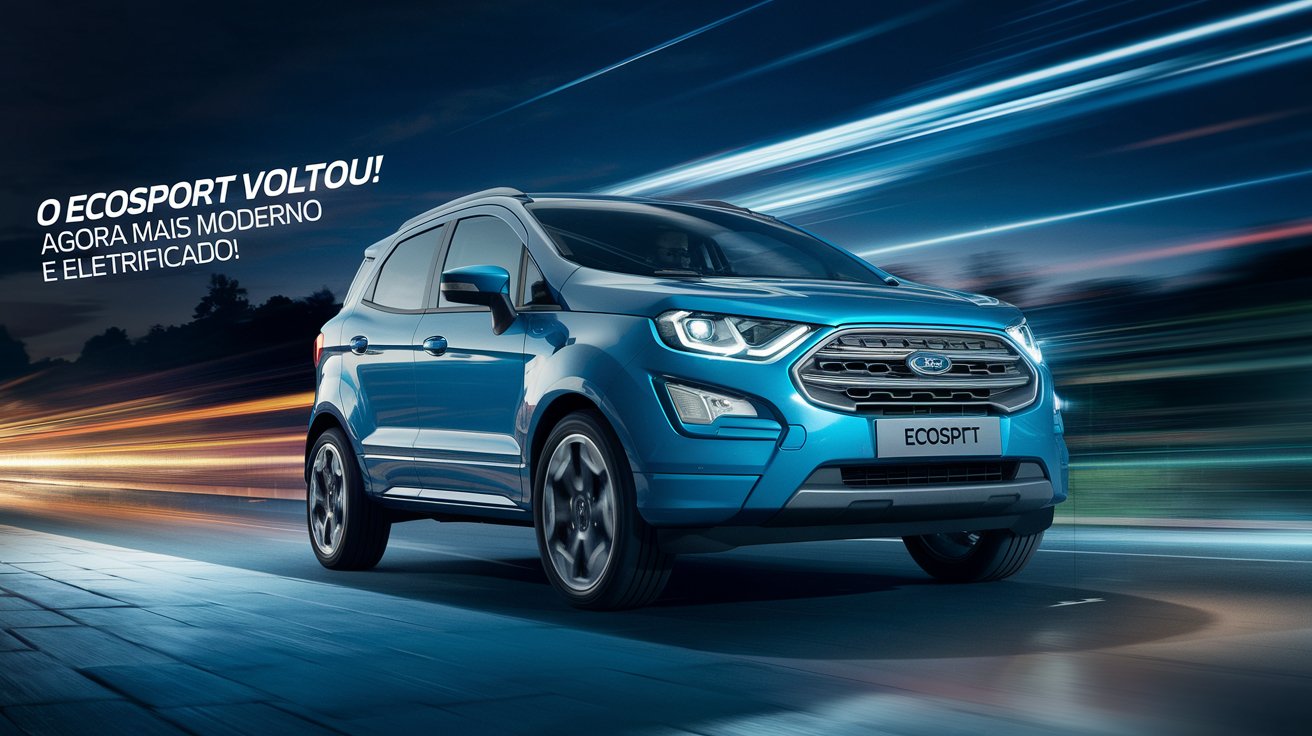


Ford EcoSport Is Back! Fully Redesigned and with Electrified Versions, the SUV Is Reborn to Revolutionize the European Market in 2026. While Ford Places High Bets on the Newcomer, Brazilian Consumers Remain Expectant: Will the Iconic Model Return to the Country? Discover Everything About This Historic Renewal of the EcoSport!
After years of absence, one of the most iconic Ford SUVs is about to return to the market and promises to surprise fans with a new generation full of innovations.
The EcoSport, which was once one of the brand’s most popular models, stopped being produced in Brazil in 2021 and in Europe in 2023, but now has a return date set to hit the streets with an updated design and various engine options.
The Relaunch of the EcoSport: A New Chapter for Ford
Ford is placing high bets on the return of the EcoSport, bringing a completely redesigned model that will cater to both traditional consumers and a new audience interested in more sustainable technologies.
-
Uber Faces Shareholder Scrutiny as Board Accused of Ignoring Safety, Compliance, and Harassment Warnings Amid Over 3,500 U.S. Lawsuits

-
Ferrari’s First Electric Car Divides Fans, Priced at $630,000, Amid Concerns Over Limited Editions; Brand Clarifies It’s Not Just for Future Perks
-
BYD Dolphin Mini: The Electric Car That Defies Depreciation, Losing Only 3.58% in a Year and Becoming the Best-Selling Retail Model Under $22,000

-
Electric Car JAC E-JS4 Loses $19,000 in Value in One Year, Leading Record Depreciation of Used Cars in Brazil Due to Expensive Battery and New Models


With a launch planned for 2025 as a 2026 model, the new version of the SUV will initially focus on the European market.
This decision is part of the automaker’s global strategy, aiming to fill the gap left by discontinued models, such as the Fiesta and Focus.
The new generation of the EcoSport will be manufactured at the Almussafes plant in Valencia, Spain. This production hub will become the main manufacturing center for the model to supply the European market.
The choice of the Spanish factory demonstrates Ford’s commitment to maintaining its relevance in the compact SUV segment in Europe.
Technologies and Engine Options: Multi-Energy for Different Profiles
One of the key differentiators of the new EcoSport 2026 will be its multi-energy proposal, offering versions with gasoline, hybrid, and 100% electric engines.
This approach reinforces Ford’s commitment to diversifying its vehicle offerings, allowing consumers to choose the model that best meets their needs and expectations.
In addition, the automaker is investing in modern technologies to enhance the driving experience.
Among the expected highlights are an advanced digital display, updated connectivity system, and a range of driving assist features that elevate the safety and comfort level of the vehicle.
Renovated Design: What to Expect from the New EcoSport
Although the final design is still being kept secret, experts are already speculating about what the new EcoSport will look like.
Projections indicate that the model will follow Ford’s most recent visual identity, with vertically stacked LED headlights next to the front grille, resulting in a more modern and aggressive look.
With these changes, the new EcoSport will aim to compete directly with models like the Volkswagen T-Cross, Toyota Yaris Cross, and Dacia Duster, some of the best-selling compact SUVs in Europe.
The hope is that Ford can regain a significant share of this highly competitive market.
Sales Expectations in Europe
The European market will be Ford’s main focus for the EcoSport 2026.
In the past, the SUV reached sales of over 50,000 units per year in the region, and the expectation is that the new generation will be able to surpass this performance.
To achieve this, the automaker should position the model at a competitive price, ensuring an attractive proposal for consumers.
With the removal of the Focus and Fiesta from the catalog, the new EcoSport arrives as a viable alternative for those looking for an efficient, technological, and affordable compact SUV.
The combination of new engines, a renewed design, and a greater focus on energy efficiency may be the necessary differentiator to boost its sales.
Will the EcoSport Return to Brazil?
For the Brazilian market, the situation remains uncertain.
Since Ford ended its manufacturing operations in the country in 2021, local production of the EcoSport has been discontinued, and the automaker began importing models to meet domestic demand.
Although internal tests have been conducted to explore the possibility of the EcoSport returning to Brazil, the company ultimately canceled the project.
If the SUV returns to the country, it will only do so as an imported model, which may raise the price and limit its target audience.
The potential return of the EcoSport to Brazil will depend on a commercial decision from Ford, taking into account factors such as market acceptance, import viability, and competition with other compact SUVs that already dominate national sales.
A Promising Return for Ford
The Ford EcoSport 2026 has everything to be a great success, especially in Europe, where compact SUVs continue to be in high demand.
With a multi-energy approach, an updated design, and new technologies, the model arrives to occupy an important space within the brand’s portfolio.
In Brazil, uncertainty still looms over the return of the model, but the possibility is not completely ruled out.
It remains to be seen what strategic decisions Ford will make to determine if Brazilians will again have the chance to see the EcoSport on the streets.
Regardless, the reintroduction of the model reinforces Ford’s commitment to continue innovating in the SUV segment and meeting the needs of an increasingly demanding audience.





Nenhuma fotinho pra gente ver o modelo?
Fui proprietario de EcoSport, com duas compras em 8 anos. Mas perdi a confiança com a interrupção da produção.