Portuguese
  Spanish


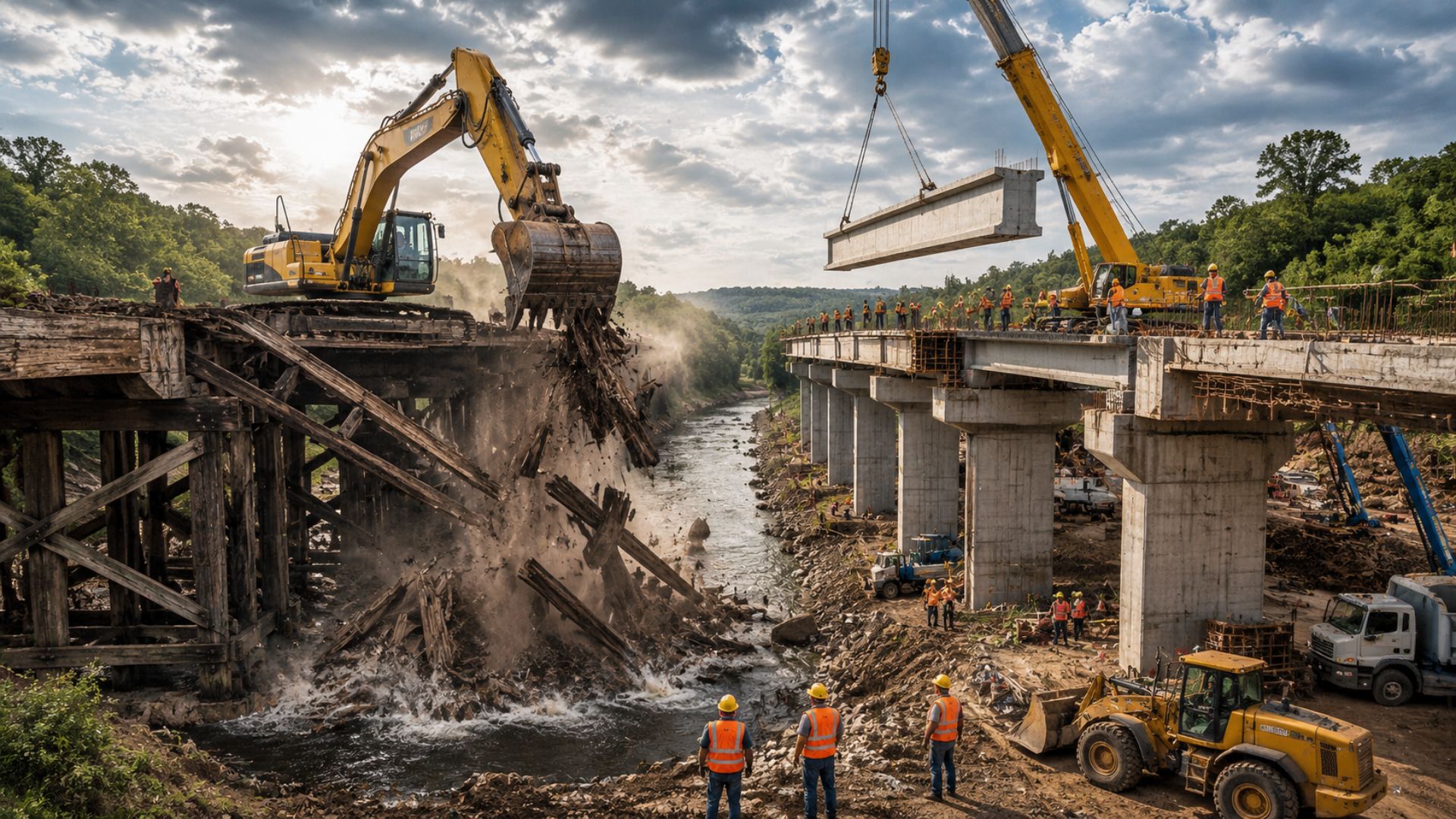

Measures include replacing about 700 wooden bridges, monitoring with artificial intelligence, and creating a unified national system to identify structural risks on federal highways. The government relies on sensors, satellite images, and quick response to prevent collapses, reduce city isolation, and enhance road safety.
The Ministry of Transport has defined new rules to replace about 700 wooden bridges still existing on federal highways, in an attempt to reduce risks of interdiction, collapse, and isolation of communities dependent on these road connections.
According to the new guidelines, DNIT must present, within 45 days, an action plan with a detailed schedule of the planned measures, while the complete survey of the structures will have a one-year deadline to be completed across the entire federal network.
The initiative was formalized by Ordinance No. 305, dated May 5, 2026, as part of a broader package aimed at managing the so-called Special Art Works, a group that includes bridges, viaducts, tunnels, walkways, and containment structures.
-
Eco Invest Auction Aims to Unlock $10 Billion in Investments, Focusing on Green Fertilizers, Critical Minerals, Batteries, and AI for Clean Industry in Brazil

-
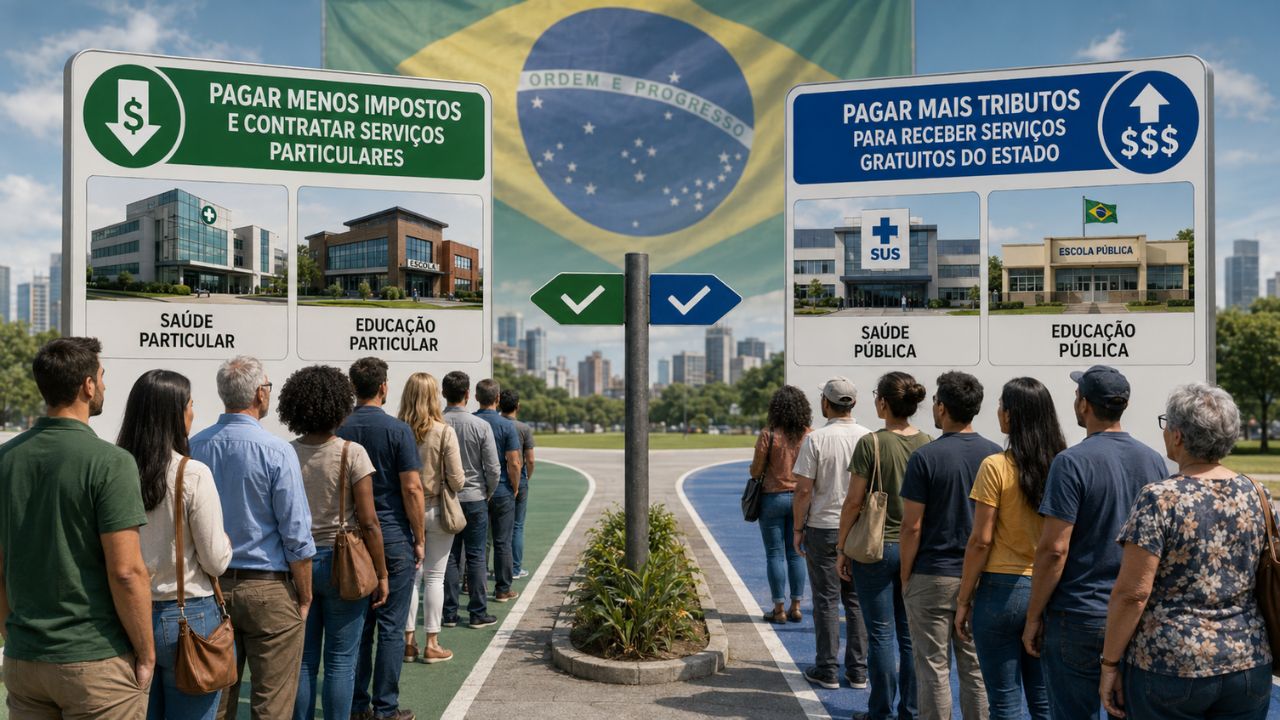
Half of Brazilians Prefer Lower Taxes with Private Health and Education, While 44% Opt for Higher Taxes for State-Provided Services, Datafolha Survey Reveals

-
Brazil’s Most Expensive Toll Rises to R$ 40.60 on Route from São Paulo to the Coast, Nearly Matching Bus Fare to Santos

-
As Brazil Expands Social Welfare, Survey Reveals 40% Blame Poverty on Laziness, While 58% Cite Lack of Opportunities




Government wants to accelerate replacement of wooden bridges
The replacement of the bridges will follow technical criteria, such as traffic volume, history of occurrences, severity of structural problems, and the importance of the route for access to ports, airports, hospitals, and other infrastructures considered essential.
In the government’s assessment, wooden bridges have a reduced lifespan and require frequent maintenance, especially in more isolated areas, where the presence of companies capable of performing the services is still limited, which increases the cost of interventions and complicates quick responses in critical situations.
With the aim of increasing the interest of construction companies in future bids, the Ministry of Transport is considering grouping different bridges into larger lots, a strategy that can generate economies of scale, reduce operational costs, and make projects economically viable in less attractive regions.

Additionally, the government intends to encourage the use of pre-molded construction models, allowing parts of the structures to be produced in industrial centers and later transported to installation sites, an alternative that tends to reduce timelines and increase competition among companies.
According to the national secretary of Road Transport, Viviane Esse, the interruption of a bridge in isolated regions can affect schools, healthcare services, and the flow of production.
“When one of these bridges collapses, entire regions can become isolated,” she stated to Agência iNFRA.
Artificial intelligence and sensors enter monitoring
In addition to replacing wooden bridges, the government has created guidelines to standardize the monitoring of Special Art Works across the entire federal highway network, both on roads directly managed by the Union and those granted to the private sector.
Within the new policy, a unified general registry called SGE will be created, responsible for gathering technical information on all monitored structures, in an attempt to reduce data fragmentation between DNIT, ANTT, concessionaires, and other bodies linked to the Ministry of Transport.
The monitoring will use satellite images, smart sensors, remote monitoring, and artificial intelligence tools.
These resources will be employed to identify signs of deterioration, anticipate failures, and guide interventions before problems progress.
While the concessionaires will be responsible for the operational monitoring of structures on the granted highways, under the supervision of ANTT, it will be up to DNIT to monitor the roads directly managed by the Union and regulate the submission of information to the national system.
The policy also incorporates criteria for climate adaptation and infrastructure resilience.
Among the factors considered are increased rainfall volume, hydrological changes, and extreme events capable of compromising the stability of bridges, viaducts, and containment structures.
Critical structures will have emergency evaluation
A third ordinance mandates the national mapping of Special Art Works considered critical.
The survey will be conducted by DNIT on federal highways under direct management and, in the case of concessions, by ANTT in conjunction with the concessionaires.
The work should identify structures with an imminent risk of collapse or signs of structural compromise.
When there is a threat to road safety, the responsible technical teams must conduct a specific evaluation within 24 hours after becoming aware of the problem.
In addition to the technical diagnosis, the responsible bodies must estimate the costs necessary for recovery, reinforcement, or definitive solution of each problematic structure, allowing the government to organize a national portfolio of priority interventions based on technical criteria and not just on emergency demands.
The Ministry of Transport also mandated the adoption of BIM, the English acronym for Building Information Modeling, as the standard tool for recovery, rehabilitation, and construction projects of Special Art Works.
This model allows for the concentration of project, execution, maintenance, and monitoring data throughout the lifecycle of the works.
In practice, the tool can help the public authorities better track the history of each structure and plan future interventions.
Federal resources and concession contracts will fund interventions
Investments in structures directly managed by the Union will continue to be made with resources from the General Budget of the Union, although the ministry also foresees the possibility of external financing, international technical cooperation agreements, and support from multilateral organizations.
Viviane Esse stated that the new policy does not create a specific budget line.
In the granted highways, the costs should be absorbed by the contracts themselves, especially in more recent projects, which already reserve part of the tariff for resilience and climate adaptation.
According to the secretary, about 2.5% of the tariff in the newer contracts is allocated to environmental and structural adaptation measures.
These resources can finance reinforcement, elevation, recovery, or reconstruction of structures affected by climatic and operational risks.
Tragedy in Tocantins increased pressure for oversight
The measures were announced after a series of bridge collapses recorded since 2022, a scenario that gained even more attention after the collapse of the Juscelino Kubitschek de Oliveira Bridge, between Estreito, in Maranhão, and Aguiarnópolis, in Tocantins, in December 2024, an accident that left 14 dead and three missing.
A subsequent report by the Federal Police pointed to structural failures, omission of public agents, and excess weight as factors related to the collapse of the bridge, which was part of a strategic link over the Tocantins River.
Viviane Esse acknowledged that the tragedy increased the urgency of the actions, although she stated that the policy of maintaining Special Works of Art was already part of the government’s plans.
“The idea is to have advance information to preserve lives and maintain national integration,” she said.