






 Portuguese
  Spanish
  3 min of reading
  1 comment


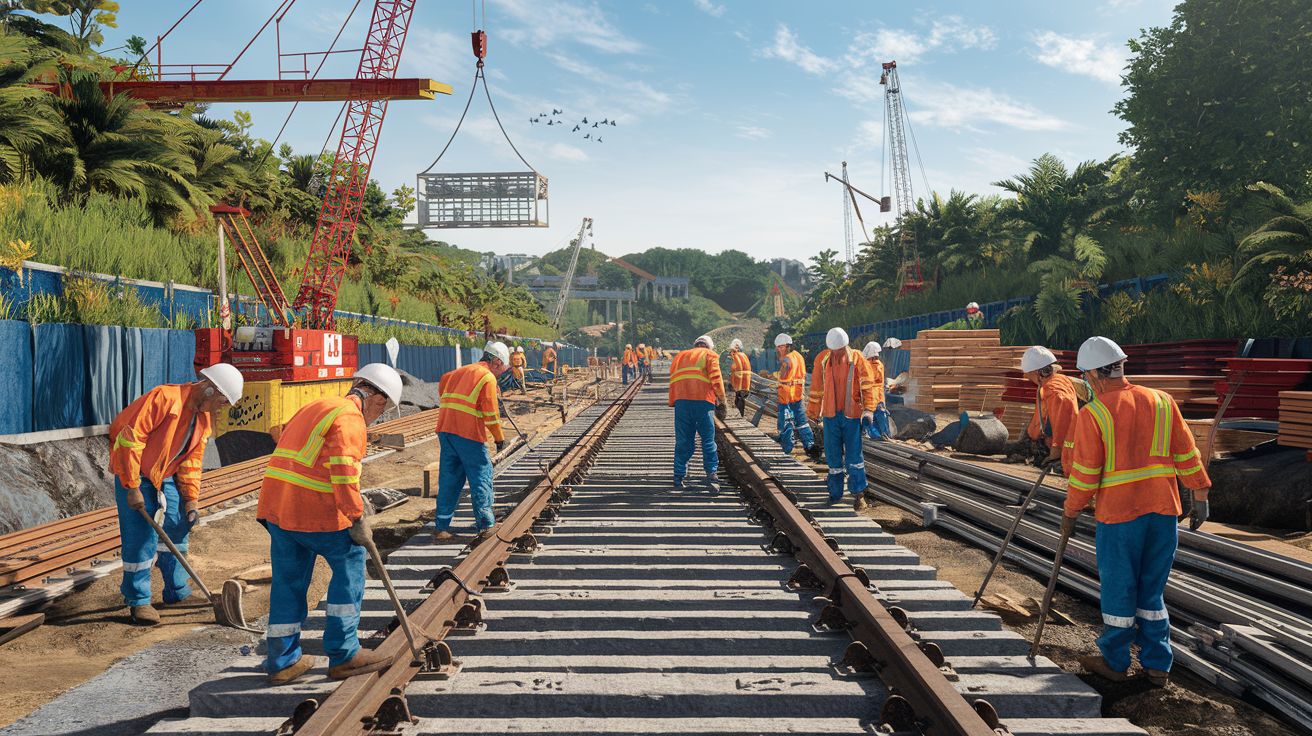


Lula Government Unlocks Transnordestina with R$ 3.6 Billion, Bringing Hope to the Northeast. The Largest Infrastructure Project in the Region Promises to Revolutionize Cargo Transport, Generate Jobs and Reduce Inequalities.
Few projects in Brazilian history have managed to accumulate as many ups and downs as Transnordestina.
Announced as the largest infrastructure project in the Northeast, it carries the promise of transforming the regional economy and boosting the export of grains, fertilizers, minerals, and other essential products for Brazil to compete in the global market.
But what seemed destined to be forgotten has gained a new chapter, filled with expectations and optimism.
-
Central Bank changes rule that lasted decades and allows dollar and euro accounts in Brazil for exporters and companies with foreign capital, eliminating the need for currency exchange in some transfers starting in October 2026.

-
The Central Bank ends the R$ 500 limit on Pix by approximation, and account holders will be able to use the general Pix limit to pay any amount by tapping their phone on the terminal starting in October 2026.
-
A collective political will that allows for the creation of a cross-party and state agenda, focusing on concrete actions such as reducing the Custo Brasil; commitment to fiscal balance; feasible goals that enhance professional qualification and the adoption of a myriad of incentives aimed at innovation.

-
PIX from BRICS becomes reality: BRICS Pay advances to enable international payments without the dollar; system inspired by Pix and based on blockchain could move up to 20% of global trade by 2030, while bloc countries already account for 40% of the world economy.




Last Thursday, November 28th, President Luiz Inácio Lula da Silva announced an investment of R$ 3.6 billion to complete Transnordestina, a landmark in the national railway sector.
The announcement was made during the signing of an amendment aimed at unlocking the work on the railway, considered a strategic axis for regional and national development.
“I have been pursuing this railway like I have never pursued such an important project in Brazil,” declared the president.
His remarks highlighted the priority the government placed on the rail modal, a sector historically neglected in the country, but crucial for increasing competitiveness and facilitating the flow of production.
Multi-Billion Investment and Defined Timeline
The R$ 3.6 billion will be transferred by the Banco do Nordeste (BnB) to Transnordestina Logística (TLSA) through the Northeast Development Fund (FDNE).
According to the timeline, the funds will be disbursed in installments: up to R$ 1 billion per year between 2024 and 2026 and R$ 600 million in 2027.
According to Paulo Câmara, president of BnB, the project now follows a structured plan to overcome bottlenecks and meet established deadlines.
“It took President Lula’s return for this project to be resumed correctly. We will prioritize financing and ensure that Transnordestina becomes a development axis for the Northeast,” Câmara stated.
New PAC and Logistics Integration
Inserted in the New Growth Acceleration Program (New PAC), Transnordestina connects three states in the Northeast: Piauí, Ceará, and Pernambuco.
The railway was designed to be a robust logistics corridor, benefiting the transport of high economic relevance cargo, such as grains, cement, and fuels.
Additionally, it is a solution to the growing demand from the Matopiba region, an acronym that encompasses Maranhão, Tocantins, Piauí, and Bahia, where agricultural production is expected to grow by 40% in the coming years.
George Santoro, acting Minister of Transport, emphasized that the completion of Transnordestina represents much more than a railway project: it is a tool for social inclusion and job creation in less developed areas of the country.
“This project will allow Brazil to meet the growth of agricultural production in strategic regions, reducing logistics costs and increasing competitiveness,” he explained.
Regional Impacts and Strategic Benefits
The completion of Transnordestina promises a wide range of benefits. Among them are:
- Ease in the flow of agricultural production from the Brazilian semi-arid region;
- Development of the Port of Pecém in Ceará, a strategic point for exports;
- Reduction of regional inequalities and increased tax revenue;
- Strengthening of local economies, especially in hubs like Petrolina and Juazeiro;
- Creation of direct and indirect jobs, providing training and retention of the population in rural areas.
Waldez Góes, Minister of Integration and Regional Development, emphasized that the project goes far beyond the Northeast. “Transnordestina helps to develop Brazil.
This is a project that fights inequalities, integrates regions, and distributes income, ensuring social inclusion.”
A Look to the Future
With the resumption of Transnordestina, the Lula government seeks to reposition Brazil in the global logistics and export scenario.
The project is more than a railway; it is a symbol of the ambition to reduce regional inequalities and build a modern and efficient transport infrastructure.
Now, the question remains: will Brazil finally be able to turn this dream into reality and bring the Northeast to the economic prominence it so deserves?




Porque ele não destrava a transposição do rio São Francisco??