






 Portuguese
  Spanish
  6 min of reading
  0 comments


The homemade recipe created by Marcos Fenício’s mother became Tia Sônia, a Bahian granola brand with a revenue of R$ 120 million and plans for São Paulo. After an accident at 17, he started with R$ 40, expanded the portfolio, and built his own distribution in the current Brazilian healthy market.
The homemade recipe of granola made by Marcos Fenício’s mother became the foundation of Tia Sônia, a granola brand from Bahia that reached a revenue of R$ 120 million and now targets São Paulo. The story was published by Exame on June 18, 2026, in the business section.
The business was born after a personal turning point. Fenício had a motorcycle accident at 17, had a leg amputated, turned to natural food, and years later started selling granola with R$ 40 borrowed from his mother, until he built a company with a revenue exceeding R$ 120 million in 2025.
Accident at 17 changed the course of the Bahian agronomist
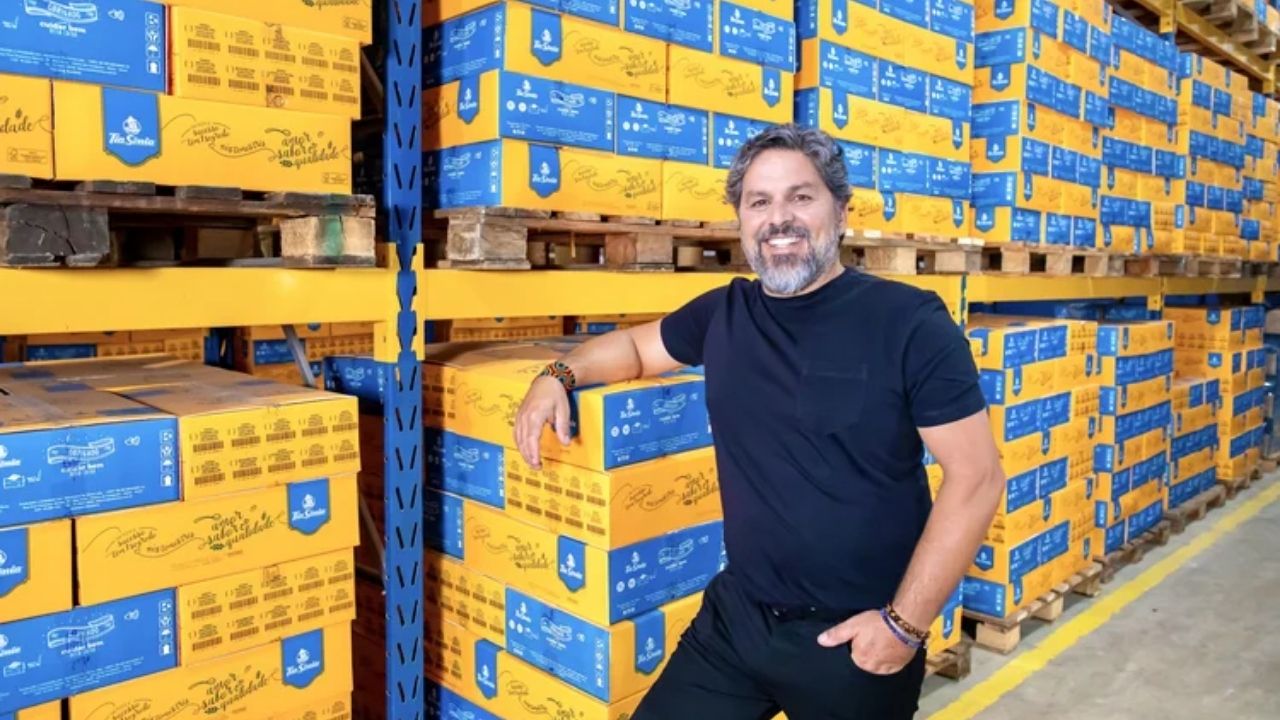
Marcos Fenício was 17 when he had the motorcycle accident that changed his life. The amputation of one leg led him to rethink choices, habits, and paths that seemed defined.
-
The CNPJ made up only of numbers is numbered in Brazil, and the Federal Revenue has already set the changeover for July 2026: the new model will mix letters and numbers to avoid exhausting combinations and also prepare the ground for tax reform taxes.

-
The government will increase the MEI limit and allow the hiring of one more employee, announced the Minister of Finance on Wednesday, but did not specify by how much.
-
Dia Supermercados closes 343 stores in Brazil, ends judicial recovery ahead of schedule, and attempts to revive with 238 units in São Paulo after a debt of nearly R$ 1.1 billion exposed the brutal pressure of wholesale clubs on traditional chains.

-
‘The vessel of human civilization has entered dangerous waters, full of reefs and storms’: it was with this apocalyptic tone that China launched an explosive manifesto this Wednesday, full of barbs at protectionism and the “double standards” of Western powers.


It was in this process that he turned to meditation, yoga, and natural food. The life change did not start as a business plan, but as a personal quest for health, awareness, and new meanings after a profound rupture.
Mother’s recipe became the starting point of Tia Sônia
The origin of Tia Sônia lies in a homemade recipe prepared by Dona Sônia, Fenício’s mother. She made granola for him to take on a trip to Machu Picchu, Peru, using ingredients that deviated from the traditional standard of the time.
The mixture had coconut, tapioca, and rapadura, creating a flavor with a Bahian identity in a product still seen as niche. What started as travel food returned with unexpected demand: friends wanted more of the granola.
R$ 40 borrowed started the business
The decision to sell came at a time of financial difficulty. At 30 years old, Fenício heard from a friend that he could make granola to sell and decided to test the idea.
The initial capital was minimal: R$ 40 borrowed from his mother. Without partners and external investors, the company was born artisanal and grew by reinvesting its own results. The homemade recipe left the family kitchen before becoming a brand, factory, and national network.
Granola stopped being an alternative product
In the early years, Tia Sônia sold mainly to natural product stores. The audience was more restricted, and granola still carried an image linked to alternative and niche healthy consumption.
The turning point occurred in the early 2000s when the product began to gain space among higher-income consumers. Fenício attributes part of this advance to the popularization of the açaí with granola combination, which helped bring the category to new audiences.
Supermarkets opened another scale for the brand
Around 2003, the Bompreço network in Bahia became the company’s first major client. Entering the supermarket retail showed that the brand could grow beyond specialized stores.
This move changed the size of the game. The homemade recipe that once circulated among acquaintances began to compete for space on shelves, requiring standardization, volume, management, and delivery capacity.
Own distribution became a competitive advantage
In the beginning, Fenício couldn’t absorb the margins demanded by distributors. The solution was to make the deliveries himself, first with a Fiorino, then with other units as the business grew.
The improvisation became a strategy. Today, Tia Sônia has its own distribution network in the North and Northeast, with salespeople, promoters, and sales representatives. This structure helps the brand defend space in stores and paves the way for new products.
Company produces 300 tons of granola per month
Tia Sônia produces about 300 tons of granola per month in Vitória da Conquista, Bahia. The volume shows the distance between the artisanal beginning and the current industrial operation.
Even with the scale, the company preserves the family origin of the homemade recipe in its narrative. This contrast helps explain the brand’s strength: it grew without completely abandoning the memory of the product made by the mother.
Revenue exceeded R$ 120 million in 2025
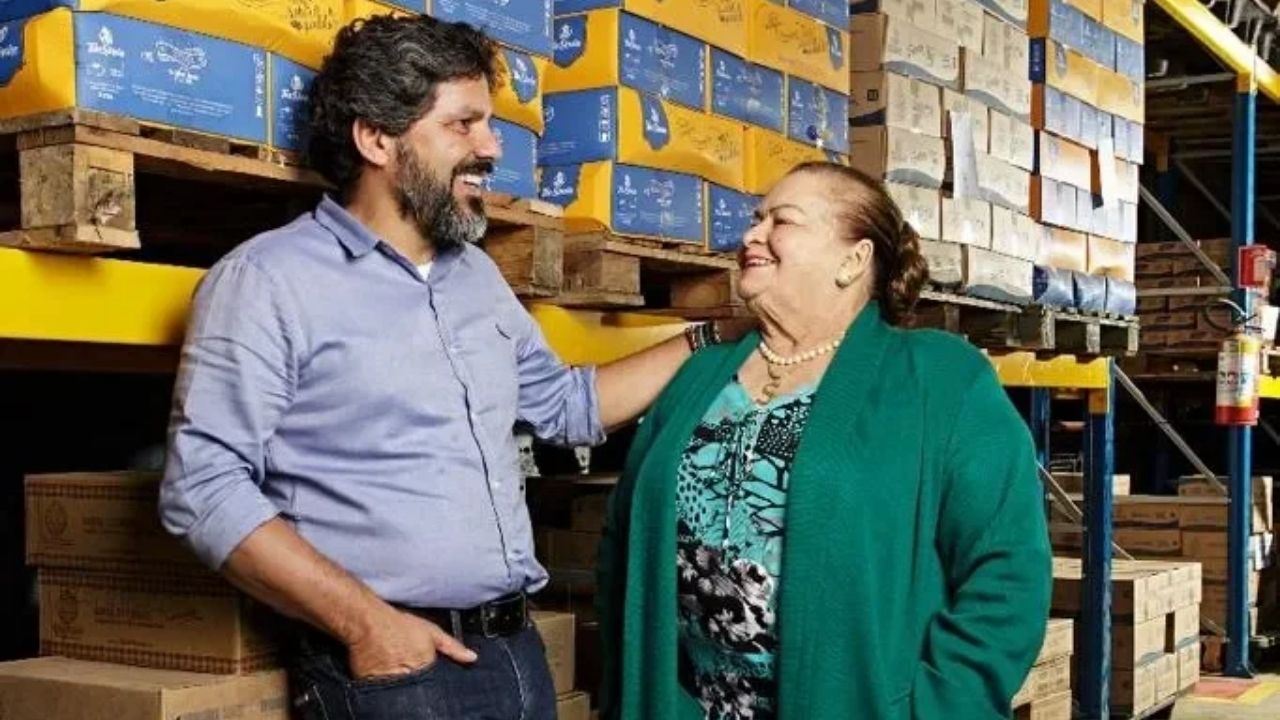
According to Exame, the company earned more than R$ 120 million in 2025 and expects to grow 15% in 2026. The performance consolidates Tia Sônia as one of the leading national granola brands.
The company also positions itself as the leader in the Northeast and the second-largest brand in the country in the category. The case shows how a homemade recipe can transform into a relevant business when it finds distribution, management, and market timing.
São Paulo became the center of national expansion
For years, Tia Sônia’s growth was concentrated in Bahia and the Northeast. Then, the company began targeting São Paulo, considered the largest consumer market in the country and responsible for about 30% of Brazilian consumption in the category, according to Fenício.
Since 2025, the brand has set up a dedicated team in the state, opened a commercial operation center, and inaugurated Casa Tia Sônia, a concept space to present products to São Paulo consumers. The expansion in São Paulo became the company’s next test outside its historical base.
São Paulo operation already shows progress
The first results in São Paulo are showing strong momentum. According to the report, the operation in the state is growing between 30% and 40% per year, while half of the company’s e-commerce sales already come from the São Paulo market.
The brand has also started gaining space in networks like Pão de Açúcar, Carrefour, Santa Luzia, Santa Maria, and St Marche. For a company born from a homemade recipe, entering major São Paulo showcases represents a new stage of national validation.
Portfolio expanded from granola to 80 products
Although granola still accounts for about 65% of sales, Tia Sônia has expanded its operations. The portfolio now includes more than 80 products, including cereal bars, snacks, whole grains, specialty coffees, and supplements.
The Ultra B line, with whey protein, creatine, and protein bars, represents an entry into categories related to sports nutrition. The company is trying to move beyond just being a granola brand to occupy more healthy consumption moments.
New factory should sustain the coming years
To accompany the expansion, Tia Sônia acquired an area of 16,000 square meters in Vitória da Conquista. The first phase of the works has already begun, and the expectation is to start the main construction of the new factory in 2027.
The new industrial headquarters should support the brand’s growth on a national scale. The challenge will be to increase production, maintain quality, and preserve the identity that was born from the Fenício family’s homemade recipe.
From mother’s kitchen to the national market
The journey of Marcos Fenício shows how a homemade recipe can turn into a company when it meets need, persistence, and management capability. The agronomist from Bahia started with R$ 40 borrowed from his mother, transformed the family’s granola into Tia Sônia, and reached a business that grossed over R$ 120 million.
Now, the next chapter involves São Paulo, a new factory, and an ever-growing portfolio. Do you think brands with family origins can maintain authenticity when they grow nationwide, or does scale inevitably change the essence of the product? Share your opinion.




Be the first to react!