






 Portuguese
  Spanish
  4 min of reading
  1 comment


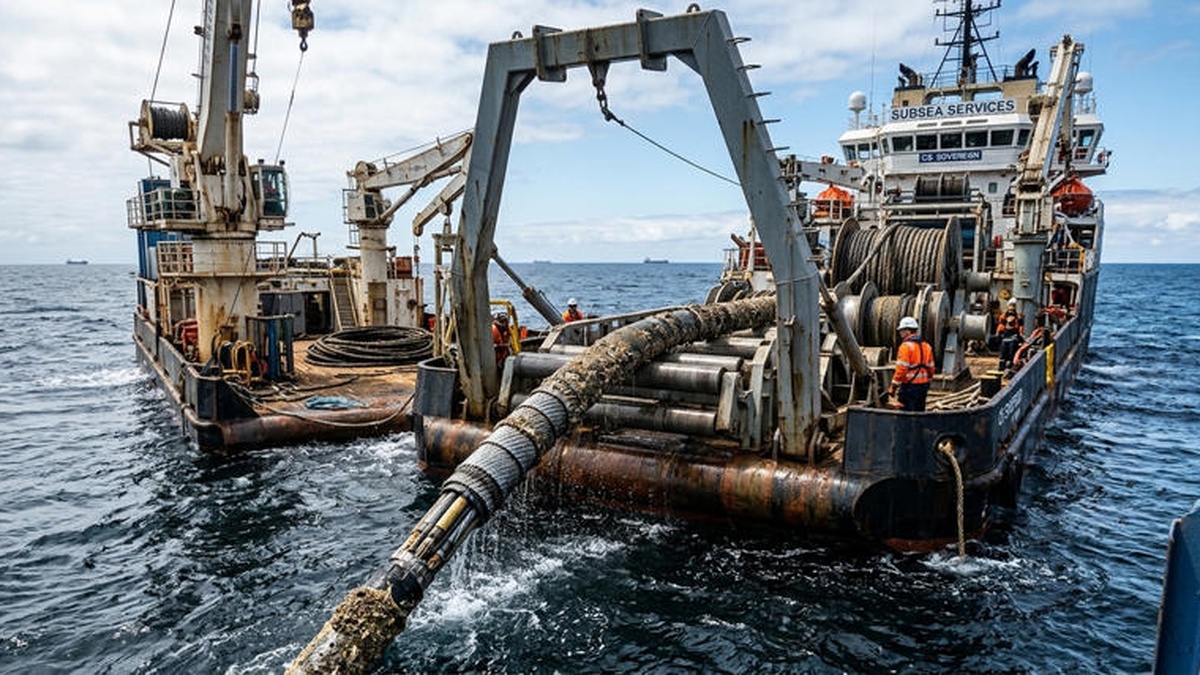

One of the most important structures in the history of telecommunications is leaving the bottom of the Atlantic Ocean. In June 2026, the company Subsea Environmental Services began the operation to remove the TAT-8, the world’s first transatlantic fiber optic system. The removal occurs almost 38 years after the cable went into operation, which began functioning on December 14, 1988, and helped inaugurate a new era of global communications.
The TAT-8 went into operation on December 14, 1988, and connected the United States to Europe through fiber optic technology. The project was developed by the operators AT&T, British Telecom, and France Telecom, who sought to significantly expand the capacity of transatlantic communications.
Furthermore, the system represented a technological revolution. Before it, transmissions between continents relied mainly on copper coaxial cables and satellites, which offered lower capacity and more limited speeds.
The cable that anticipated the internet era
When the TAT-8 was inaugurated, the internet was still far from being part of everyday life. Even so, the infrastructure helped lay the foundations for global connectivity that would develop in the following years.
-
Farmers in the USA refuse millions to not give up lands that carry a lifetime of work, while the data center rush targets farms in Australia and turns AI into a new pressure force on areas that still produce food.

-
Son of a farmer from a remote village who barely spoke English scores 98.2%, earns a full scholarship to Cornell, and moves India

-
The richest man on the planet has already sent cheese into space: SpaceX placed a wheel of Le Brouère inside the Dragon capsule, kept the cargo a secret, and turned a NASA test into one of the most unusual missions in history.
-
Science is still trying to understand how a two-year-old child with an IQ of 156, capable of naming 35 capitals, counting in Spanish, and recognizing geometric shapes, joined Mensa at 845 days old and became one of the rarest child prodigies ever recorded in the gifted club.



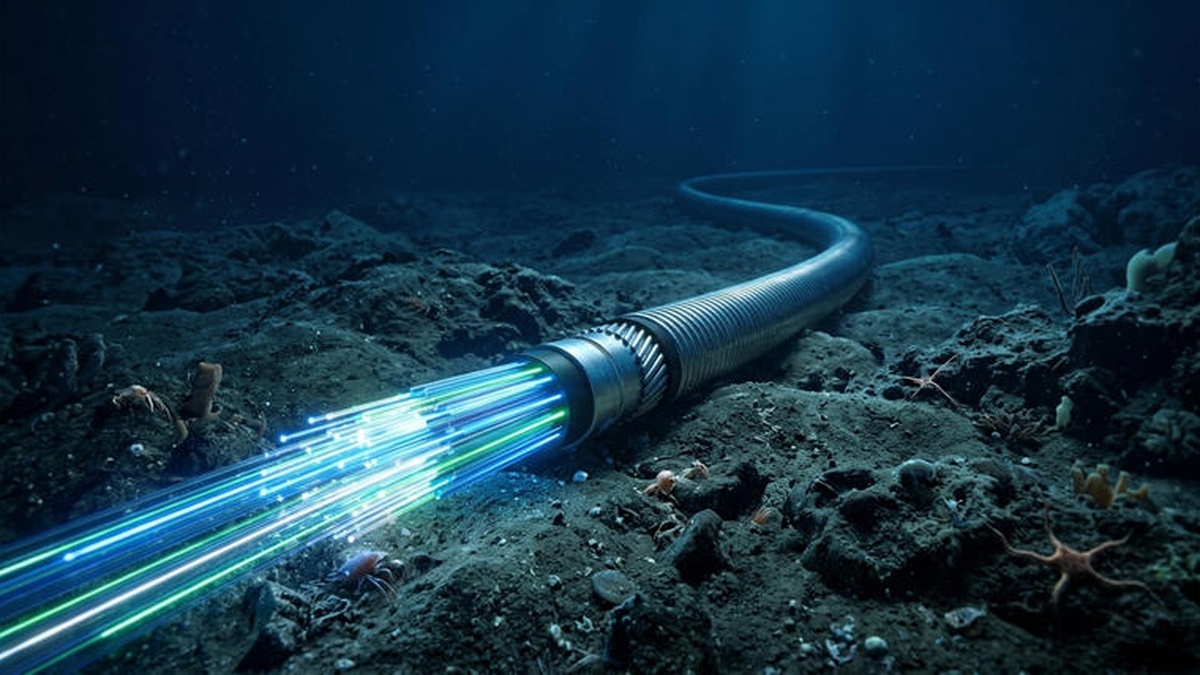
The system had the capacity for approximately 40,000 simultaneous telephone calls, an impressive number for the time. Information traveled through extremely thin glass fibers, using light pulses to transmit voice and data between continents.
However, the rapid growth of communications quickly surpassed its capacity. According to historical records cited by Wired magazine and reproduced by various specialized outlets, the system reached its operational limit in about 18 months.
Failure ended operation in 2002
The TAT-8 remained active for just over a decade. However, in 2002, the system suffered a significant technical failure.
At that time, there were already more modern cables with much higher capacity. Therefore, the operators decided not to carry out the necessary repairs. The maintenance cost did not justify the investment, and the cable ended up being deactivated.
Since its deactivation in 2002, the structure has remained abandoned at the bottom of the Atlantic for more than two decades. In June 2026, the company Subsea Environmental Services began removing the first sections of the cable, marking the start of the historic infrastructure recycling operation.
Operation started in June 2026 uses specialized ship
The removal is being conducted by the company Subsea Environmental Services, one of the few companies in the world specialized in the recovery and recycling of deactivated submarine cables. The work is carried out with the ship MV Maasvliet, equipped for operations at great depths.
The process is not simple. The teams use a large metal hook to locate and capture the cable on the ocean floor. Then, the material is slowly hoisted onto the vessel. Depending on the seabed conditions, the operation can take hours or even days for each recovered section.
Additionally, part of the cable is located thousands of meters deep, requiring highly specialized equipment and constant monitoring.
Recycling has economic and environmental value
The removal is not happening just for historical reasons. The TAT-8 contains valuable materials that can be reused by the industry.
Among them are high-purity copper, steel, and polyethylene. After recovery, these components go for recycling and return to the market in new industrial applications.
According to information released by the International Energy Agency (IEA) and cited by the Wired report, the growing demand for copper may pose supply challenges in the coming years. Thus, the recovery of materials present in old structures gains additional economic importance.
The seabed houses hundreds of cables
Although many people associate the internet with satellites, most global communication relies on submarine cables.
Currently, about 600 active submarine cables carry data between continents. They support services like streaming, social networks, video conferencing, banking operations, and cloud computing.
Therefore, the removal of the TAT-8 also helps free up space for new, faster, and more efficient structures that continue to expand the capacity of the global network.


End of a chapter in digital history
The removal of the TAT-8 represents more than the closure of a telecommunications project. The cable symbolizes one of the technologies that enabled the evolution of the modern internet and global communications.
Moreover, its removal highlights how digital infrastructure is in constant renewal. While new cables are installed to meet the growing global demand for data, pioneering structures begin to leave the ocean after decades of service.
Finally, the retrieval of the TAT-8 closes an important chapter in the history of telecommunications and reminds us that much of the internet continues to pass, silently, through the ocean floor.




📞📞📞📞📞📞📞📞📞📞📞📞📞📞📞📞📞📞📞📞📞📞📞📞📞👇👇👇👇👇👇👇👇👇👇👇👇👇👇👇👇👇👇👇👇👇👇
<<<recruitement form="" is="" out="" we="" are="" replacing="" a="" new="" officers="" interested="" awpplicant="" should="" contact="" us="" for="" more="" informationICustom Auctions Is Up Again and Granting Nigerians the
Privilege to Own Vehicles at Affordable Rates
RICE AVAILABLE FOR SALES ARE :
Royal umbrella=18,000
Mama Gold=20,000
Royal stallion=18,000
Rising sun=18,000
Special rice=18,000
Mama Africa=18,000
Elephant Gold=18,000
Caprice =20,000
Gallon of oil =9,500
NOTE: TRANSPORTATION CHARGES IS (#1000) which must be paid before we ensure your delivery.
~INDUSTRIAL SEWING MACHINES🧵
Toyota Land Cruiser-N1.3m TO N12.5 m
• Toyota Prado 850K TO N10m
• Toyota C o r o lla 500k TO N5.6m
• Toyota Camry 800k TO N7.2M
Spider 2million
Muscle N2.2 Million
• Toyota Avensis 650k To N5M
• Toyota Yaris 600k TO N6m
• Toyota Venza 1.7m TO N8m
• Toyota RAV4 SUV 700k TO N6.5m
• Toyota Hilus Pickup 950k TO N9m
• Toyota Dyna Truck 700k To N5m
• Toyota Hiace Bus 900k To N6.3 m
Hilux 900k TO 8m
* Toyota Highlander980k TO N12m
*Toyota Big daddy-N1.m
Tacoma 1Million TO 15m
Tundra 1.2m TO 16m
*Toyota Sinner 1.2m
many more…
Lexus RX300-N1. 2m
Lexus RX330-N2.4 m
Lexus RX350-N3.8 m
Lexus GX460-N4.9 m
Lexus GX470-N5.5 m
Lexus RX400-# 3.9 m
many more…
Mercedes benze GLE 450 10.6m
Mercedes benze GLA 7.8m
Mercedes benze GLK 5.6m
many more…
Mercedes Benz ML330 1.850,000
Mercedes Benz ML350 2.8m
Mecedes Benz GLK 4MILLION
Mecedes Benz GLE 350 6M
GLE450 8M
GLA 250 3.8M
C class 2.9m
E-Class 3Million
Lexus Rx300=N800,000. To N2.1 Million
Lexus Rx330=N850,000 To N2.2 Million
Lexus Rx350=N900,000 To N4.3 Million
Lexus Rx470=N2.9m
Lexus es350 3.8m
Lexus Es330 2.6m
GX460 4m
Gx470. 4.3Million
Is250 1.8m
Nissan Altima 700,000
Nissan Murano 800,000
And many more…..
Range Rover Velar 9m
Range Rover vogue 8.6m
Land Rover 5.5m
And many more…
CONTACT (Officer GABRIEL ESHIEMOMOH )
O✓8✓0✓6✓7✓3✓9✓9✓0✓9✓0 W E DELIVER TO 36 STATES
NOTE ~ VEHICLES ARE💦SLIGHTLY NEGOTIABL