Portuguese
  Spanish


BRICS payment system gains strength amid search for alternatives to the dollar, inspired by the Brazilian Pix, using blockchain and promising to reduce costs in international transactions between bloc countries, still facing technical and political challenges.
The BRICS Pay advances as one of the bloc’s main initiatives to expand international payments in local currencies, reduce transaction costs, and decrease dependence on the dollar in commercial operations among its members.
Still in the testing phase, the platform uses blockchain technology and seeks to connect national payment systems, including the Brazilian Pix, allowing transactions between the currencies of participating countries without the need to go through the dollar or SWIFT.
The information was discussed this Monday (15) on the Mundioka podcast by Sputnik Brasil and is expected to gain space at the 18th BRICS Summit, scheduled for September in New Delhi, India, the country holding the group’s rotating presidency this year.
-
Brazilian Entrepreneur Expands Automotive School to 48 Locations, Acquires Electric Car Company to Lead Technical Training in Latin America

-
Former Roma and Fiorentina Player Filipe Gomes Returns to Brazil to Found Empório do Galeto, Aiming for $10 Million Revenue by 2026
-
Many Unaware: Seniors Entitled to Monthly Income, Free Transport, Medication, and Property Tax Exemption in Brazil

-
Brazil’s BNDES Funded Metro and Steel Plant Projects in Venezuela with Brazilian Support


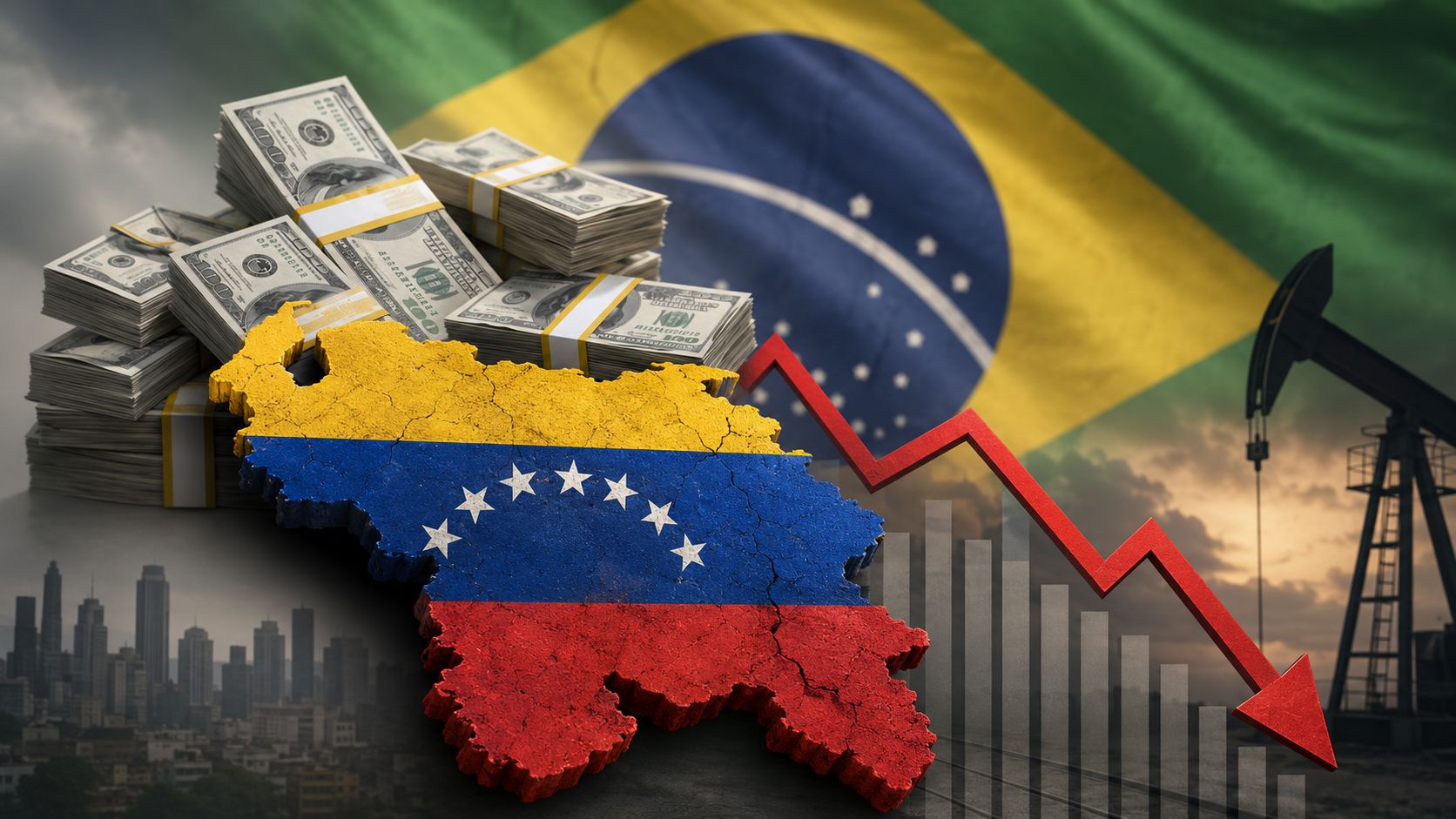
BRICS Pay targets payments in local currencies
In practice, the BRICS Pay intends to function as a more direct international payment infrastructure, aimed at companies, consumers, and financial institutions conducting commercial and financial operations within the bloc.
The proposal does not eliminate national currencies nor create, at this moment, a single currency, but seeks to allow faster settlements, with less exposure to exchange costs and fewer intermediations in transactions between BRICS countries.
Comparisons with Pix arise from the promise of agility and digital integration, although the Brazilian system operates in a single jurisdiction, under Central Bank rules, while BRICS Pay would have to connect distinct financial structures.
Dedollarization still depends on trust
For Matheus Cecílio, PhD in international political economy from the Federal University of Rio de Janeiro, the initial impact of the project tends to be more operational than geopolitical, especially in the short term.
In the expert’s assessment, the platform can facilitate trade between bloc countries, but should not be treated as a direct substitute for the dollar in global transactions at this first moment.
“All countries can unite. This can reduce transaction costs, firms and consumers can transact more easily, but potentially much faster and without being exposed to exchange costs,” Cecílio said to Mundioka.
The economist also cited an estimate from the BRICS Business Council according to which the system could account for 15% to 20% of international trade by 2030, if structured and adopted on a large scale.
Economic weight increases the project’s relevance
This debate occurs at a time of increasing economic weight of the BRICS, which brings together countries with a growing share in the global economy and a common interest in reducing external financial dependencies.
According to data released by the Brazilian presidency of the bloc based on the IMF, the member countries accounted for about 40% of the global economy in purchasing power parity in 2024, with a projection of 41% in 2025.
This weight helps explain the interest in creating payment alternatives less dependent on structures dominated by strong currencies, although profound changes in the international financial system require trust, liquidity, and scale.
In Cecílio’s view, emerging economies could benefit if they reduced the need to maintain large international reserves in strong currencies, but this process would depend on a more robust architecture than an isolated platform.
Internal differences challenge the system’s advancement
Professor Luiz Antonio Joia, from FGV Ebape, also sees potential in the initiative, although he considers it premature to present it as a disruption of the global financial order or as a rapid replacement of current systems.
Among the main obstacles, he highlights the technological, regulatory, economic, and political diversity of the countries that make up the BRICS, in addition to the different levels of financial digitization and banking.
“There are different technological infrastructures, different regulatory models, different socioeconomic contexts, and all of this would have to be interconnected. It is an interesting initiative, but there is still a lot, a lot of water to flow under the bridge,” said Joia.
The comparison with Pix, according to the professor, helps explain the ambition of the project, but also highlights important limits, because an international platform requires coordination between governments, central banks, private institutions, and strategic interests.
Pix inspires platform, but does not resolve impasses
Pix is cited as an inspiration for having shown that instant digital payments can quickly gain scale when there is technical standardization, institutional adherence, and user trust.
In the case of BRICS Pay, the difficulty is greater, as the platform would have to operate with different currencies, compliance rules, financial supervision models, and levels of population access to digital services.
Cecílio recalled that China already has a highly digitalized financial environment, while other countries in the bloc still experience greater inequality in access to electronic payments, which may delay widespread adoption.
Even so, analysts believe that the system may gain ground in specific operations, especially in commercial transactions within the bloc and in less complex payments.
BRICS Pay must coexist with SWIFT
In the short term, the trend is that BRICS Pay will function as a complementary alternative, and not as an immediate substitute for SWIFT, the main network used in international transfers.
For small and medium-sized enterprises, the platform could reduce costs, simplify payments, and facilitate business in local currencies, provided there is sufficient adherence from countries and secure interoperability between systems.
Also weighing in the debate is the fact that payment systems are not just technical tools, as financial infrastructures can become instruments of economic influence and targets of pressure in geopolitical disputes.
The expansion of BRICS has increased the political weight of the group, but it has also made it more difficult to build consensus on common projects, especially when they involve currency, financial sovereignty, and capital circulation rules.
According to Joia, the pursuit of a more multipolar international order tends to strengthen initiatives like BRICS Pay, as long as the bloc manages to transform the proposal into a stable, secure infrastructure accepted by the participating countries.