






 Portuguese
  Spanish


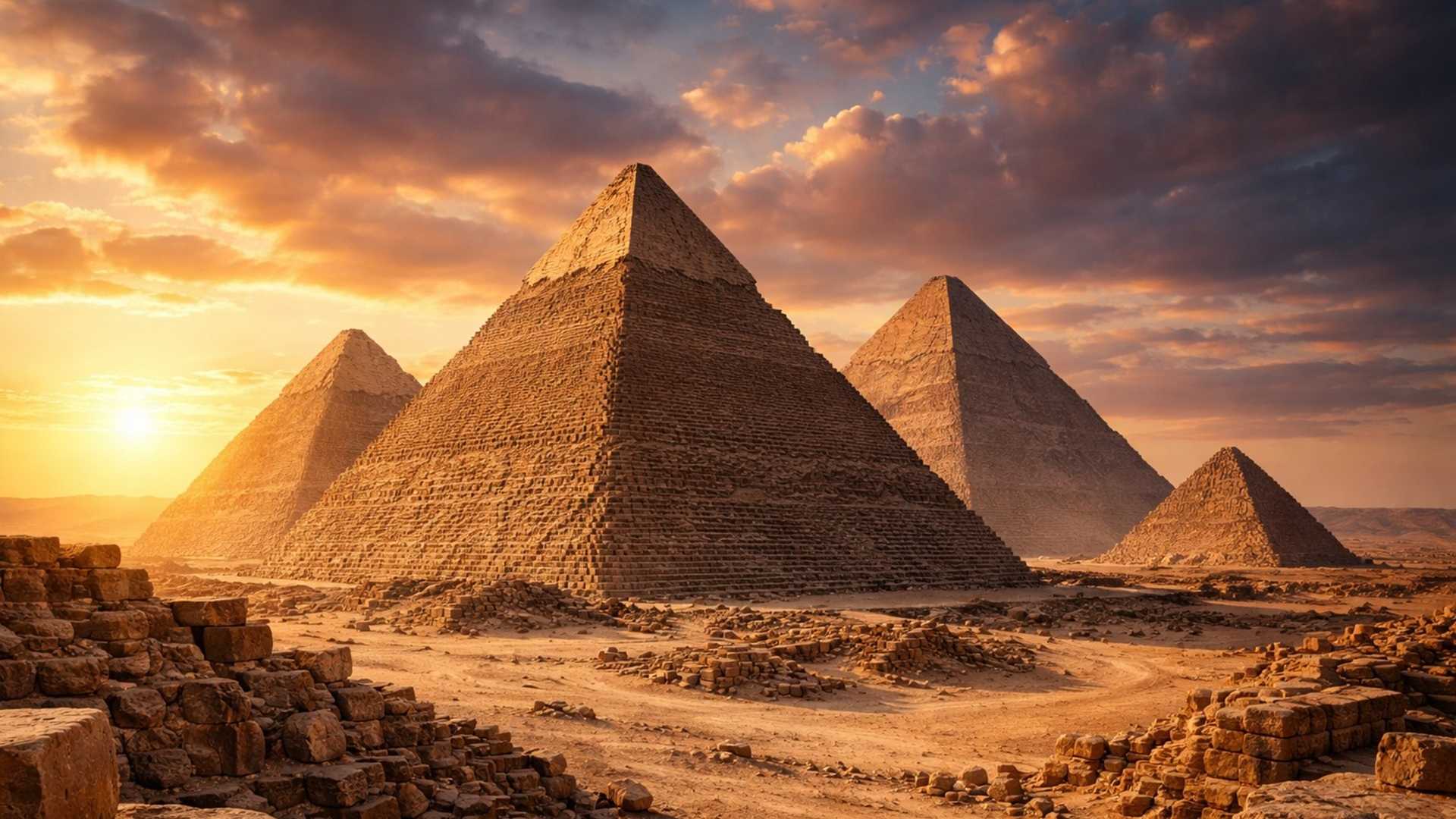


New Study Presented by Independent Researcher Gathers Archaeological Evidence, Historical Inconsistencies, and Structural Analyses of the Great Pyramids of Giza to Support the Hypothesis That the Complex May Have an Origin Preceding Egyptian Civilization, Raising Debate About Historical Chronology and Ancient Engineering
The Great Pyramids Are Back at the Center of Archaeological Debate After a Researcher Claims That the Giza Structures May Be Up to 12,000 Years Old, Preceding Known Egyptian Civilization and Indicating the Possible Existence of an Earlier Technological Society.
Researcher Questions Origin Attributed to the Great Pyramids
The Egyptologist António Ambrósio, an independent researcher affiliated with the Autonomous University of Barcelona, Presented a Study Arguing That the Great Pyramids Were Not Originally Built by the Pharaohs of the Fourth Dynasty.
According to the Article, the Three Main Pyramids of Giza Would Have Already Existed Thousands of Years Before the Rise of Egyptian Civilization, Being Subsequently Appropriated by the Rulers of the Dynastic Period.
-
Billionaire says the most valuable skill will help overcome job elimination caused by AI, following Bill Gates’ fears

-
A Dutchman created a ‘box’ that makes trees grow in the desert almost without water and without irrigation: the invention has already brought seedlings to dozens of countries and achieves up to 90% survival where common planting did not exceed 10%.

-
Abandoned warehouse hid a giant collection of rare computers, with over 2,000 artifacts from the 1930s to the 1980s.
-
Scientists warn that melting ice is triggering an alarming chemical transformation in preserved areas, and the first signs are already concerning researchers worldwide.




Ambrósio Argues That Historical and Archaeological Inconsistencies Would Indicate That the Egyptians Encountered Pre-Existing Structures and Attempted to Reproduce Them in Later Constructions.
The Study Has Not Yet Passed Peer Review, But It Argues That Confirmation of the Hypothesis Would Require a Rewrite of Modern Human History.
Absence of Mummies Raises Doubts About Funerary Function
One of the Main Points Presented Involves the Absence of Funerary Evidence Within the Great Pyramids of Giza.
According to the Researcher, No Royal Mummy or Complete Set of Funerary Objects Was Found in the Structures, Despite the Egyptian Tradition Claiming That They Would Serve as Tombs for Khufu, Khafre, and Menkaure.
Ambrósio Claims That the Sarcophagus Attributed to Khufu Was Discovered Empty, Which, According to Him, Would Not Prove the Construction of the Pyramid by the Pharaoh, Only Its Later Claim.
Another Often-Cited Element Is the Cartouche with Khufu’s Name, Painted in Red Ocher Above the King’s Chamber.
While Various Egyptologists Consider the Symbol Authentic, Skeptical Authors Argue That the Inscription May Have Been Forged by Colonel Howard Vyse in 1837.
Engineering of the Great Pyramids Exceeds Later Constructions
The Study Highlights That the Great Pyramids Exhibit Technical Features Considered Exceptional When Compared to Other Confirmed Egyptian Pyramids Built Between 2500 and 2150 BC.
Among the Elements Mentioned Are the Astronomical Alignment with Constellations, Extremely Precise Stone Cuts, and an Almost Perfectly Flattened Base on All Sides.
According to Ambrósio, No Smaller Pyramid Built Later Managed to Repeat the Same Technical Standard Observed in Giza.
The Article Also Points Out That Later Constructions Were Smaller, Exhibited Visible Structural Defects, and Used Materials Considered Weaker.
Additionally, Many of These Pyramids Did Not Maintain Alignment with Celestial Bodies, Unlike the Main Structures of Giza.
Erosion of the Sphinx Suggests Anterior Antiquity to Dynastic Egypt
Another Central Argument Involves the Sphinx Located Near the Pyramids.
Ambrósio Claims That the Statue Shows Signs of Water Erosion Caused by Heavy Rains, a Phenomenon That Has Not Occurred in the Region of Egypt Since Approximately 5000 to 3000 BC.
According to the Researcher, This Would Indicate That the Giza Complex Had Already Been Exposed to Natural Processes Long Before the Start of Egyptian Civilization, Dated Around 3100 BC.
This Interpretation Would Reinforce the Hypothesis That the Archaeological Site Could Be Significantly Older Than Traditional Chronology Suggests.
Similar Mega Structures Appear on Different Continents
The Article Also Relates the Great Pyramids to Other Megalithic Constructions Found in Different Parts of the World.
Among the Examples Cited Are the Inca Citadel of Sacsayhuamán in Peru, and the City of Baalbek in Lebanon, Which Would Exhibit Similar Structural Characteristics.
Ambrósio Argues That Such Similarities Would Indicate the Action of the Same Advanced Civilization Responsible for Disseminating Complex Construction Techniques Among Primitive Human Cultures.
According to the Researcher, Later Egyptian Dynasties Tried to Reproduce These Structures, But Without Achieving the Same Technical Results.
Concept of Zep Tepi Associated with Possible Lost Civilization
The Study Also Mentions the Egyptian Concept Known as Zep Tepi, Translated as “First Time.”
In Mythological Tradition, This Period Would Represent an Early Era When Gods Ruled Directly Over the Earth Before the Emergence of Human Kings.
Researchers Like Graham Hancock and Robert Schoch Support the Interpretation That Zep Tepi Could Correspond to a Real Historical Period Occurring Around 10,500 BC.
According to This Hypothesis, an Advanced Civilization Would Have Flourished Approximately 12,000 Years Ago.
Hypothesis Suggests Global Transmission of Ancient Knowledge
The Independent Researcher Matthew LaCroix Claimed That This Possible Ancient Culture May Have Preserved Knowledge Through Geometry, Symbolism, and Monumental Design.
According to Him, Monuments Spread Across the Planet Would Contain Structural Codes Intended to Convey Teachings Before Catastrophic Events.
The Study Also Mentions the Recent Identification of Recurring T-Shaped Forms, Three-Level Recesses, and Stepped Pyramids Carved from Ancient Stones on Various Continents.
These Elements Would Have Been Associated with Even Older Periods, Between 38,000 and 40,000 Years Ago.
LaCroix Adds That This Civilization Would Have Followed Cosmic Cycles and Incorporated Concepts About the Structure of the Universe into Sacred Sites, Including the Alignment of the Giza Pyramids with the Orion Belt.





Sou profe Dr. de Literatura Comparada e já levo esse novo modelo para o ensino fundamental. Uma ingenuidade e infantilismo defender o modelo ortodoxo de História que figura nos livros. Não vê quem não quer, começando pelo Hawas, o egiptologo ortodoxo. Grato.
São os mistérios que a humanidade ainda não decifrou como elevar pedras de 3 ou mais toneladas a alturas de mais 150 metros, numa época que sequer tinhamcordas para suportar tamanho peso.
Outra situação: além de itens rudimentares que quase não existiam, quase não existia pedras na região desértica p/suprir tanta demanda p/as grandes obras das pirâmides.
Eis o mistério que ainda poderá levar muito tempo para ser desvendado pelo homem, msm em tempo de muitos avanços da tecnogia, que sequer ainda sabem quando e como foram feitas estas magníficas obras para a humanidade.
Se tem vidas em outras galáxias e planetas, acho que estas obras foram executadas por seres muito mais evoluídos que nós. Este é meu modesto ponto de vista.