Portuguese
  Spanish


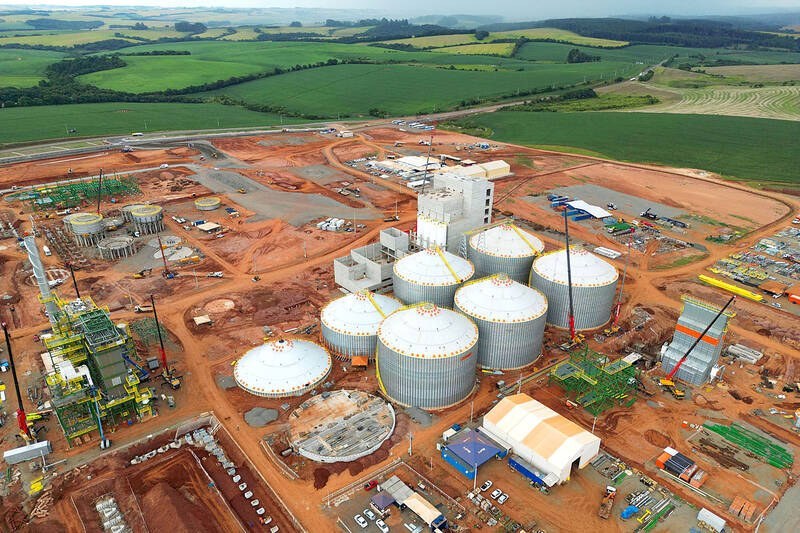
Few sectors challenge high interest rates like corn ethanol. Even with the cost of money soaring, new plant projects announced in Brazil already total R$ 23 billion across 21 units and promise a nearly 50% increase in the country’s production by the 2026/27 harvest.
The survey is from Itaú BBA and paints an impressive map: 12 plants under construction and 9 in planning, which together will consume 14 million tons of grains per year. Including the necessary working capital, the expected investment approaches R$ 28 billion. It’s a significant amount of money coming in at a time when the high Selic rate should, in theory, freeze investments of this magnitude. Between 2025 and 2027 alone, the projected disbursement exceeds R$ 15 billion.
What drives investment despite high interest rates
The trigger has a name: margin. “What led companies to decide on new investments was the drop in corn prices this year, which increased margins,” explained Guilherme Theodoro, credit manager at Itaú BBA. With the second harvest, the famous “safrinha,” flooding the Midwest with cheap corn, the raw material became abundant just where the plants want to set up.
And corn has a structural advantage over sugarcane that changes the game. The grain is storable: it can be stored and used to produce ethanol year-round, without the seasonality of sugarcane harvests. Each ton yields 380 to 410 liters of ethanol, and the process also delivers by-products that help pay the bills, such as DDG, a protein-rich animal feed, corn oil, and biogas generated from biomass. Each ton of grain turns into ethanol, food, and energy simultaneously. Few supply chains are as efficient in transforming a single input into three revenue streams.
-
A newly opened terminal in the middle of the Amazon has begun transporting soy and corn through Amapá, eyeing the queue of ships that is congesting the ports in the South.

-
Tesla injected an additional $250 million into the German factory, doubled the battery cell target, and opened its own production line for startups.
-
A 180-meter ship with a deck the size of a football field was christened to carry 25,000 tons of giant energy modules around the world.
-
To erect the “Baleia” building on the richest avenue in Brazil, he bought 35 houses, paying with trips to Disney, a truck, and even an apartment, waited over 20 years, and today the complex is valued at R$ 2.5 billion.


The effect on the production geography is radical. Municipalities like Sorriso, in Mato Grosso, already produce more ethanol than the traditional sugarcane hub of Ribeirão Preto. What was once a secondary player to soybeans has become the engine of a new energy industry in the heart of agribusiness, and the logic is simple: where there is cheap and abundant grain, a plant emerges to turn it into fuel.
The map of money and the names behind it
The geography of the boom follows the corn. Mato Grosso leads by far, followed by Goiás and Paraná, with boundaries advancing through MATOPIBA. Among the big names, Inpasa announced about R$ 3.5 billion in new plants in Mato Grosso and the first unit in Goiás. FS Bioenergia is investing R$ 2 billion in the fourth factory in Campo Novo do Parecis, Grupo Potencial is investing R$ 2 billion in Paraná, and São Martinho is expanding its unit in Quirinópolis. Coamo, 3Tentos, Be8, and Cerradinho add to the list.
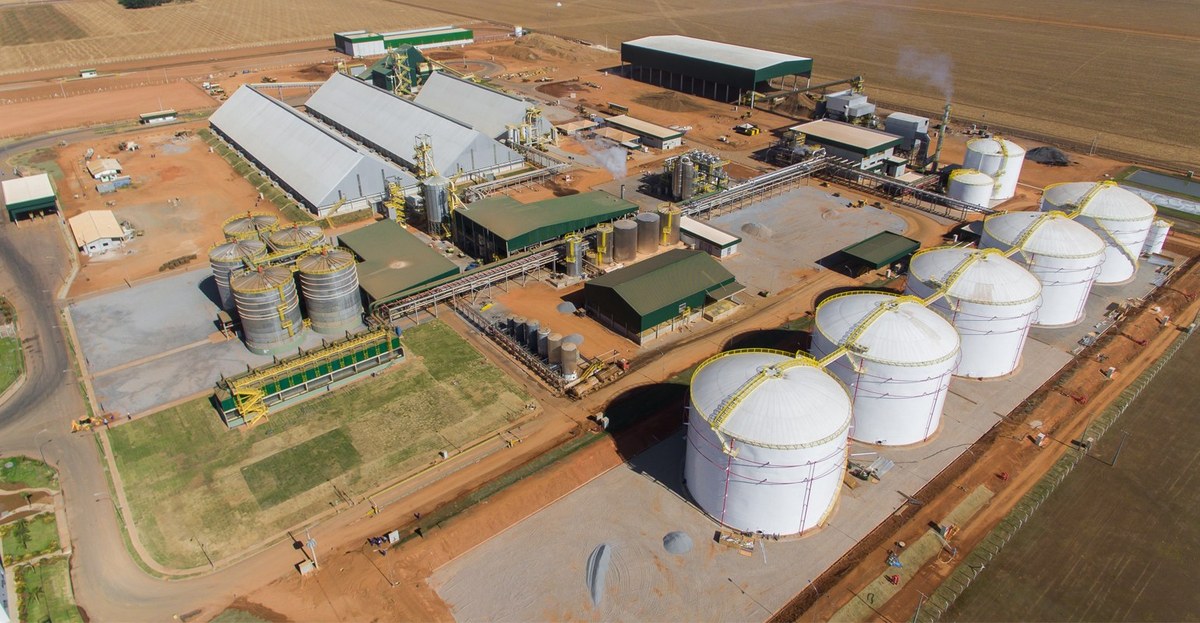
“We had a paradigm that corn only produced a second crop for soybeans. Paraná is the second-largest corn producer in Brazil, we have an abundance of raw material,” said Carlos Eduardo Hammerschmidt, vice-president of Grupo Potencial. The consolidated result is impressive: the total supply of cereal ethanol is expected to rise from 8.2 billion liters in the 2024/25 harvest to 12.1 billion in 2026/27, an increase of nearly 50%.
Where interest rates still bite
Not everything is accelerating. The same survey points to 11 projects, about R$ 7 billion, that are waiting in line for better financing conditions. It is concrete proof that the cost of capital weighs, but it wasn’t enough to stop the main block. Additionally, the new plants still need to invest up to R$ 7 billion in biomass and energy cogeneration, an extra cost that also turns into revenue in the end.
Behind the long-term demand are the increase in ethanol blending in gasoline, the Future Fuel Law, which foresees a content of up to 35%, and the decarbonization credits from RenovaBio. Corn ethanol “was treated as a niche and is now a robust player in the market,” defines Guilherme Nolasco, president of the National Corn Ethanol Union. It already accounts for more than a quarter of all Brazilian ethanol, an unthinkable share a few years ago.
On the demand side, the wind is favorable. The mandatory ethanol blending in gasoline rose to 30%, and the immense Brazilian flex-fuel fleet ensures constant flow for the fuel. The co-products expand the reach: DDG supplies beef and dairy cattle right in the region where livestock is concentrated, and part of the production is already aimed at export. It’s an arrangement where the plant does not depend on a single revenue stream to balance the books, reducing risk in a historically volatile sector. This revenue diversification is precisely what gives investors the confidence to fund the project even with expensive credit, and explains why so many are betting on grain at a time of hostile interest rates.
If the plants in line are unlocked when interest rates drop, the R$ 23 billion figure becomes just the first chapter. The sector’s vision talks about R$ 40 billion over the decade, with the park jumping from 25 to more than 33 biorefineries. I confess that following this turnaround is like watching the country’s energy map being redrawn in the interior of the Midwest, away from the spotlight. The grain that was once just a secondary player to soybeans has become the protagonist of a billion-dollar race, and Brazil has gained a new fuel factory that operates year-round.
Will corn ethanol dethrone sugarcane as the main source of Brazilian biofuel?