






 Portuguese
  Spanish
 3 min of reading
  0 comments


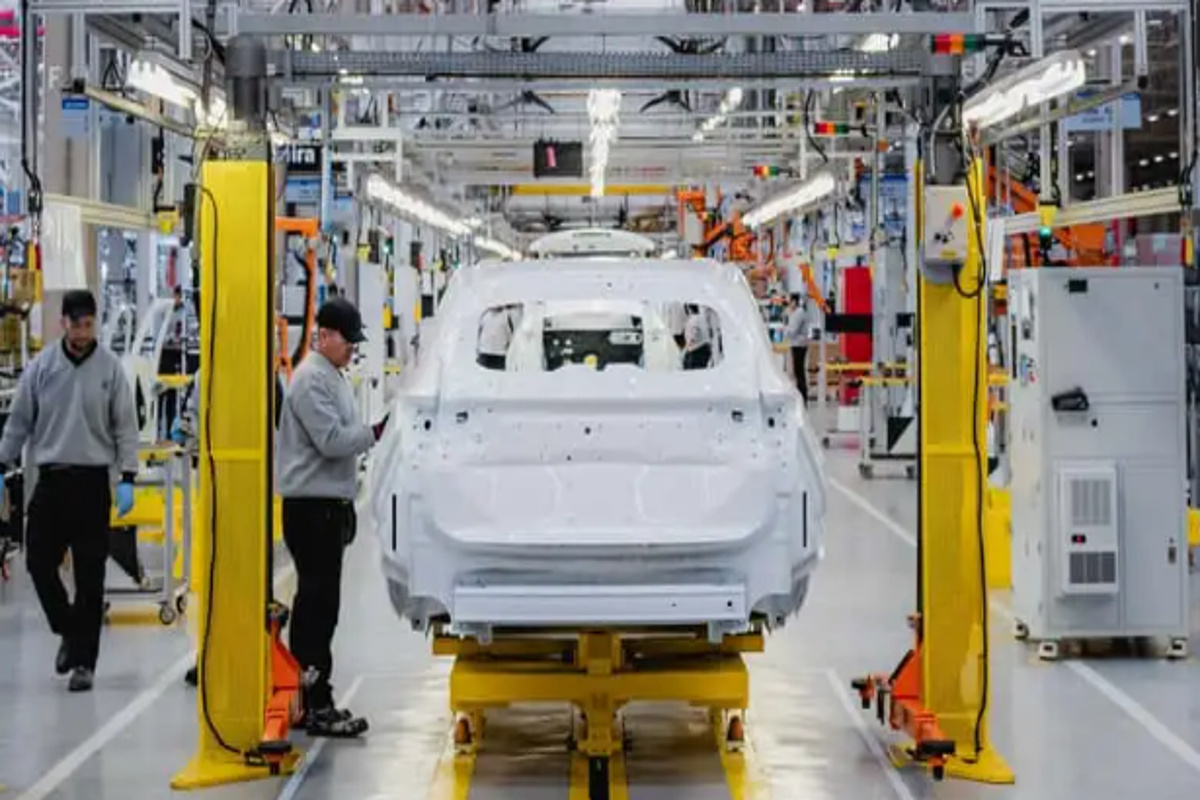
New Plant in Espírito Santo Expands Industrial Strategy of Chinese Manufacturer, Strengthens Exports and Consolidates Brazil as Long-Term Production Base
Recently, GWM confirmed the establishment of its second factory in Brazil, thus moving the national automotive sector.
This time, the manufacturer chose Aracruz, in Espírito Santo, and projected capacity of up to 200 thousand vehicles per year.
With this, the volume will be four times greater than that of the Iracemápolis (SP) unit, inaugurated in 2025.
Therefore, the company expands production scale and, at the same time, reinforces Brazil as a strategic base.
In addition, the company integrates the project into a plan of R$ 10 billion in investments by 2032.
So far, the company has already invested R$ 4 billion in the first phase, as officially reported.
As a result, the new plant is expected to generate 3 thousand direct jobs and up to 10 thousand indirect jobs when it reaches full capacity.
Thus, suppliers, logistics, and regional services are expected to grow.
The announcement took place at the Palácio Anchieta, in Vitória, during a governmental schedule aimed at attracting investments.
On that occasion, Governor Renato Casagrande attended alongside executives from the company, including Ricardo Bastos, director of Institutional Relations at GWM Brazil.
Thus, the event highlighted the economic relevance of the project for Espírito Santo.
-
Uber Faces Shareholder Scrutiny as Board Accused of Ignoring Safety, Compliance, and Harassment Warnings Amid Over 3,500 U.S. Lawsuits

-
Ferrari’s First Electric Car Divides Fans, Priced at $630,000, Amid Concerns Over Limited Editions; Brand Clarifies It’s Not Just for Future Perks
-
BYD Dolphin Mini: The Electric Car That Defies Depreciation, Losing Only 3.58% in a Year and Becoming the Best-Selling Retail Model Under $22,000

-
Electric Car JAC E-JS4 Loses $19,000 in Value in One Year, Leading Record Depreciation of Used Cars in Brazil Due to Expensive Battery and New Models


Complete Industrial Structure and Progress in Nationalization
Initially, GWM will structure the new unit as a full factory.
That is, the complex will include stamping, welding, painting, final assembly, and testing.
In addition, the project includes areas dedicated to the production of strategic components.
With this configuration, the company increases industrial verticalization and strengthens the national production chain.
At the same time, the manufacturer intends to gradually raise the level of nationalization.
Thus, regional suppliers will gradually gain space.
Additionally, Espírito Santo offers a strategic logistical position, with access to relevant ports, a railway network, and connection to the Southeast.
As a result, the factory may act as a export platform for Latin America and other markets.

Iracemápolis Drives Expansion
Earlier, in 2025, the Iracemápolis unit in the interior of São Paulo began national production.
At that moment, the company adopted a CKD/SKD regime and integrated manual welding, 18 robots, and four automatic painting stations.
Initially, the operation involved 18 national suppliers, such as Basf, Bosch, Continental, Dupont, and Goodyear.
Subsequently, the company expanded the number of evaluated partners.
Currently, the plant assembles models such as the Haval H6 Hybrid, the Poer Pickup, and the SUV H9.
Thus, these vehicles established a dealer network, logistics, and after-sales services.
Consequently, the operational learning reinforced the decision to build a more robust unit.
New Market Positioning
Since 2025, GWM has been evaluating alternatives to expand its production in the country.
Initially, the company considered purchasing existing facilities.
However, it opted to build a plant from scratch in Espírito Santo.
Today, the brand’s models start at prices close to or exceeding R$ 200 thousand, while the market averages around R$ 150 thousand.
Therefore, industrial expansion opens space for products in higher volume segments.
Among the possibilities are a smaller SUV than the Haval H6 and a compact pickup below the Poer.
In 2024, during a visit from the portal Motor1.com to China, executives indicated that the new generation of the Haval Jolion could occupy a similar range to a possible “Haval H4,” possibly with flex hybrid engine.
Long-Term Industrial Strategy
By expanding capacity to 200 thousand units per year, GWM demonstrates confidence in the Brazilian market.
Furthermore, the company strengthens its regional presence and increases industrial competitiveness.
Thus, Brazil begins to receive not only new brands but also complete industrial structures, with direct impacts on employment, technology, and wealth generation.
Does this expansion represent merely corporate growth or does it inaugurate a new phase for the Brazilian automotive industry?





-

1 person reacted to this.