






 Portuguese
  Spanish




Stephan Quandt and Susanne Klatten Control a $47 Billion Empire, but Avoid Fame at All Costs; the Origins of BMW’s Wealth Are Tied to a Dark Chapter in German History That Explains Generational Silence.
With a combined fortune exceeding $47 billion, siblings Stephan Quandt and Susanne Klatten rank among the richest people in Germany and the world. As major shareholders of BMW, they control one of the most iconic and valuable car brands on the planet. However, unlike other billionaires who celebrate their wealth on social media and at gala events, the heirs of the Bavarian giant maintain a nearly absolute family tradition of discretion, living away from the spotlight.
This deep anonymity, as detailed by sources from Global Knowledge, is not just a preference for a simpler lifestyle. It is directly rooted in a controversial past and a complex family history marked by collaboration with Adolf Hitler’s Nazi regime. The fortune that today sustains the BMW empire was forged in a dark period, and the aversion to public exposure has become a protective mechanism that spans generations, raising questions about legacy, responsibility, and the historical memory of one of Europe’s most powerful dynasties.
The Origins of the Empire and the Nazi Connection
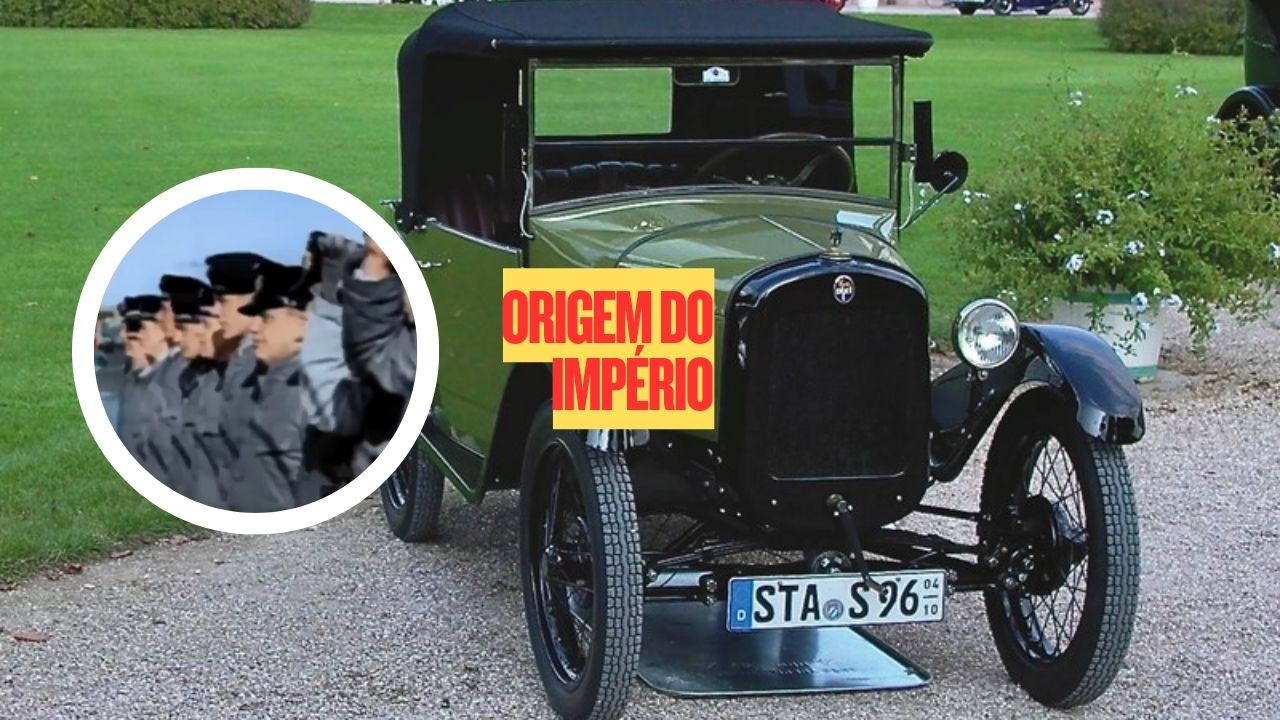
The Quandt family’s business saga began modestly in the 19th century. In 1883, Emil Quandt founded a textile factory that quickly thrived thanks to a contract to supply uniforms to the German imperial army. It was his son, Günther Quandt, who transformed the family business into an industrial powerhouse. During World War I, he became the main supplier of fabrics and leather for the armed forces, amassing significant capital that would be used to aggressively expand the empire in the following years, acquiring stakes in strategic sectors such as energy and batteries (with AFA, owner of Varta) and, crucially, in the automotive industry, with investments in Daimler-Benz and the then-nascent BMW.
-
Simple Aluminum Foil Trick Can Easily Remove Excess Ice from Freezer and Simplify Cleaning

-
College Dropout Turned Window Cleaner Builds $1 Million Cleaning Business with Subscription Model After 18 Years of Door-to-Door Work

-
North Korean Soldier Risks Crossing One of the World’s Most Dangerous Borders, Detained in South Korea

-
Stingless Bee Honey from Brazil Can Cost Up to $120 a Liter, Surprises with Flavors of Wood, Citrus, and Even Cheese


The family’s rise reached a new level with the arrival of the Nazi Party to power in 1933. Günther Quandt and his eldest son, Herbert, joined the party, forging close ties with the regime’s high echelons. The connection became even more intimate when Günther’s ex-wife, Magda, married Joseph Goebbels, Hitler’s Minister of Propaganda. This proximity secured Günther a privileged status, being appointed by the Führer himself as “Leader of Military Economy”. This position was not merely honorary; it placed the Quandt companies at the center of the German war effort, securing lucrative contracts and immeasurable influence.
War Profits and the Use of Forced Labor
During the Second World War, the Quandt conglomerate became a vital cog in the Nazi war machine. Their factories not only produced uniforms but also weapons, ammunition, and critically, batteries for U-boats and V-2 missiles that terrorized the Allies. However, the profits did not come solely from government contracts. A detailed investigation, corroborated by an article from The New York Times, revealed that the family directly benefited from the persecution of Jews, acquiring companies from Jewish owners at prices far below market value in a process known as “Aryanization”.
The darkest chapter of this story involves large-scale human exploitation. The Quandt factories employed forced labor from over 57,000 people, including prisoners of war and civilians from occupied countries, who were subjected to inhumane conditions to meet production targets. There are reports that Herbert Quandt, who would later save BMW, was personally involved in planning a concentration camp adjacent to one of his factories in Poland. These inhumane practices formed the basis upon which a significant portion of the family fortune was built, a fact that the heirs would attempt to keep hidden for decades.
The Post-War Era and the Bet That Saved BMW
With Germany’s defeat, one would expect that industrialists like Günther Quandt, who actively collaborated with the regime, would be severely punished. However, the reality was different. Günther was arrested in 1946 but absolved two years later, classified as a “Mitläufer” (fellow traveler or passive follower), an argument that minimized his ideological and criminal responsibility. Historians like David de Jong, author of “Nazi Billionaires”, suggest that the Allies, focused on strengthening the West German economy against the Soviet threat, were complicit in the acquittal of many industrialists to expedite the country’s reconstruction.
After Günther’s death in 1954, his children Herbert and Harald divided the empire. It was during this time that Herbert Quandt made the most important decision in the family’s history. By the late 1950s, BMW was on the brink of bankruptcy, with acquisition by competitor Daimler-Benz considered a certainty. Contrary to all advice, Herbert risked his personal fortune and increased his stake in the company to over 50%, taking control. A few years later, in 1962, the launch of the BMW 1500, a revolutionary sedan, completely reversed the automaker’s fortunes. Herbert’s bet not only saved BMW, but transformed it into the global luxury powerhouse it is today, multiplying the family’s wealth to astronomical levels.
The Silence of New Generations and the Public Revelation


After Herbert’s death in 1982, control of BMW passed to his third wife, Johanna, and their two children, Susanne Klatten and Stephan Quandt. They inherited not only the fortune but also the culture of silence. For years, they lived as practically anonymous figures in Germany, even as the largest shareholders of one of the country’s most famous companies. This veil of secrecy, however, was torn in 2007 with the release of the German documentary “The Silence of the Quandts” (Das Schweigen der Quandts), which publicly exposed in detail the family’s collaboration with the Nazi regime.
The initial reaction of the heirs was one of denial. In light of the fallout and public pressure, the family hired an independent historian to investigate their past. The study, completed years later, only confirmed the documentary’s revelations. Even so, a formal apology was never made. Only partial and reluctant acknowledgments emerged, while the family continues to honor their ancestors, maintaining Günther Quandt’s name at the headquarters of their foundation and sponsoring a journalism award named after Herbert Quandt. The fortune thrives, but the shadow of the past remains.
Does the story of a powerful family affect the image of a global brand like BMW? Is the discretion of the heirs a form of respect or an attempt to erase the past? We want to know your opinion. Leave your comment below and share your perspective on this complex legacy.






O herdeiros não podem ser culpados pelos atos dos pais.