






 Portuguese
  Spanish


Young Russian Becomes The Newest Pensioner In The Country After Taking Advantage Of An Exceptional Rule Created During Martial Law That Multiplied Service Time And Allowed The Granting Of Benefits In Record Time.
A 23-year-old Russian man has obtained retirement after only two years of formal activity.
Identified as Pavel Stepchenko, he accumulated the necessary time thanks to a rule applied in the context of martial law, which allowed for accelerated counting of service time.
In practice, each month in a conflict zone was counted as three, drastically shortening the path to benefits.
-
Woman with no tech background uses AI to develop app, reaches 50,000 users and goes viral with 2 million views by turning conversations into an emotional support tool.

-
From Construction Helper at 12 to Leading Real Estate Ventures Worth $210 Million After Delivering Over 2,000 Homes
-
‘Solar Cat’ Technology Arrives in Brazil, Raising Concerns Among Energy Distributors Over Suspected Cost-Cutting Method
-
Brazil offers $6.30 per kg bounty to control invasive pufferfish threatening local ecosystems with its lethal toxin and damage to fishing nets, with over 103 tons already captured.


How The Exceptional Rule Shortened The Path To Pension
The legislation applied in Eastern Ukraine, under Russian administration, provides for special counting of time for members of the internal affairs system.
In the context of military operations, there is multiplication of service time: what would normally take years can be achieved in months.
It was this combination that enabled Stepchenko’s early retirement with only 24 months of actual work.
According to reports published by local agencies and media, the young man began training with the Ministry of Internal Affairs at age 16.
After his schooling, he worked for about two years in Donetsk, within the internal affairs structure.
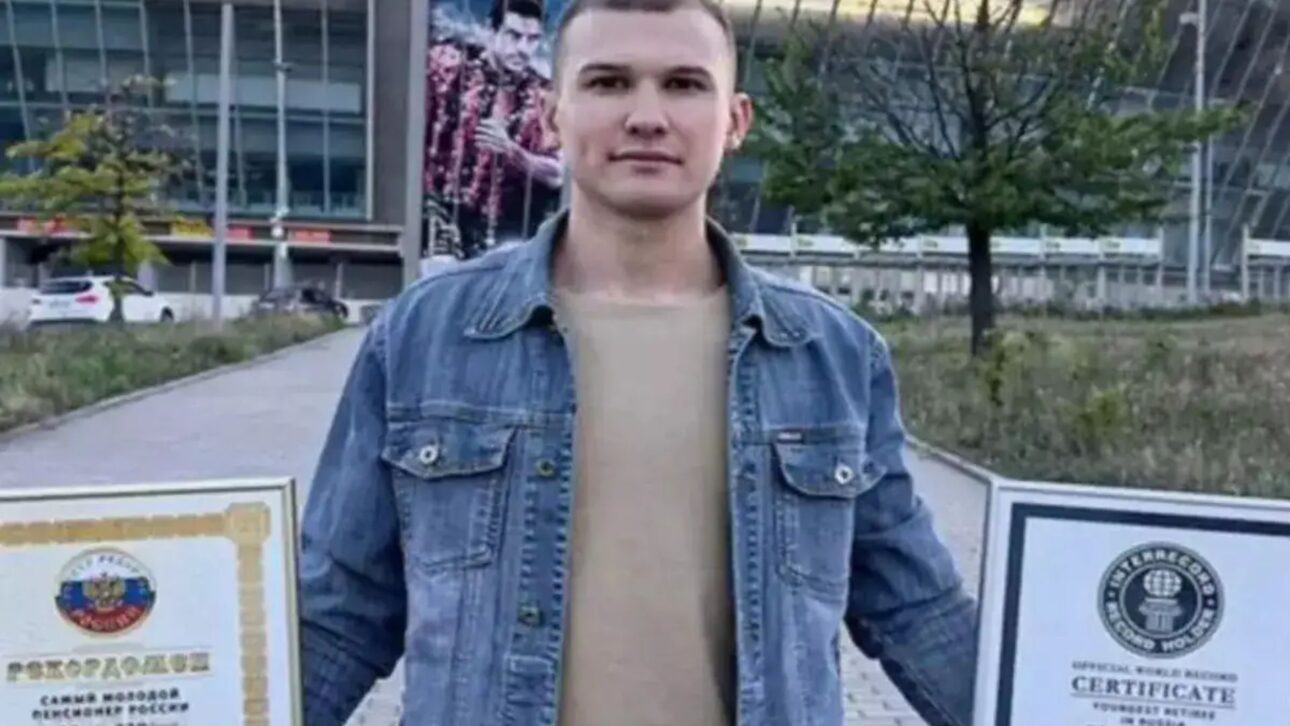
With the “one for three” rule valid in hostile areas, the computable time for the so-called longevity service pension grew rapidly, allowing the application to be submitted and accepted at just 23 years old.
Legal Basis And Beneficiaries Of The Special Rule
The differentiated counting of time is not a general rule of the Russian pension system; it is a special regime related to security functions and public service under specific conditions.
In periods of martial law and direct participation in tasks in conflict zones, the counting may be increased, reaching the ratio of one month equivalent to three months of service.
This method of calculation is applied for the benefit of “service time retirement” in certain careers, distinct from the age retirement paid to the general population.
According to current regulations, the common retirement age in Russia has increased in recent years, with the minimum reference age now being 65 years for men and 60 for women, with transitions and exceptions provided for specific categories.
Stepchenko’s case does not change these ages; he falls under a sectorial pension for service time under extraordinary rules, established for specific moments and locations.
Public Recognition And Repercussion Of The Case
Stepchenko’s achievement gained international visibility and was publicly recognized by entities that record unusual milestones.
According to the disclosed record, he was identified as the youngest pensioner in Russia, at 23 years and 339 days on the date the benefit was granted.
The recognition mentioned was conducted by Interrecord, an agency that catalogs records in post-Soviet countries.
This categorization reinforces the exceptional nature of the episode without altering the technical nature of the benefit: it is an accelerated service time pension due to a war regulation, not an age-based pension.
Impact On Other Workers
Even though it draws attention, the case does not create an automatic precedent for the general population.
The rule does not extend to workers outside the eligible careers or to regions without martial law status.
For the majority of citizens, the age and contribution requirements for ordinary retirement still apply.
In practice, only those who work in specific State functions and meet eligibility requirements can benefit from the accelerated counting.
Even in these cases, access depends on formal proof of activity under the conditions provided by the regulation, as well as the administrative process for recognition of the right.
International Comparisons And Risk Regimes
Pension systems around the world provide for differentiated counts for high-risk professions or in unhealthy conditions.
In some European countries, police officers, military personnel, and miners have special time rules for pension purposes.
In others, there are retention bonuses or hybrid retirements that combine contributions and age with different weights.
The diversity of models shows that State careers and conflict contexts are often treated with exceptions, although the formulas vary widely.
The Russian case draws attention due to the magnitude of the multiplication of time under martial law.
While many regulations apply additions of 20% to 40% for risky activities, the ratio of “one month for three” represents an uncommon shortcut.
The design, however, is restricted to a wartime reality and to specific functions, which limits its replication in civil contexts.
What Changes In The Life Of Pavel Stepchenko
Local reports indicate that Stepchenko does not intend to step away completely from the job market.
With the pension guaranteed under the rules of his regime, he expressed intent to continue studying and engage in private activities like physical training.
The existence of continuous income from service time does not prevent new occupations, as long as they are compatible with the legislation applicable to the benefit.
For public accounts, isolated cases like this have marginal impact.
The aggregated cost depends on the number of beneficiaries falling under the same rule, the duration of the conflict, and the remuneration profile of each career.
In post-conflict scenarios, it is common for exceptional rules to be reviewed or repealed, returning to the usual pension formulas.
Debate On Pension Flexibility In Times Of War
Retirement at 23 sparked discussions about equity between regimes.
On one side, the argument for enhanced protections for those who work in extreme risk and in regions under martial law.
On the other, the caution against distortions that may arise when emergency rules prolong and create misaligned incentives.
Experts emphasize that decisions like these require a balance between recognition of service rendered and actuarial sustainability of the systems.
While Russia maintains higher minimum ages for ordinary retirement, the coexistence of special regimes for public safety and defense is not rare internationally.
The uniqueness here lies in the rapidity of counting in a war scenario, which allowed a civil servant to reach an unprecedented milestone still in youth.
Finally, Stepchenko’s story highlights a central point in the pension debate: to what extent should exceptional rules, created for critical moments, shorten the required service time for permanent benefits?




Bora pra Ucrânia, Rússia, dar uns tiros soltar umas bombas e se aposentar com 2 anos de contribuição… 🗣️
A conta mão fecha. O cara não tinha nem 24 anos. Pra aposentar com tempo miniko, teria que ter 65 anos em sotuação normal, o que daria, dos 25 asos 65 anos, 40 anos de servico.
Como cada mês conta três, ele teria que ter trabalhado cerca de 13 anos e 4 meses.
Como ele se aposentou aos QUASE 24 anos, para ter 13 anos e 4 meses ele teria que ter começado a trabalhar aos 10 anos e 1 mes de idade em local de conflito. A menos que ele tenha trabalhado em outras regiões de guerra, só a guerra da Ucrania e Russia não daria tempo, pois ali tem cerca de 4 anos que contariam 12 anos para aposentar.
Ele se aposentou por tempo de serviço. Não ficou explícito no texto qual o tempo mínimo de contribuição, mas, concordo que a conta não fecha. Ele trabalhou só 2 anos em regime de lei marcial, o que daria 6 anos. Com mais 5, seriam 11. Ficam faltando 4, pela nossa lei. Não sei como é a deles.
Não sei como é por lá, mas aqui no Brasil, se não me engano, a carreira militar por si só já tem um tempo menor de contribuição. Os militares se aposentam bem mais cedo, geralmente com 30 anos de serviço.
Henrique, militar das Forças Armadas do Brasil vai para a reserva após 35 anos de serviço, não com 30 anos. O regime previdenciário do militar é diferente de CLT: militar contribui para Pensão Militar, não paga INSS. E, na reserva, o militar continua sendo descontado a Pensão Militar.
A carreira de Stepchenko cabe em uma linha. Ele se matriculou em uma escola do Ministério de Assuntos Internos da Rússia, aos 16 anos. Após cinco anos, começou a trabalhar na divisão territorial do sistema de assuntos internos. Foram dois anos de trabalho até se aposentar.
1 vale 3 pela profissão, em guerra também 1 vale 3, ou seja 1 mês vale 9, é acumulativo, e na matéria diz que ele está quase com 24 dando uns meses a mais para o calculo, ai tem que ver a regra de tempo de trabalho já que pela profissão não existe idade mínima.
Trata-se de uma pensão. Para obtenção de pensão militar na Rússia é necessário cumprir pelo menos 20 anos de serviço. A matéria fala que ele iniciou a formação ligada à área aos 16, embora tenha atuado em campo somente mais tarde (os 24 meses a que se referem). Com quase 23 anos, ele já teria cumprido quase 7 anos, que, multiplicados por 3 (1 mês equivalente a 3) passa dos 20 anos exigidos por lei para obtenção do benefício.
Esse é de família amiga do rei.
Vai lá fio viver no meio de uma guerra!
Lava sua boca com sabão se vc nunca ariscou sua vida ou viu a morte cara a cara.