Portuguese
  Spanish


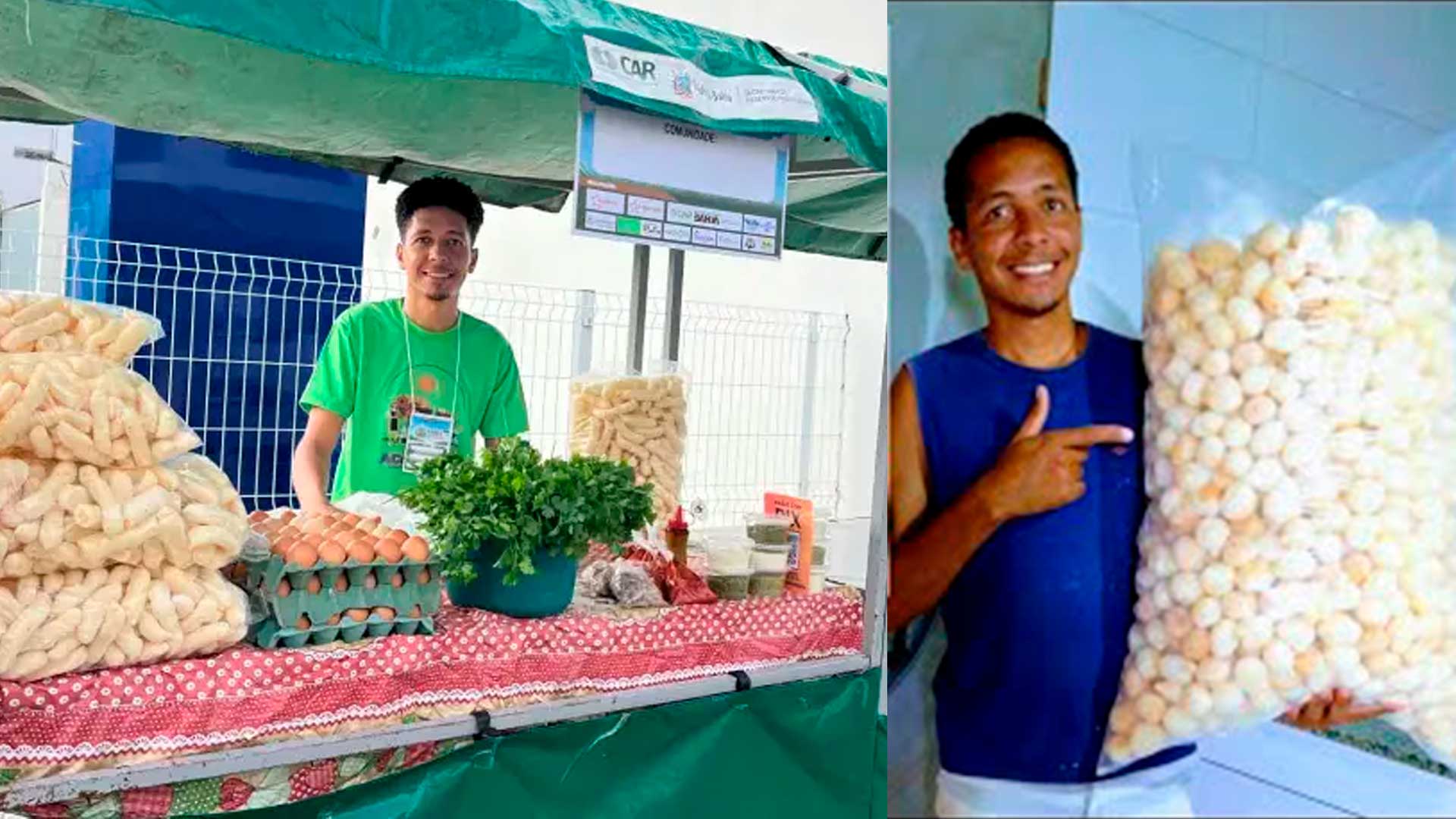

After returning from São Paulo to buy a farm in Cândido Sales, Sílvio de Jesus ventured into chicken farming, saw the plan fail, and found a way to restart in the lack of fresh bread in the rural community. Today, the artisanal cookies support the family, the poultry farming became a complementary income, and the simple routine of the property already gathers more than 100 thousand followers on YouTube.
The rural producer Sílvio de Jesus left São Paulo after three and a half years of work with a direct goal, to buy a small farm in the rural area of Cândido Sales, in the southwest of Bahia, and live off the land. The first plan was to raise chickens, but the loss of almost the entire flock changed the family’s path.
According to the Sebrae News Agency of Bahia, Sílvio invested practically all his savings in the barn and the purchase of 50 chicks. The idea was to turn poultry farming into a livelihood, but the difficulties at the start of production forced the producer to look for another source of income within the community itself.
The turnaround came from a basic need. The property is about 22 kilometers from the city, in a region where residents bought bread for several days because they could not go to the urban market frequently. Sílvio noticed the gap, started producing artisanal bread and then expanded sales to doughnuts, cakes, and cookies.
-
Japanese Botanist Akira Miyawaki Plants 30,000 Trees on a Tennis Court-Sized Plot, Intentionally Sacrificing Many to Accelerate Forest Growth; Miyawaki Method Has Spread Over 40 Million Trees Across 15 Countries

-
Couple Converts Retired U.S. Navy Research Barge into Off-Grid Floating Home on Idaho Lake with DIY 3-Stage Water Filtration System Using UV Light
-
Brazilian Military Police Officer Turns Family Farm into Internationally Certified Guava Producer, Eyes Exports to UK, Portugal, and Canada After Cooperative Boosts Sales by 580%

-
Man Builds Entire Treehouse in 21 Days Without Spending a Cent, Using Free Wood Collected from the Forest, and Creates a Structure That Slowly Rotates Around Its Own Trunk



Today, the artisanal cookies are the family’s main product. The chicken farming continues on the property but has ceased to be the central activity and has become a secondary income.
Chicken farming was the plan, but the loss revealed another market in the rural community
Sílvio returned to Bahia with limited funds and a common expectation among small producers: to turn the land into a business. He built the barn, bought the chicks, and started the farming believing that selling the birds would sustain the property.
The problem arose before the project could scale. The loss of practically the entire flock hit the family’s finances and confidence. For someone who had invested their savings in the first batch, the loss was not only financial but also the interruption of the plan that motivated the life change.
The solution did not come from an expensive course or a high investment. It came from observing the local routine. Since the community was far from the city, fresh bread did not reach the tables of many residents every day.
It was in this gap between distance, need, and recurring consumption that Sílvio found an opportunity. He began producing bread in the rural area itself, selling to neighbors and families who already had demand but lacked easy access.
Bread opened the door, but the artisanal cookie became the family’s flagship


The production started small, as an alternative to generate money after the failure with poultry. First came the breads. Then, the family’s kitchen began delivering pastries, cakes, and cookies.
Over time, the cookie began to sell more and became the core of the business. The product had practical advantages for the rural reality: longer shelf life than bread, ease of transport, and acceptance at breakfast and afternoon snacks.
This point helps explain the change in direction. In remote communities, foods with a slightly longer shelf life can have more commercial space, especially when travel to the city depends on time, fuel, and availability.
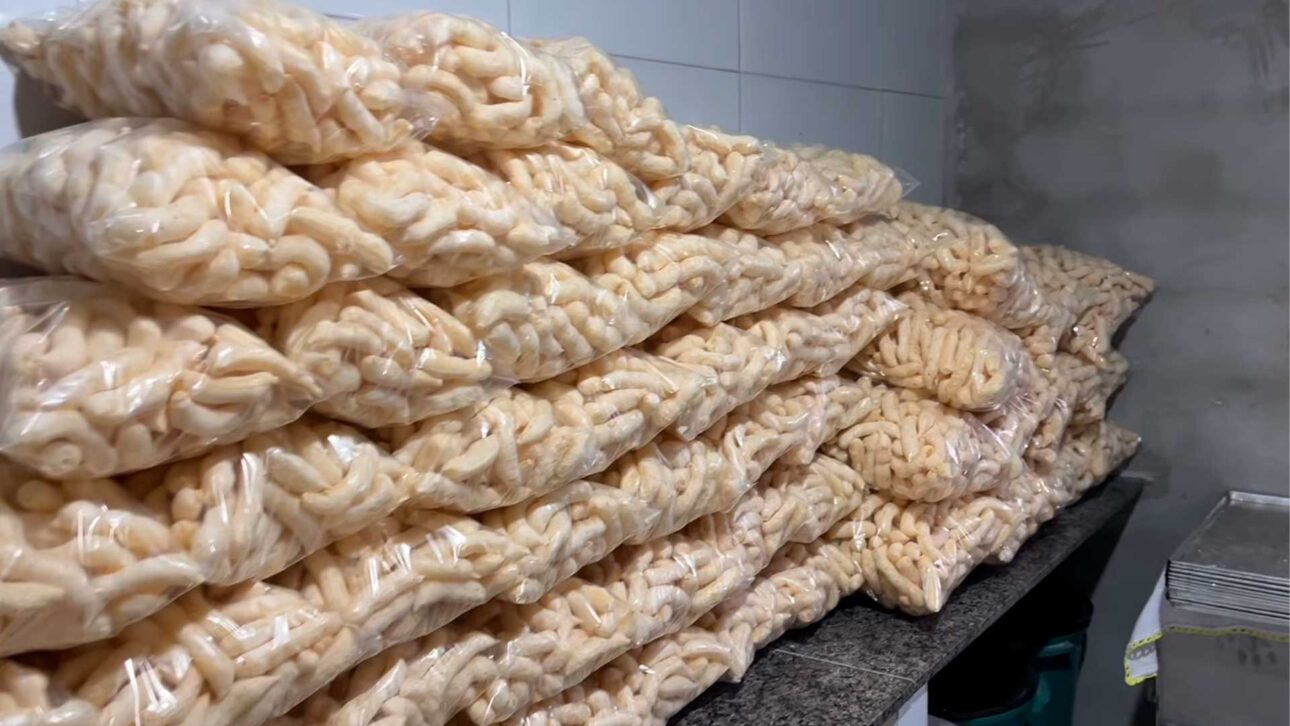
The income from the cookies allowed the family to reinvest in the property. Poultry farming did not disappear but lost its role as the main economic bet. In practice, Sílvio moved from a model dependent on a vulnerable livestock to an artisanal production with more consistent sales.
The story gained strength because the internet saw the routine before seeing the product
As the family’s business grew, Sílvio began recording life in the countryside. The initial goal was not to create a commercial showcase, but to show the property’s routine, the animals, the artisanal production, and the simple way of living in the countryside.
The audience’s response changed the reach of the story. The channel Silvio de Jesus Aqui na Roça began to gather more than 100 thousand followers on YouTube, in addition to about 11 thousand followers on Instagram, according to the data reported in the original article.
The content helped bring consumers, producers, and territory closer. For those following from afar, the videos show a routine that mixes work, homemade food, animal husbandry, and family life. For the business, this exposure reinforces trust in the product and puts a face to the production.
The internet also brought relationships beyond the standard of a common sale. Sílvio reports that some followers spent days at his home, bringing the audience closer to the family and the property. This bond explains why the story circulates beyond the product sold.

Cândido Sales helps to understand why small rural businesses depend on access and organization
Cândido Sales has 25,247 inhabitants in the 2022 Census and an estimated population of 26,469 people in 2025, according to IBGE. The municipality covers an area of 1,169.814 km², which helps to gauge the weight of internal distances for those who live and work outside the urban center.
In this type of scenario, small rural businesses face two barriers at the same time. The first is to produce regularly. The second is to get the product to the consumer, whether through direct sales, fairs, orders, social networks, or local partnerships.
Silvio’s journey shows a practical response to this challenge. Instead of relying solely on trips to the city, he created supply within his own community. Then, he used the internet to expand the reach of the routine and strengthen trust around the production.
This movement does not replace infrastructure, technical assistance, or marketing channels. But it reduces dependence on a single product and gives the producer a greater chance to adjust the business when the first bet fails.
Agrocultural Fair brought producers, buyers, and institutions closer in Cândido Sales
Sílvio was among the participants of the Agrocultural Fair of Cândido Sales, held on June 27 and 28. The event brought together family farmers, entrepreneurs, artisans, and partner institutions to stimulate commercialization and the exchange of experiences in the municipality.
The fair serves as a showcase for businesses that often start at home, in the kitchen, in the backyard, or in small production areas. For the rural producer, selling at a local event reduces the distance between the maker and the buyer.
It is also an opportunity to test products, listen to customers, and create contacts with other farmers. In Sílvio’s case, attending the fair reinforces an important stage of the turnaround: the business emerged from the community’s need and began to circulate in an organized local economy environment.
The program included participation from Sebrae in a lecture focused on entrepreneurship in the field, associativism, and cooperativism. For small producers, this type of guidance can help in forming groups, improving sales, and accessing new markets.
Family farming still supports an important part of food production in Brazil
Sílvio’s story fits into a larger picture of Brazilian family farming. Data from the 2017 Agricultural Census indicates that this segment represented 77% of the country’s agricultural establishments, although it occupied only 23% of the total agricultural area.
The same survey showed the weight of family farming in common foods on Brazilian tables. The segment accounted for 80% of the production value of cassava, 69% of pineapple, 42% of beans, and 48% of the production value of coffee and bananas.
These numbers help explain why stories like that of Cândido Sales are not just individual cases of overcoming. They show how small producers seek income in daily consumption products, often with simple structures and family labor.
In Sílvio’s case, the family appears as the foundation of the business. Mother, sister, and brother participated in building the activity, something common in properties where production, sales, cooking, and animal care mix in the same routine.
From the loss with 50 chicks to the cookie that pays the bills
The main change in Sílvio’s trajectory was not abandoning the farm. It was changing the product when the first plan stopped working. The chicken farming continued, but without solely carrying the property’s income.
The artisanal cookie filled this space because it solved a real problem in the neighborhood, fit into the family’s structure, and gained visibility with videos of the rural routine. The story involves loss, adaptation, and daily work, without a ready-made formula.
For small producers, the case leaves a concrete lesson: looking at local demand can be as decisive as investing in livestock or planting. In the field, the opportunity is not always in the most planned product, but in the one that is missing from the table of those who live nearby.
What do you think of Sílvio’s decision to switch the main focus from chicken farming to the production of bread and cookies? Leave your comment and tell us if you know other stories of rural producers who changed paths to maintain the family’s income.