Portuguese
  Spanish


Ambitious Project Reinforces China’s Technological Leadership and Raises Alert on New Global Balance in Nuclear Fusion
Recent satellite images have revealed a massive project underway in China. It is a laser nuclear fusion facility, located near the city of Mianyang, in the southwest of the country.
The construction is being closely monitored by U.S. intelligence and is generating discussions about its potential implications for the energy sector and the international geopolitical landscape.
Nuclear Fusion With Civilian and Military Potential
The structure, identified as “Laser Fusion Major Device Laboratory”, has been analyzed by scientists from CNA Corp.
-
Venice Deploys 78 Massive Steel Gates to Shield City from Extreme Adriatic Tides

-
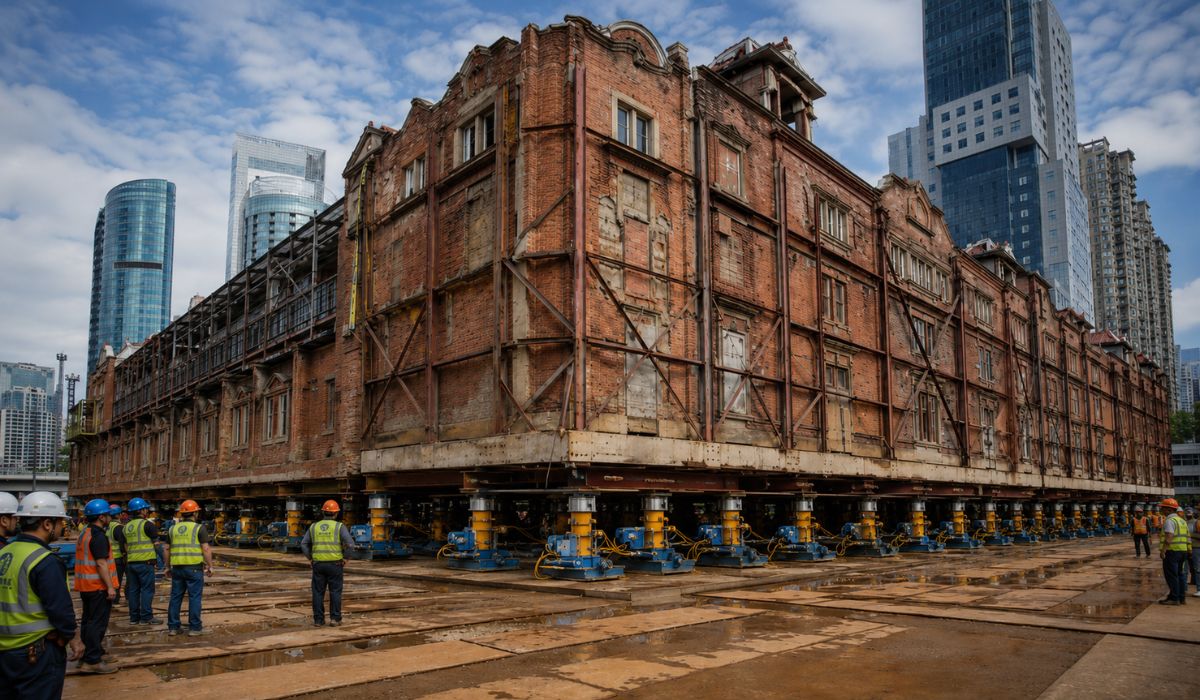
China Uses 432 Robots to Move a 7,500-Ton Historic Building in Shanghai, Preserving Architecture While Creating Space for Underground Center
-
World Cup Ball Chip Uses Technology to Detect Invisible Touches, Confirms Offside, Secures Portugal’s Victory Over Croatia

-
36-Meter Hydrogen-Powered Superyacht Arrives in Brazil to Debut German Engines and Showcase Future of Clean Navigation



The images reveal an X-shaped arrangement, with four large arms that are expected to contain high-power laser chambers. All converge into a central chamber, where the fusion experiment takes place.
The main objective of the Chinese laboratory is to achieve nuclear fusion through the concentration of laser energy on hydrogen isotopes.
Nuclear fusion is considered a clean and virtually inexhaustible source of energy, as it uses hydrogen isotopes — the most abundant element in the universe — as fuel.
However, the size and complexity of the facility also suggest applications beyond the energy sector.
According to experts, experiments like this could be used to model and simulate nuclear explosions without the need for actual tests. This is possible under the rules of the Comprehensive Nuclear-Test-Ban Treaty (CTBT), signed by both China and the United States.
Alert on Armament Development
William Alberque, a nuclear policy expert at the Henry L. Stimson Center, states that centers with capabilities similar to the Chinese facility could “improve existing weapon designs and facilitate the development of new models without physical tests.”
Alberque’s statement reinforces the duality of the project: a laboratory with a scientific appearance could, in practice, also serve military purposes.
The scale of construction in China even exceeds that of the famous National Ignition Facility (NIF) in the United States, which was previously considered the largest in the world.
The size of the Chinese facility is interpreted as a clear demonstration of the country’s commitment to leading advancements in the field of nuclear fusion, both in terms of energy and national security.
Experts Call for Caution
Despite the concerns raised by analysts, there are more moderate voices. Siegfried Hecker, former director of the Los Alamos National Laboratory in the United States, assesses that these experiments are common among countries with a history of nuclear testing.
He notes that data obtained through laser fusion is useful for validating and maintaining existing arsenals, without a significant impact in terms of offensive advancements — especially for countries like China, which does not have as extensive a database as the U.S.
In conclusion, the construction of the “Laser Fusion Major Device Laboratory” represents an ambitious bet by China on cutting-edge science and technology. Although it raises concerns about its military use, there are no signs of an imminent threat.
The true impact of the project will only be known in time, as the results of the tests in Mianyang are revealed and assessed by experts.