





 Portuguese
  English
  Spanish
  2 min of reading
  1 comment


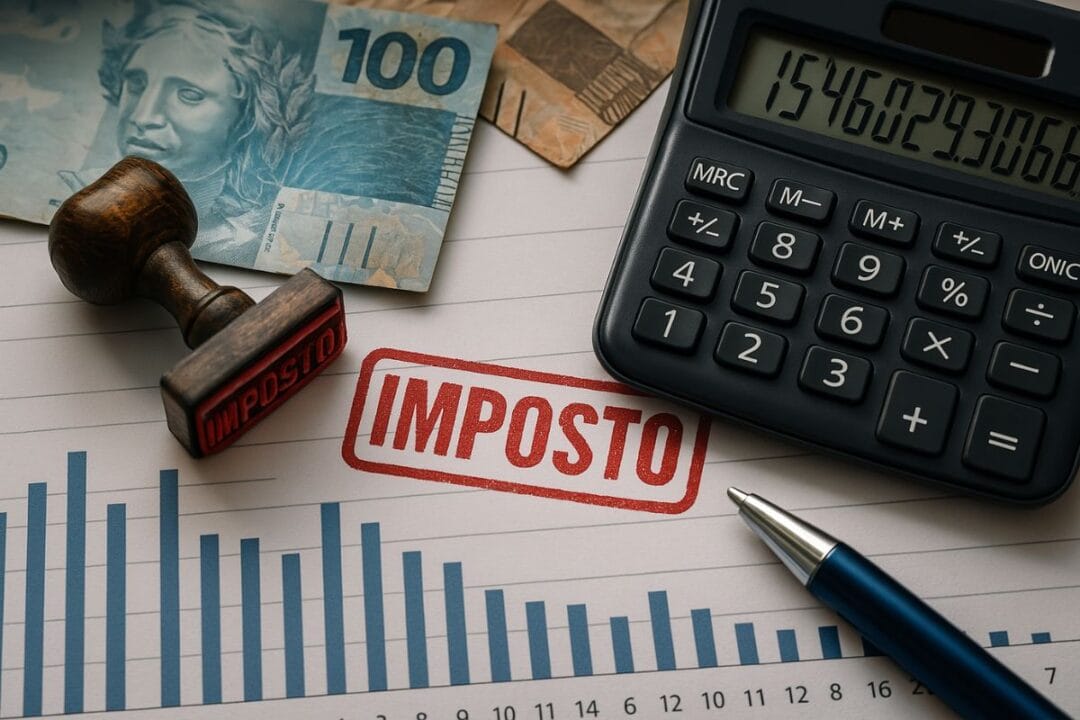


While Basic Services Stumble, The Astronomical Value Collected By The Federal Government Until April Sparks Debate On Tax Burden And Return Of Taxes To The Population.
In just four months of 2025, Brazil has already collected over R$ 1 trillion in taxes, according to updated data from the São Paulo Commercial Association (ACSP) at 8 PM last Friday (4). And the most impressive part: this number just keeps rising.
For those who think this is “just political talk,” the list of considered taxes is enough to make any taxpayer lose sleep. It includes everything: Income Tax (IR), IPI, ICMS, IOF, Cofins, FGTS, PIS/Pasep, Cide, CSLL, Social Security, fees and more fees. It’s an acronym soup that represents one of the heaviest tax burdens in the world.
And it doesn’t stop there: the average Brazilian had to work about 150 days in 2024 just to pay taxes — that’s more than 40% of the year!
-
Brazil and Morocco face off on the field this Saturday for the World Cup, but off the pitch, the two countries engage in $2.8 billion a year in agricultural trade; Brazilian sugar alone accounts for nearly 60% of everything the African country buys from here.

-
The tax on blouses is out, but ICMS remains: understand why international purchases can still be costly for consumers

-
Partnership between Brazil and the European Union targets chips, AI supercomputer, and cloud services, as the government seeks to strengthen digital sovereignty in areas considered strategic.
-
BYD will invest up to R$ 500 million in batteries in Brazil after the government auction and could generate at least 400 direct jobs.



São Paulo Leads The Tax Collection Podium
When it comes to collecting taxes, the state of São Paulo is the absolute champion, responsible for 37.3% of the total collected in Brazil. Rio de Janeiro ranks second, with 13.7%, followed by Minas Gerais, with 7%.
What Could Be Done With R$ 1 Trillion?
Get ready to be impressed — or indignant:
- If placed in a savings account, this amount would yield over R$ 204 million in interest per day;
- It would be possible to pay ten minimum wage salaries monthly for over 9 million years;
- You could buy 2.4 billion basic food baskets with this amount.
The Taxometer Does Not Forgive
The electronic panel that shows, in real time, how much Brazilians have paid in taxes can be seen by those passing through downtown São Paulo, but it’s also available online. The calculation is based on data from the Federal Revenue, National Treasury Secretariat, Caixa Econômica Federal, Federal Accounting Court (TCU), and IBGE.
And you, who have followed this reading until now, answer in the comments: do you feel that the taxes you pay come back in the form of quality public services? Does the math add up in your daily life?
Source: Revista Oeste








Se fosse menos impostos abriria mais postos de trabalho, mais famílias satisfeitas. E também teria que ter menos gastos desnecessários e menos regalias pra políticos e magistrados. Só assim o Brasil se tornaria uma grande nação. Mas o que temos em grande escala no Brasil Baronil é escândalo e corrupção, Vamos aprender a VOTAR EM QUEM PRESTA.