






 Portuguese
  Spanish
  5 min of reading
  0 comments


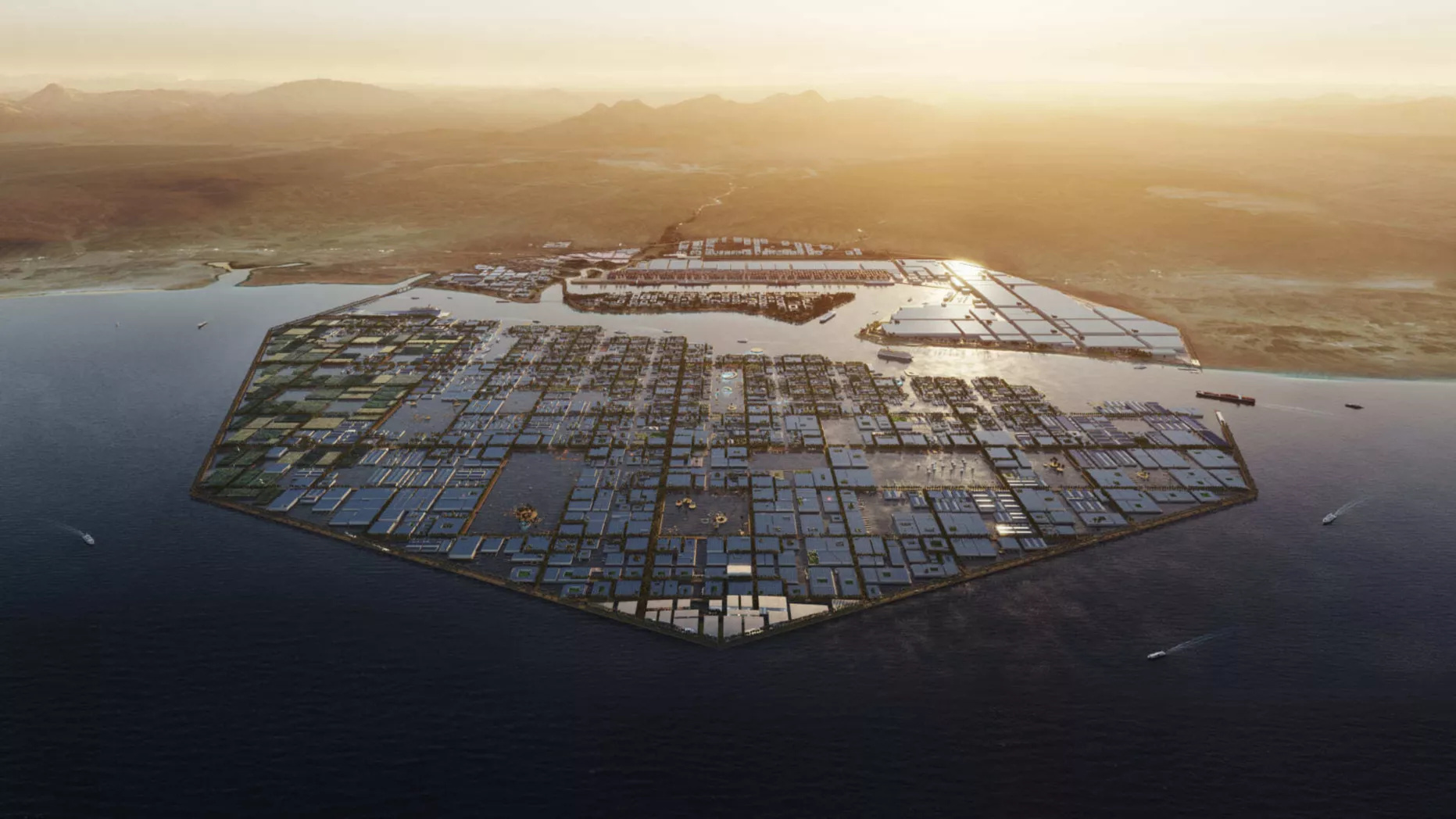
Saudi Arabia builds an US$8.4 billion green hydrogen mega-plant in Oxagon, powered by solar and wind energy.
In 2023, the NEOM Green Hydrogen Company advanced the construction of one of the most ambitious energy structures ever planned for industrial-scale green hydrogen production. Located in Oxagon, in the NEOM region, Saudi Arabia, the plant’s financial close was announced by NEOM on May 22, 2023, with a total investment of US$8.4 billion, an operation based on approximately 4 GW of renewable electricity, and a projected capacity to produce up to 600 tons of carbon-free hydrogen daily.
The project is impressive not only for its multi-billion dollar value but also for the physical scale of its infrastructure. According to the official technical page of the NEOM Green Hydrogen Company, the operation is expected to occupy over 300 km², gather more than 5.6 million solar panels with up to 2.2 GW of solar generation, and over 250 wind turbines capable of delivering 1.6 GW of renewable energy, forming an energy base dedicated to the production of green hydrogen and green ammonia for export.
The venture is treated by Saudi Arabia as part of a strategy to maintain energy relevance even in a global transition scenario. Instead of relying solely on fossil fuel exports, the country is trying to compete in an emerging clean fuel chain, using sun, wind, electrolysis, and industrial infrastructure in the desert to transform Oxagon into one of the largest **green hydrogen** factories on the planet.
-
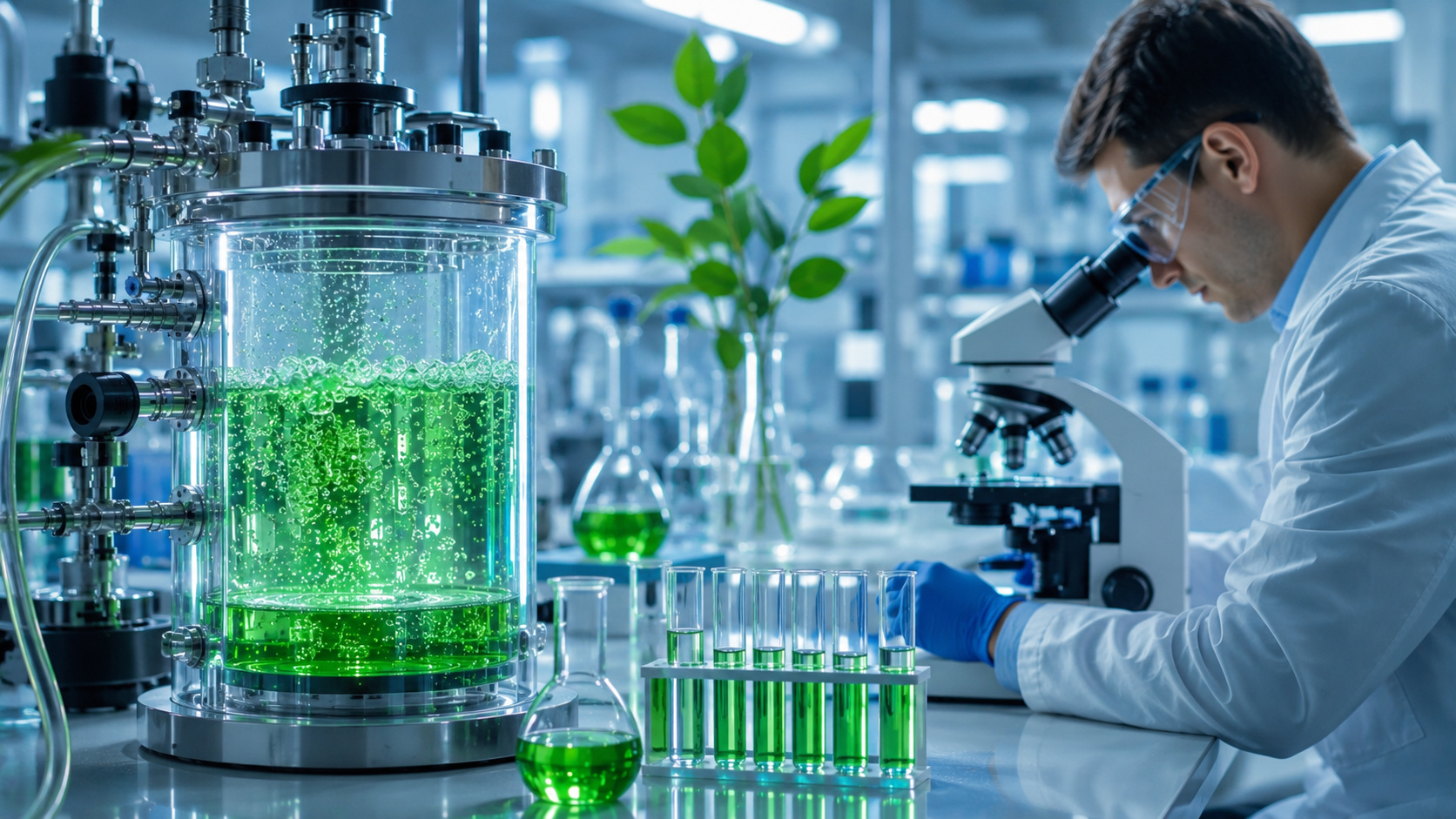
Brazilian scientists are simultaneously advancing two research projects on clean hydrogen and driving solutions that could transform the energy matrix, enhance industrial competitiveness, and accelerate large-scale emission reduction targets.

-
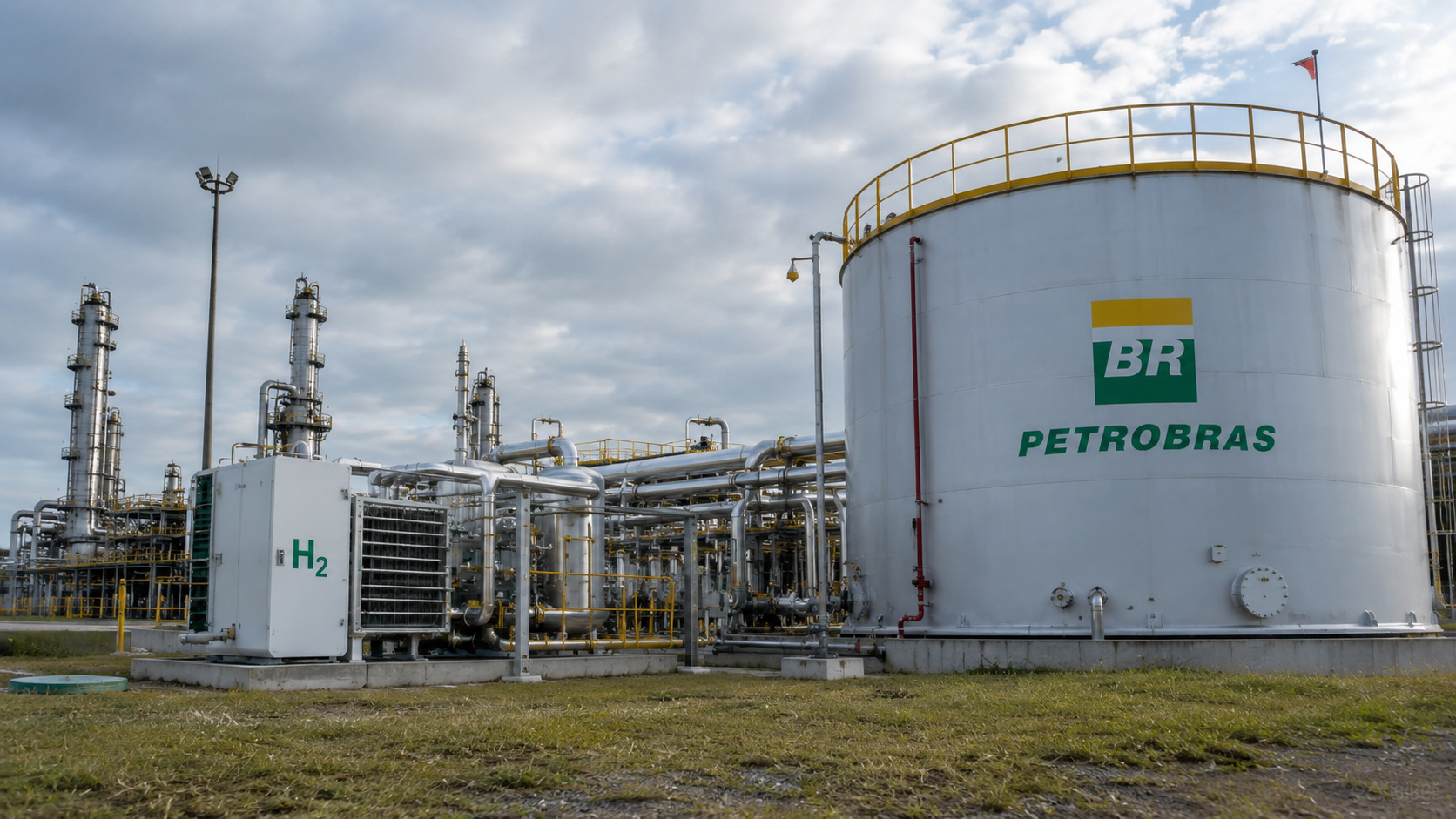
Advancement in renewable energy: A R$ 150 million project launched by Petrobras and Finep aims to create state-of-the-art electrolyzers for green hydrogen, strengthening national research and preparing Brazil to compete in a billion-dollar energy market.
-
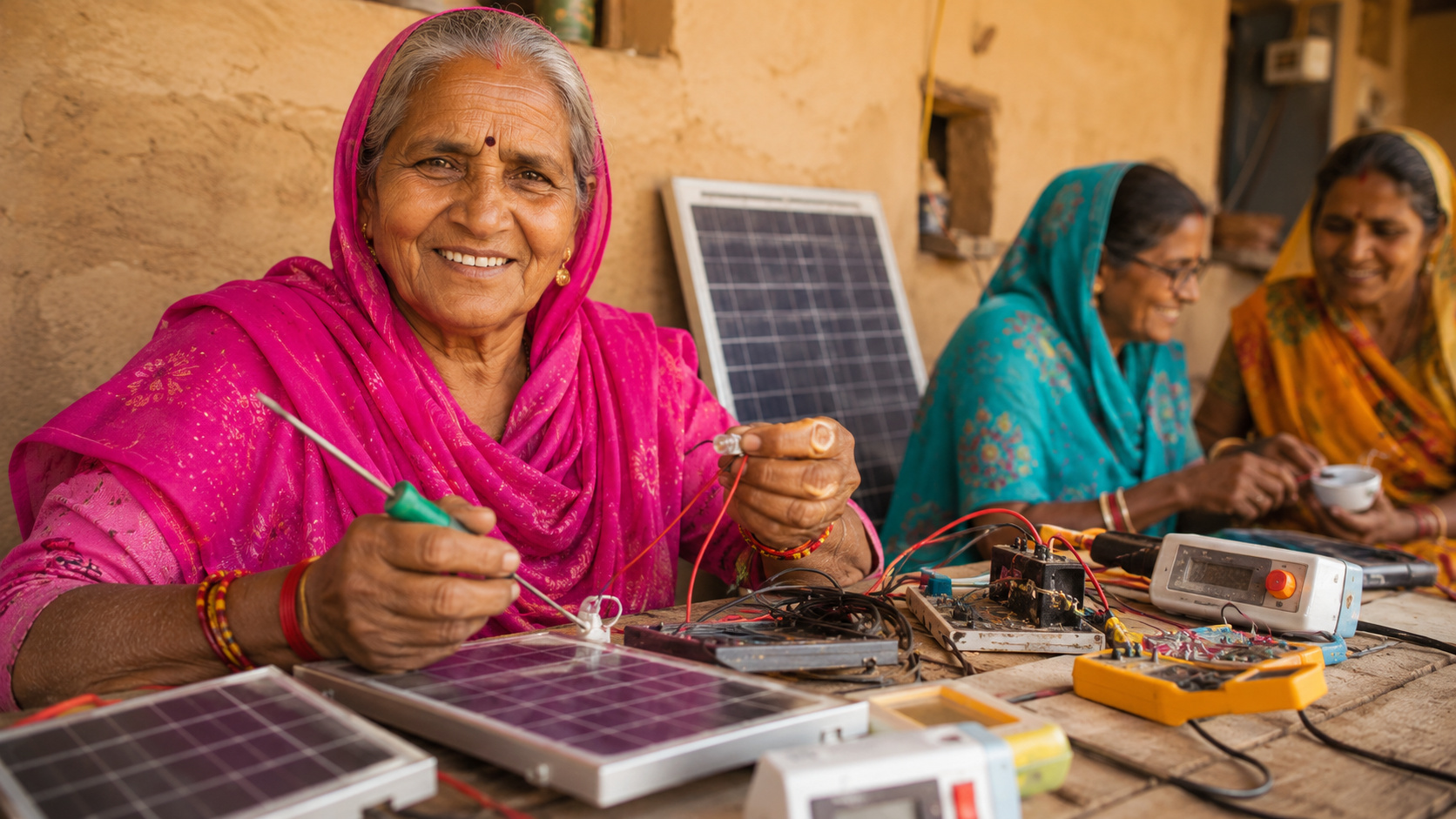
Illiterate or semi-literate grandmothers were trained to repair solar systems, open rural workshops, and light up homes that still depended on kerosene.
-
The world has bet on green hydrogen as the fuel of the future, but now faces the side effect: producing 1 kilogram requires about 9 liters of ultrapure water, and the largest projects on the planet are precisely in the driest regions of the Earth, where water is already scarce for people.

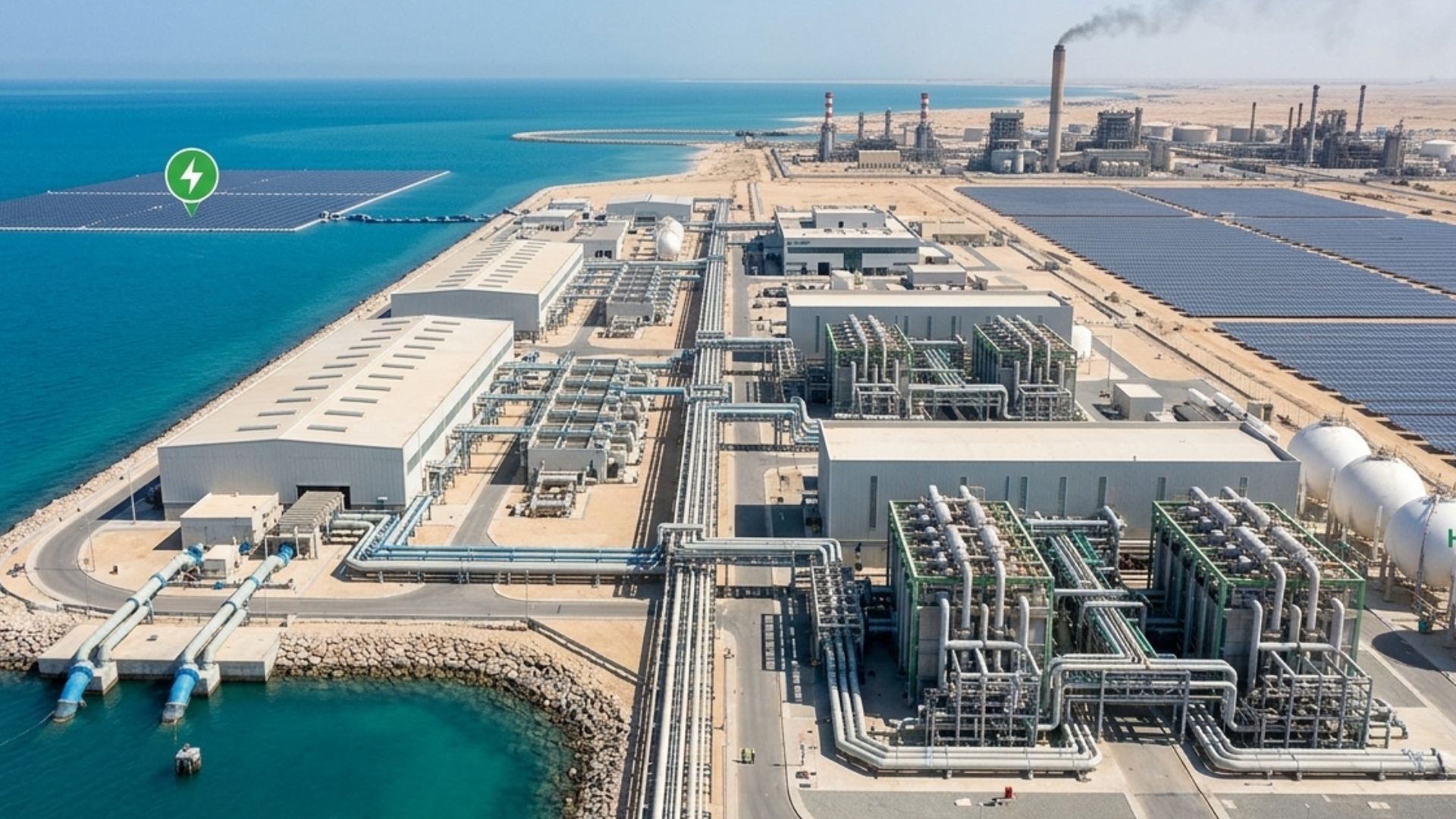
US$8.4 billion project is among the world’s largest for green hydrogen
The financial scale of the venture places Oxagon among the most ambitious energy projects today. According to the NEOM Green Hydrogen Company, **the project’s financial close reached approximately US$8.4 billion.**


The investment involves renewable infrastructure, electrolysis systems, industrial facilities, storage, transport, and export of hydrogen derivatives.
**The project is operated by a joint venture formed by Saudi ACWA Power, American Air Products, and NEOM itself.**
Over 5.6 million solar panels will power the mega-plant
The figures associated with energy supply are striking even by global industrial standards. According to the company, the system will utilize over 5.6 million solar panels and more than 250 wind turbines.

These structures will be responsible for generating approximately **4 GW of renewable electricity exclusively for green hydrogen production.**
**In practice, the Saudi desert is being converted into a gigantic clean electricity factory aimed at producing the energy fuel of the future.**
Green hydrogen is produced using water and renewable electricity
The plant’s operation depends on a process called electrolysis. **In this system, renewable electricity separates water molecules into hydrogen and oxygen.**
When the energy used comes from clean sources like solar or wind, the product is called green hydrogen.
Unlike traditional hydrogen produced from natural gas, the green model aims to drastically reduce carbon emissions associated with the process.
Production can reach 600 tons per day
According to data released by the company, the plant will have the capacity to produce up to 600 tons of green hydrogen daily. This volume is considered gigantic by current global industry standards.
A large part of the production will be converted into green ammonia to facilitate storage and international export. Ammonia functions as a more practical way to transport hydrogen on a large scale.
Oxagon is part of the futuristic megacity NEOM
The energy project is integrated into the construction of NEOM, a futuristic megacity announced by Saudi Arabia as a centerpiece of its Vision 2030 strategy.

Within this plan, Oxagon was conceived as an advanced industrial zone focused on technology, logistics, and clean energy.
The industrial city is located near the Red Sea and aims to combine automation, artificial intelligence, port infrastructure, and new-generation energy industry.
Historically, the Saudi economy was built on oil. Now, the country is trying to avoid losing global relevance in a scenario of energy transition.
Green hydrogen appears as one of Saudi Arabia’s main bets to maintain influence in the international energy market.
The logic is relatively clear:
- before, the country exported oil;
- now it tries to export clean fuel produced with abundant solar and wind energy in the desert.
Saudi desert has one of the best solar conditions on the planet
The project’s location was not chosen by chance. The region has very high solar radiation indices and vast desert areas available for the installation of renewable infrastructure.
Furthermore, parts of Saudi territory have good wind regimes, allowing solar generation to be complemented with wind energy. This creates ideal conditions for continuous production of renewable electricity.

The growth of green hydrogen is mainly linked to the difficulty of decarbonizing heavy industrial sectors.
Some activities have limitations for direct electrification, including:
- steelmaking;
- fertilizers;
- maritime transport;
- aviation;
- heavy chemical industries.
Hydrogen then appears as an alternative to replace fossil fuels in industrial processes that are difficult to electrify.
Project aims to export clean fuel to other countries
The Oxagon plant was conceived with a strong export focus. According to the company, the production of green ammonia will be mainly destined for international markets interested in reducing industrial emissions.
Europe and parts of Asia appear among potential future buyers. Saudi Arabia is trying to replicate in hydrogen a role similar to what it built for decades in oil: a global large-scale energy supplier.
The project is not just a solar or wind farm. It integrates:
- renewable generation;
- chemical production;
- industrial storage;
- port infrastructure;
- export logistics;
- electrolysis systems;
- energy distribution.
This transforms Oxagon into one of the largest industrial experiments of the new hydrogen economy.
Project scale shows how energy transition is entering the era of megastructures
For many years, renewable energy was mainly associated with isolated turbines or local solar farms.
Projects like Oxagon show another reality: countries are starting to build gigantic energy complexes focused on the international export of clean fuel.
In the Saudi case, the scale involves billions of dollars, millions of solar panels, and industrial infrastructure comparable to large petrochemical hubs.
Oxagon attempts to transform extreme desert heat into global fuel
Perhaps the most symbolic aspect of the project is precisely the transformation of the Saudi landscape. The same desert historically associated with oil is now being used to produce carbon-free fuel from sun, wind, and water.
Instead of oil wells, the new Saudi energy infrastructure relies on gigantic turbines, electrolysis, and solar panels.
Now, the main question is whether projects of this magnitude will be able to make green hydrogen economically competitive on a global scale before other countries accelerate their own race for next-generation clean fuels.





Be the first to react!