Portuguese
  Spanish


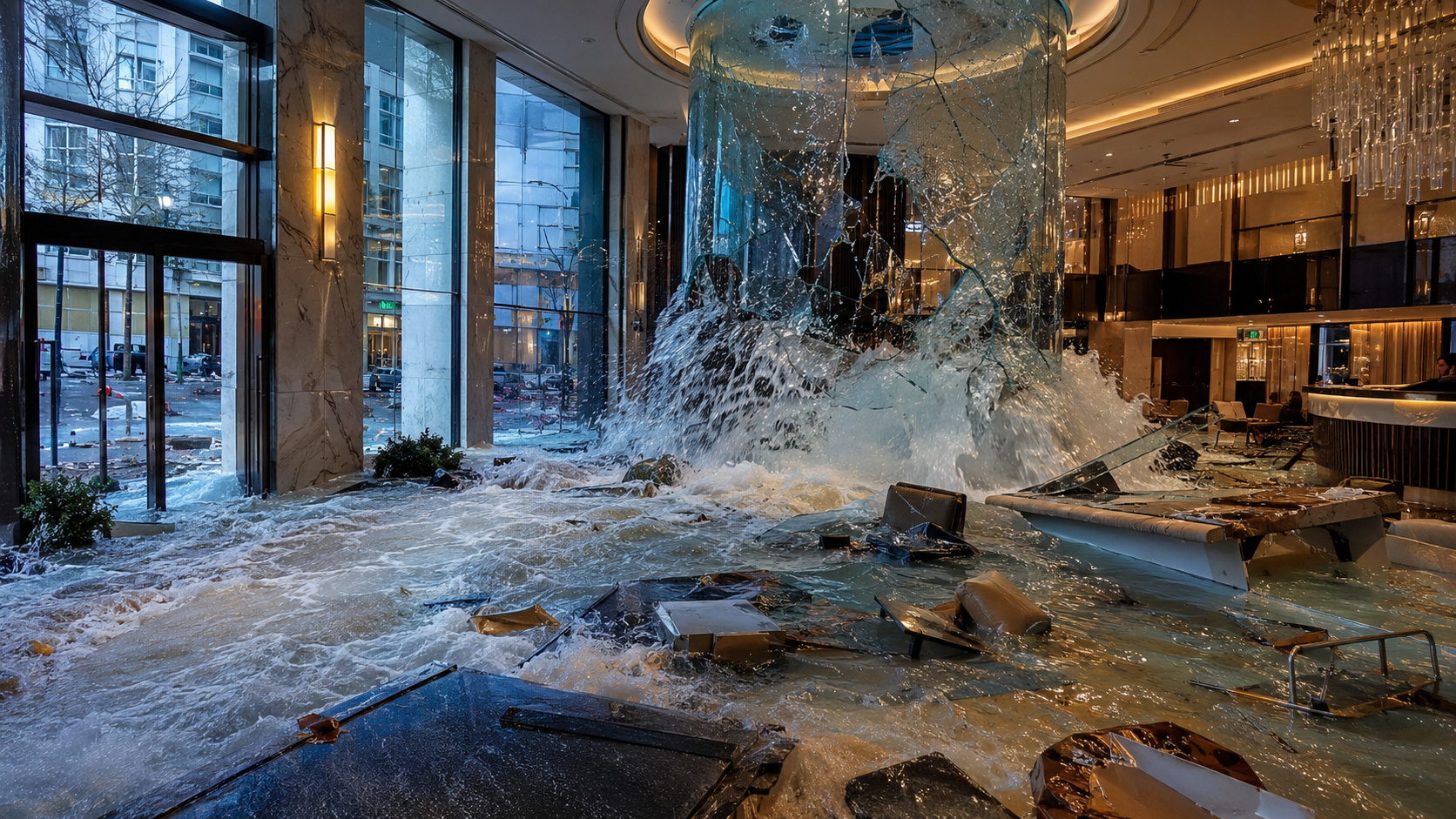

The case of the AquaDom and its giant tank in Berlin showed how a luxury attraction inside a Radisson hotel turned into a real disaster, with a million liters of water flooding the building, debris scattered across the lobby, affected stores, and an investigation closed without a definitive answer about the cause.
The giant cylindrical tank inside a Radisson hotel in Berlin burst in the early hours while guests were sleeping, releasing one million liters of water throughout the building.
The investigation was published by Associated Press, a news agency. The case involved the AquaDom, an enormous structure installed in the hotel lobby and designed to attract visitors.
The scene gained worldwide repercussion because it seemed improbable. A luxury attraction, designed to impress, turned into an internal flood with water, glass, acrylic, and debris scattered throughout the hotel and onto the street.
-
How to Prevent Brown Recluse Spider Bites: Common Hiding Spots and Free Tips to Reduce Risks

-
Natto: The Unusual Japanese Superfood Gaining Popularity on Social Media and Driving Record Exports
-
Brazilian Mayor Goes Undercover as Homeless for 24 Hours to Assess Public Services

-
15-Year-Old Entrepreneur Malu Lira Publishes 20 Children’s Books on Financial Education, Earns $500,000, and Expands Her Project to the Amazon Rainforest




Giant cylindrical tank in Berlin turned hotel lobby into a flood in the early hours
The AquaDom was located in the lobby of a Radisson hotel in Berlin and was one of the complex’s most striking structures. Its cylindrical shape and size made the installation a prominent feature for those passing through.


In December 2022, the structure burst during the early hours. The timing made the case even more impressive, as many guests were sleeping at the time of the accident.
The rupture released one million liters of water all at once. In a few moments, the hotel’s entrance area turned into an area engulfed by water and debris.
The episode was marked by the image of a lobby transformed into an internal ocean. What was once a symbol of luxury turned into a scene of destruction inside a building.
One million liters of water advanced through the building and reached the street
The volume of water inside the giant cylindrical tank in Berlin explains the extent of the damage. One million liters of water does not represent a common infiltration nor a small flood.
The water spread through the building and also reached the street. Along with it, pieces of the ruptured structure and materials hit by the force of the impact were dragged away.
The damage was not restricted to the lobby. The hotel suffered damage, stores in the complex were affected, and part of the local routine had to be interrupted.
The impact of the case lies in the contrast. A hotel designed to welcome people with comfort became the scene of an internal wave in the middle of the night.
Two people were injured, and the hotel faced enormous damage
The rupture left two people injured. The number shows that the accident could have been even more serious if it had occurred during a time of greater circulation in the lobby.
The early morning reduced the presence of people in the affected area. Even so, the force of the water and debris caused enough impact to cause injuries and extensive damage.
The complex suffered significant losses. The hotel remained closed for a long period, while internal areas and establishments connected to the building dealt with the effects of the destruction.
The collapse of the AquaDom did not only affect the appearance of the place. It impacted the hotel’s operation, the functioning of nearby stores, and the safety of an attraction that was part of the internal environment.
Cause of rupture remained without definitive conclusion by authorities
The cause of the rupture of the giant cylindrical tank inside a Radisson hotel in Berlin did not have a definitive conclusion by authorities. This point kept the case surrounded by doubts.
Associated Press, a news agency, detailed the central points of the topic and reported that the investigation was closed without a definitive explanation for the collapse.
The absence of a final answer increased public interest. A structure with one million liters of water burst inside a hotel, caused destruction, and still left open questions.
Without a confirmed cause, the case remains remembered for its visual impact, material damage, and uncertainty. The image of a luxury attraction turning into a real risk continues to be the strongest point of the story.
AquaDom ceased to exist and was replaced by another concept
After the accident, the structure did not return to its previous state. The space took another path and the AquaDom was replaced by another concept.
The decision shows that the rupture was not treated as a simple repair. The incident changed the way the area was used and ended the presence of that giant installation inside the hotel.

The case went viral because it brings together elements difficult to ignore. A well-known hotel, an enormous structure, one million liters of water, debris throughout the lobby and an investigation without a definitive cause.
The incident also reinforces a practical doubt. Grand attractions inside buildings can impress, but they also demand maximum attention when involving large volumes of water and people circulation.
The day a luxury attraction turned into a disaster inside a hotel
The rupture of the AquaDom entered the list of most unusual accidents involving hotels and large internal installations. The lobby, which should have been a safe and elegant area, turned into a scene of destruction.
The story remains strong because the facts are striking without exaggeration. There were one million liters of water spread throughout the building, two people injured, affected stores, and a cause without a definitive answer.
In the end, the case in Berlin became a warning about giant structures inside enclosed spaces. The spectacle that enchanted visitors transformed into damage, risk, and the memory of a rare disaster.
Do you think giant structures with such a large volume of water should be part of hotels and busy buildings, or would the possibility of a failure already be enough reason to rethink this type of project? Leave your opinion in the comments and share this story with those who enjoy real cases that seem like a movie script.