






 Portuguese
  Spanish
  5 min of reading
  0 comments


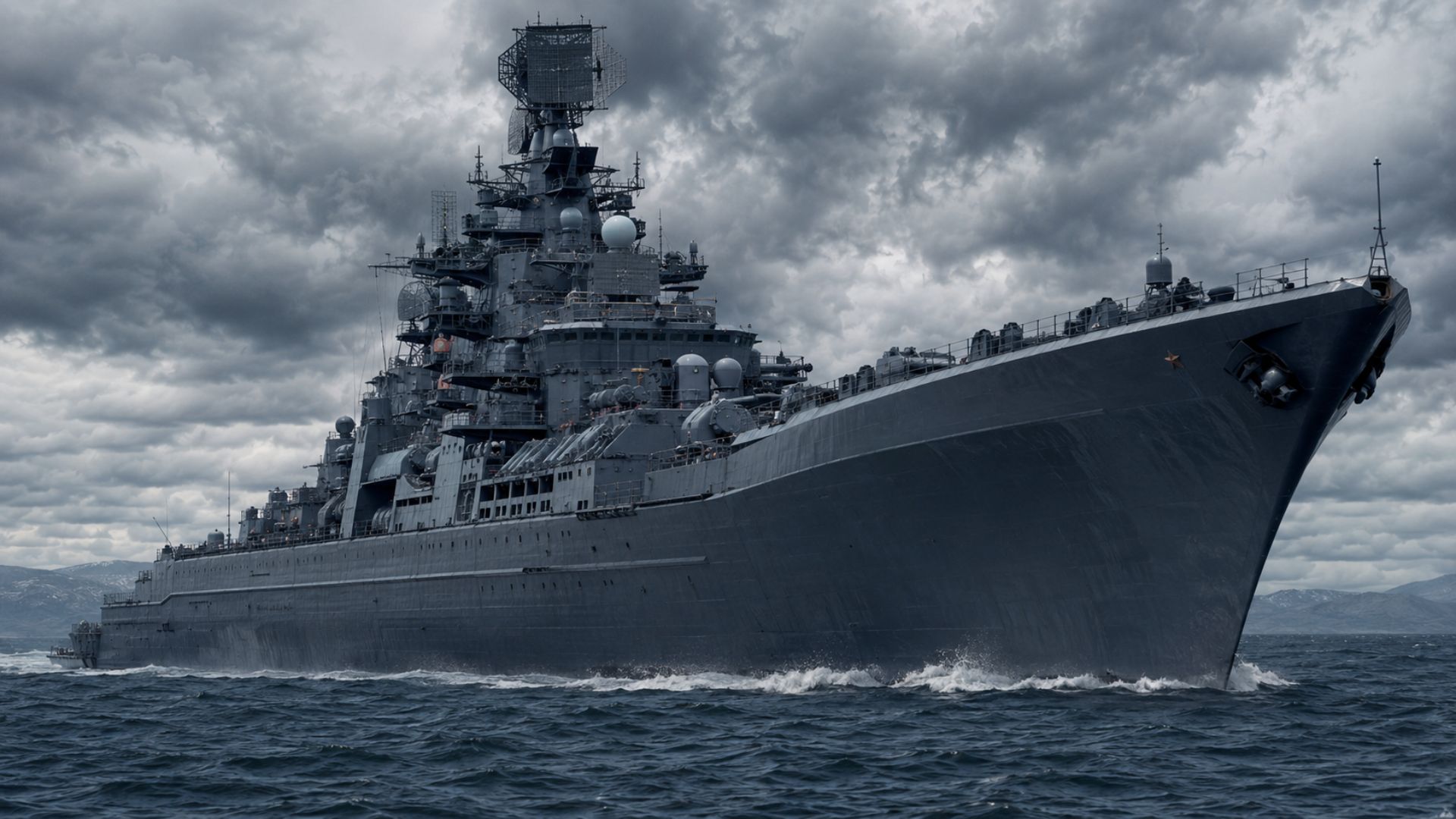
Idle since the 1990s, the 28,000-ton giant returned to the sea for final tests before re-entering operation, scheduled for 2026. The overhaul cost more than US$ 5 billion and took decades. But analysts are divided: for some, it is already born vulnerable in the era of drones and missiles.
Informally nicknamed “Death Star” because of its colossal size and volume of weapons, the Russian nuclear cruiser Admiral Nakhimov has entered the final phase of its sea trials and is approaching a return to active service. After more than a decade of deep modernization, the vessel could become one of the most armed surface warships in the world, according to estimates based on open sources, although many of its data are not officially confirmed.
The information was released on June 2, 2026, by the specialized portal Naval, and the ship’s return to active duty is scheduled for this year of 2026. Before detailing its capabilities, it is important to clarify two points: the nickname “Death Star” is informal, arising in publications and social networks, and much of the information about its armament comes from reports and analyses of open sources, not from data officially confirmed by the Russian Navy, which requires caution when reading the numbers.
What are sea trials and what phase is the ship in

The final phase of factory sea trials aims to validate the propulsion systems, power generation, navigation, communications, sensors, and the integration of the cruiser’s combat systems before its eventual formal delivery to the Russian Navy, which will still depend on additional evaluations.
-
The War of Jenkins’ Ear: How a Severed Ear Sparked One of the 18th Century’s Most Unusual Conflicts

-
The True Story of Beavers Parachuted into Idaho: A Post-WWII Mission Using Planes and Special Crates to Relocate 76 Animals to a Remote U.S. Region
-
Trailblazing Brazilian Mother of Three Becomes First Woman to Drive BYD Electric Truck, Inspiring Her Daughter to Follow Suit

-
6-Year-Old Boy Finds 1,000-Year-Old Viking Sword During School Activity in Norway


The tests began in mid-2025, when the ship left the Sevmash shipyard in northern Russia and returned to the sea under its own power for the first time in almost three decades, with its two nuclear reactors restarted.
The completion of this stage is an important milestone, but it is worth remembering that, in naval projects of this complexity, it is common to have new adjustments and even delays before the actual entry into operation.
From Soviet Cold War Ship to Modern Combatant
The journey of the Admiral Nakhimov spans distinct eras of military history.
Launched in 1986 under the name Kalinin and commissioned in 1988, still in the Soviet Navy, the cruiser was renamed Admiral Nakhimov in 1992, after the collapse of the Soviet Union, and left active service at the end of the 1990s, remaining idle in Severodvinsk before the start of its reconstruction.
The modernization, conducted at the Sevmash shipyard and accelerated around 2013, aimed to transform a platform conceived during the Cold War into a combatant adapted to contemporary naval warfare, with new weapon systems, sensors, and combat control.
The ship was relaunched into the sea in 2020, and the entire process, including the long idle period, cost more than $5 billion and extended over more than two decades, according to reports from the specialized press.
An Enviable Arsenal, According to Estimates

Reports from open sources indicate that the modernized cruiser could have between 174 and 176 vertical launch cells, more than modern destroyers and cruisers from the United States and China, allowing it to employ a mix of Kalibr cruise missiles, Oniks anti-ship missiles, and possibly Tsirkon hypersonic missiles, in addition to long-range anti-aircraft systems.
For comparison, China’s modern Type 055 destroyers carry 112 cells, and the US Ticonderoga-class cruisers, 122.
It is worth noting, however, that the Tsirkon hypersonic missile has only been declared operational on other Russian ships so far, and these capabilities still need to be proven in practice aboard the Nakhimov.
Therefore, these are projections based on disclosed information, not operational certainties.
The Counterpoint: A Giant Already Obsolete?
Despite impressing with the numbers, the ship divides opinions among experts, and it is fair to note the skepticism.
Western military analysts question whether such a large and expensive surface platform is outdated in the era of drones and long-range missiles, in which a target of this size could be relatively vulnerable, raising doubts about whether the billion-dollar investment was worth it.
Several experts also point out that Russia’s true naval trump card on the high seas today lies in nuclear submarines, capable of launching the same missiles much more stealthily, rather than in large surface ships.
Furthermore, the successive delays of the program expose the limits and priorities of Russian shipbuilding, pressured by sanctions and budgetary constraints. It is, therefore, an open debate, with no consensus among analysts.
The military and symbolic value for Moscow
Beyond combat capability, the ship carries political weight.
The return of the Admiral Nakhimov is considered important for the Northern Fleet, which concentrates the main strategic assets of the Russian Navy, and the cruiser is expected to become a sort of flagship, complementing or replacing capabilities currently associated with the Pyotr Velikiy, another nuclear cruiser of the same class, whose future is uncertain.
In operational terms, depending on where it is positioned, the ship could enhance Russia’s power projection capability in areas such as the Arctic, the North Atlantic, the Mediterranean, and the Pacific.
In symbolic terms, it represents Moscow’s attempt to preserve and update one of the most ambitious legacies of Soviet naval engineering, at a time of tensions with the West.
This article, it should be noted, merely describes this context, without taking sides in geopolitical disputes.
The return of the Russian nuclear cruiser Admiral Nakhimov, the giant nicknamed “Death Star,” is one of those events that mix impressive naval engineering, military strategy, and political symbolism.
If estimates about its arsenal are confirmed, it will be one of the most armed surface warships on the planet, but, as analysts show, doubts still linger about its real utility in modern warfare.
Between the pride of a naval power and the skepticism of experts, the ship symbolizes both the ambition and the challenges of Russia in keeping alive a military heritage conceived in another era.
And you, what do you think about the return of this colossal nuclear cruiser? Do you believe that giant warships still make sense in the era of drones and missiles, or are they too expensive targets? Leave your comment, respecting different opinions, tell us what you think of this naval engineering feat, and share the article with those interested in defense, military technology, and geopolitics.





-

1 person reacted to this.