






 Portuguese
  Spanish




Isolated After a Maritime Storm in 2006, an English Navigator Faced Nine Years of Extreme Survival on a Deserted Island Until Being Located Thanks to Digital Technology and Human Persistence

In 2006, Adam Jones departed from Liverpool, England, accompanied by two friends, on a maritime expedition bound for Hawaii. The plan included crossing the Atlantic Ocean, passing through the Panama Canal, and later navigating the Pacific Ocean, according to subsequent reports released by maritime authorities.
Storm in the Pacific Completely Alters the Expedition
However, close to the Pacific, a storm of great proportions violently struck the vessel. As a direct consequence, Adam’s two friends were thrown into the sea and died. Adam, for his part, was unconscious for several days, while the boat drifted, severely damaged.
-
A Dutchman created a ‘box’ that makes trees grow in the desert almost without water and without irrigation: the invention has already brought seedlings to dozens of countries and achieves up to 90% survival where common planting did not exceed 10%.

-
Abandoned warehouse hid a giant collection of rare computers, with over 2,000 artifacts from the 1930s to the 1980s.

-
Scientists warn that melting ice is triggering an alarming chemical transformation in preserved areas, and the first signs are already concerning researchers worldwide.
-
China placed 198 robotic legs under a 7,600-ton school and made the building walk 62 meters in 18 days, rotating the historic structure as if a concrete structure had gained feet to escape demolition.





Later, the bodies of his companions were found, and authorities concluded that Adam had also died. Still, he survived, remaining adrift for about 17 days, until the vessel reached a deserted island, marking the beginning of a long period of total isolation.
Survival Routine in a Hostile Environment
As soon as he arrived on the island, Adam had to act quickly to survive. First, he built an improvised shelter from the wreckage of the boat, which ultimately collapsed. Next, he erected a more durable structure, using only natural materials available in the area.
With extreme persistence, using only a shell, it took 11 weeks to fell a tree. After that, he learned to produce fire, essential for cooking food and maintaining survival. At the same time, he organized a daily routine, a fundamental strategy to preserve mental sanity.
According to Adam himself, his physical condition and athletic background facilitated the initial adaptation. Nevertheless, the diet required difficult decisions. He started hunting animals and, at one point, found a goat trapped in bushes, from which he obtained about 50 kilos of meat, ensuring sustenance for weeks.
Psychological Isolation Was the Greatest Challenge
Despite practical advances, the greatest enemy was mental isolation. As the years went by, extreme loneliness and the absence of any human contact caused deep depression. At times, Adam thought about taking his own life, but he chose to resist and confront his own thoughts.
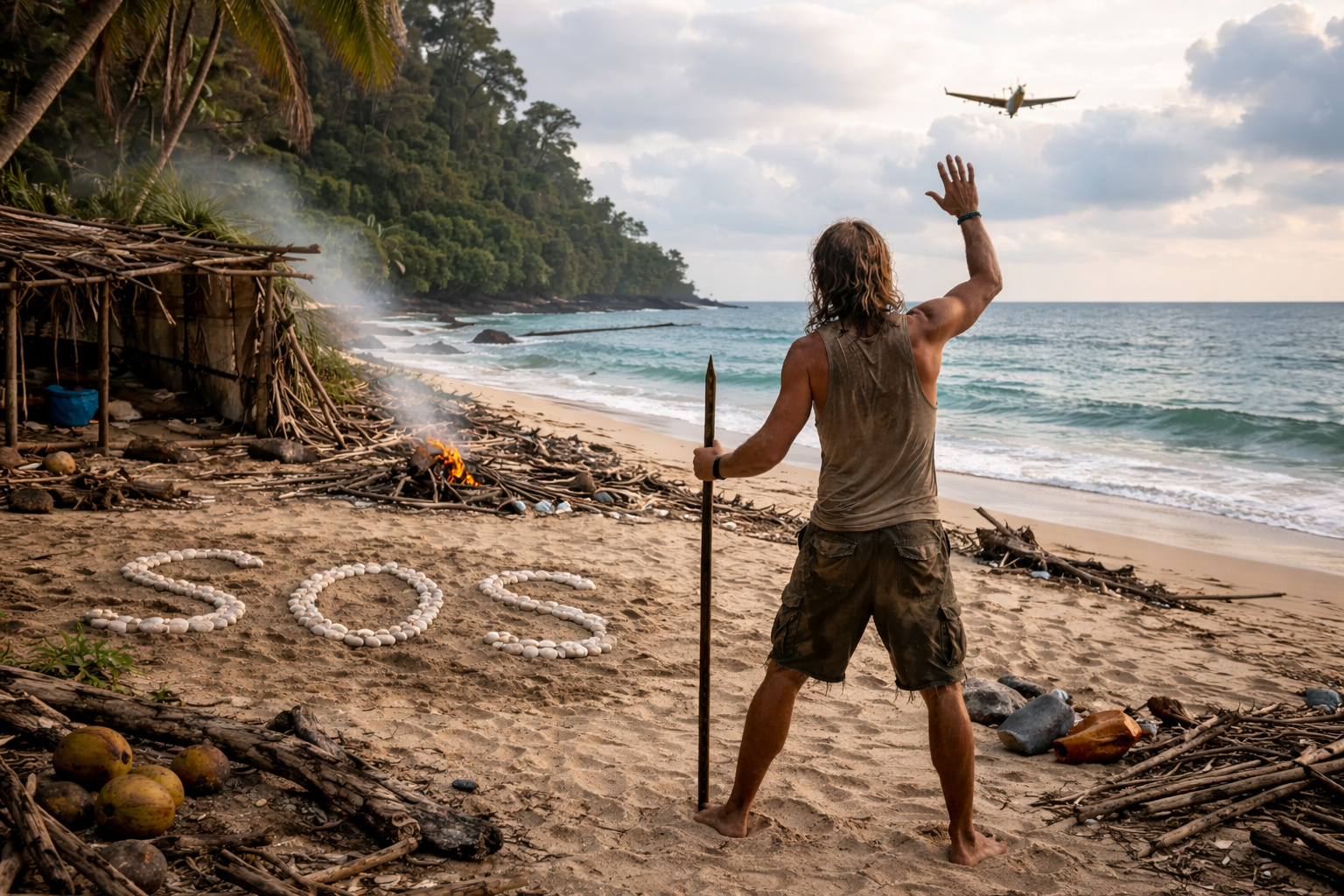
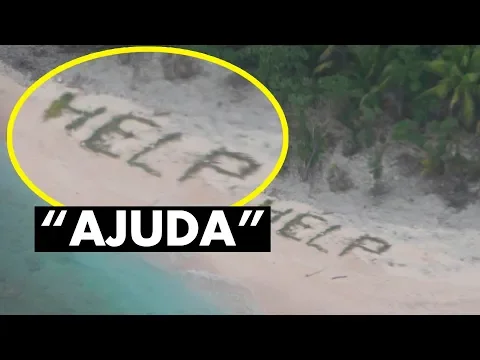
In an attempt to be rescued, he built an SOS signal about three meters long, which went unnoticed. Later, he cleared a large area of the beach and wrote “SOS” in the sand, maintaining hope that some aircraft would notice the plea for help.
Rescue Occurs After Nine Years Thanks to Technology
Only after nearly nine years of isolation, Adam heard the sound of an airplane flying over the island. Immediately, he ran to the open area and waved repeatedly. Fortunately, the crew noticed the signal and dropped a package containing a radio, water, food, and first aid supplies.
Through the radio, Adam heard a human voice for the first time in nearly a decade. According to the co-pilot, the rescue was possible because a child living in Minnesota, USA, identified the “SOS” in images from Google Earth and alerted the authorities.
Even after the initial contact, Adam waited about five days for the rescue boat to arrive. When the rescuers landed, he cried intensely, visibly weakened, extremely thin, with long hair and tanned skin, according to reports from the rescue team.
How far do you believe the human mind can resist when put to the test for such a long time?





Ele não perdeu nada , um dia ele vai querer voltar pra la
Já pensou ele ficar todo esse tempo sem sexo,energia, celular,gás de cozinha, IPVA, IPTU, água, bebida ,sal, açúcar, café ? Realmente ele economizou $kkkkk
sem salário também
Coitado desse cara se fosse brasileiro, ia trabalhar o resto da vida pra pagar os 09 anos de impostos