Portuguese
  Spanish


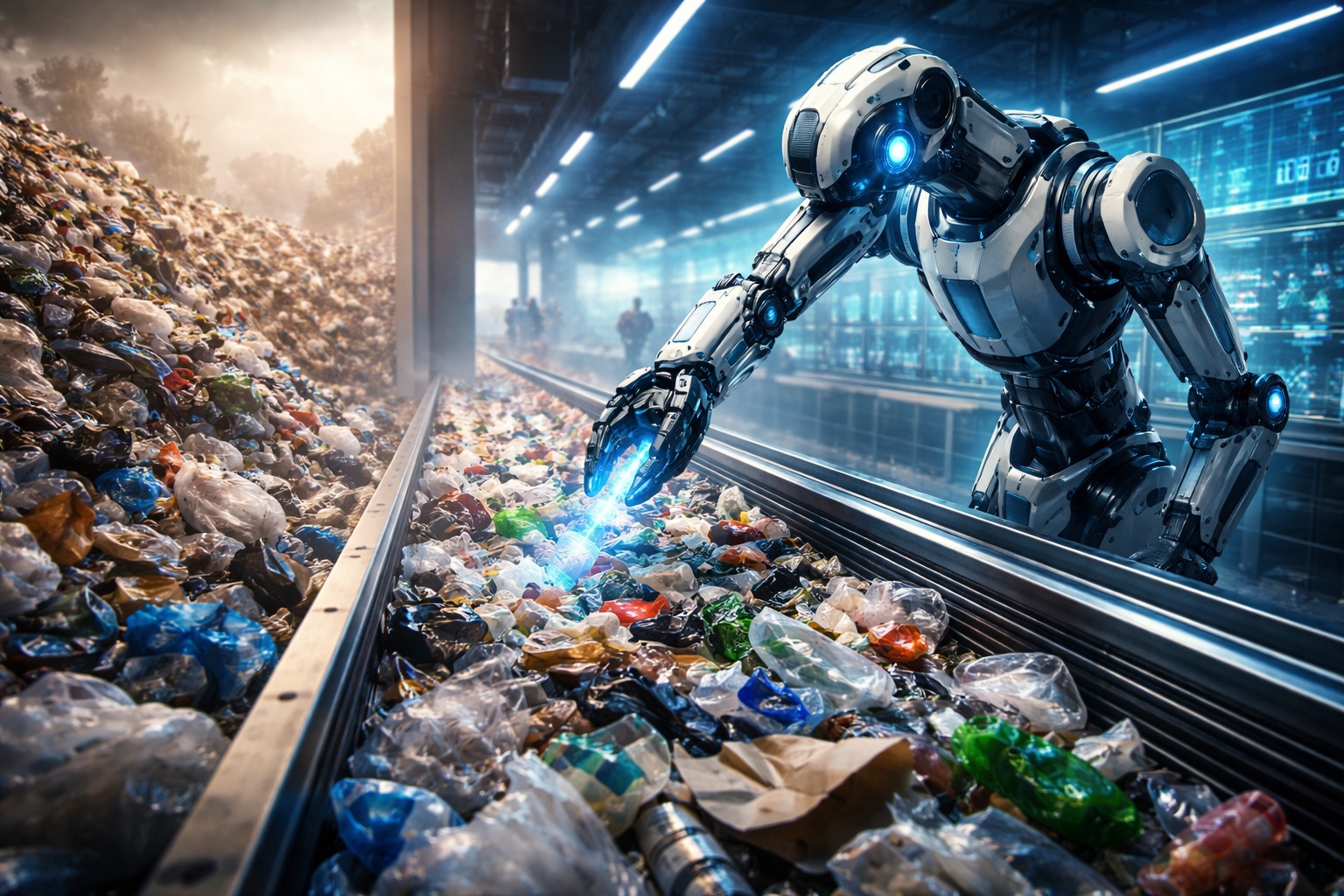


Robots With Artificial Intelligence Already Sort Waste With Up to 98% Accuracy and Are Changing the Future of Industrial Recycling.
Mountains of trash are growing at an accelerated pace on the outskirts of major cities. Trucks unload tons of mixed waste, where plastic, metal, paper, and organic refuse accumulate on industrial conveyor belts. For decades, the sorting of these materials relied almost exclusively on manual labor, with low recovery rates and high occupational risk. Now, robotic arms equipped with artificial intelligence are taking over this task.
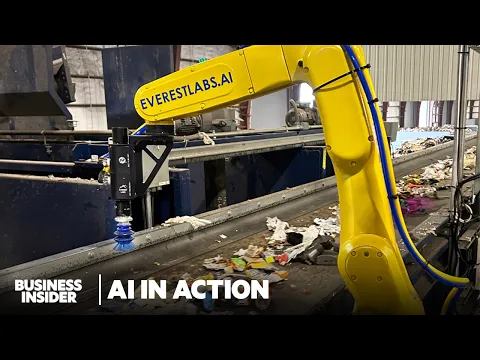
In recycling plants across the United States, Europe, and Asia, automated systems analyze each object passing on conveyor belts in fractions of a second. High-resolution cameras, optical sensors, and deep learning algorithms identify the shape, texture, density, and even the approximate chemical composition of the waste.
What was once visual chaos has transformed into digital reading. Recycling is becoming not just a basic urban service but a high-precision industrial operation.
-
China Develops Custom 140-Ton Electric Mining Truck with 770 kWh Swappable Battery, Deploys 290 Units in Xinjiang’s Largest Zinc Mine

-
Meta to Launch Arena, a New Prediction App Targeting 3.56 Billion Users, Competing with Polymarket and Kalshi

-
Scientist Challenges Famous Human Evolution Theory, Argues Homo Sapiens Evolved Gradually Over Thousands of Years
-
15-Year-Old American Builds Ocean Generator with PVC Pipe and 3D-Printed Propeller for $12, Wins National Prize, Presents at White House, and Makes Forbes 30 Under 30 List




From Manual Sorting to Artificial Intelligence Applied to Waste
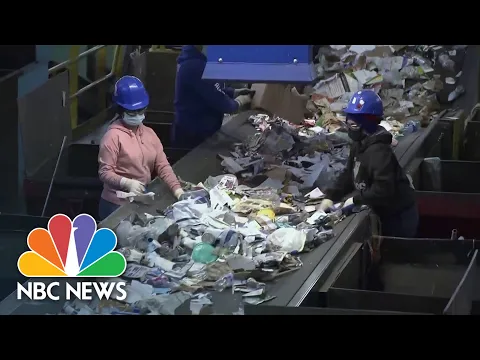
Material recovery centers, known as MRFs (Material Recovery Facilities), traditionally operated with magnetic separators for ferrous metals, rotary screens for lightweight materials, and workers positioned along the line to manually remove recyclable items.
This model had evident limitations. Human fatigue reduces efficiency, increases errors, and compromises the purity of the recovered material.

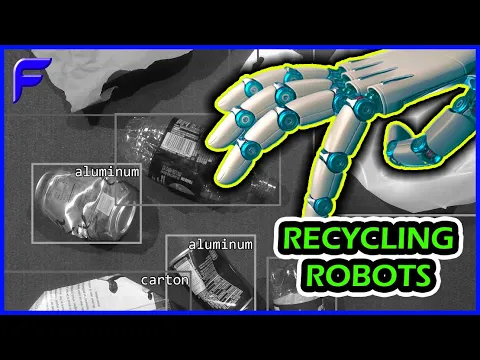
Companies like American AMP Robotics have begun to introduce robots trained with millions of images of real waste. The system uses computer vision to identify specific plastics, cardboard, metals, and complex packaging.
According to data released by AMP Robotics and industry reports, their systems can perform thousands of “picks” per hour and achieve purity levels above 95%, reaching as high as 98% in specific material flows.
In practice, this means less contamination and higher resale value of recyclables.
Robots That See, Learn, and Select in Milliseconds
The operation of these systems combines highly complex hardware and software. Cameras installed over the conveyor capture continuous images of the waste flow. Spectral and optical sensors complement the analysis, allowing for the identification of differences invisible to the human eye.
The algorithm classifies the object almost instantaneously. A robotic arm, equipped with a claw or suction cup, calculates the ideal trajectory and performs the collection. Each movement takes milliseconds.

The Finnish company ZenRobotics developed systems capable of executing up to 4,000 selections per hour in industrial waste flows. The South Korean company AETECH announced accuracy above 99% in certain types of sorting, according to the company’s technical statements.
These figures vary depending on the type of material and the configuration of the plant, but they indicate a significant leap compared to conventional sorting.
Recycling as Precision Engineering
The transformation is not only technological but structural. With higher purity of the recovered material, industries can reintegrate plastic, metal, and paper into production chains with less need for reprocessing.
Cross-contamination, one of the biggest problems in recycling, decreases significantly when sorting is automated.
This changes the economy of the sector.
Purer recyclables achieve greater market value. Operational efficiency reduces labor costs and improves production predictability.
In some centers, the integration of robotics has allowed for increased capacity without physical expansion of the plant, merely replacing manual positions with automated cells.
Environmental Impact and the Race Against Mass Disposal
The world produces more than 2 billion tons of municipal solid waste annually, according to data from the World Bank. A significant portion is still sent to landfills or improperly discarded.
The automation of sorting alone does not solve the problem of excessive consumption but drastically increases material recovery capacity.
By improving efficiency, the need for virgin raw material extraction is reduced. Recycled plastics replace new resins. Recovered aluminum saves energy compared to primary production.
The technology also reduces human exposure to unhealthy environments. Workers no longer need to directly handle contaminated materials.
In countries with high waste generation, such as the United States and EU member states, the adoption of AI in recycling is growing as part of national circular economy strategies.
Limits and Challenges of Waste Automation
Despite advancements, technology does not eliminate all obstacles.
Extremely mixed waste, contaminated organics, or complex composite materials still present difficulties for automatic sorting.
Additionally, the initial investment in robotic systems is high. Small municipalities may struggle to implement cutting-edge solutions without financial support.

There is also the challenge of standardization. Packaging with multiple layers and varied designs make sorting difficult even with advanced AI.
Technology evolves, but product design and public policies remain crucial for successful recycling.
From Sorting Centers to Automated Factories
What is happening in various parts of the world is a paradigm shift. Recycling centers are moving from being merely rudimentary separation sites to becoming automated industrial environments.
Conveyor belts, sensors, robotic arms, and software work together, transforming mixed waste into organized flows of secondary raw materials.
The image of workers isolated in unhealthy warehouses is beginning to be replaced by automated lines with digital control.
The technological race against environmental collapse is not limited to large ships collecting plastic in the ocean. It is also happening inside industrial warehouses where machines analyze waste in fractions of a second.
Robotic arms currently operating over mountains of trash represent a tangible attempt to transform waste into a resource.
The global waste crisis is still far from being solved. However, in increasingly automated plants, trash has ceased to be merely waste and has become raw material analyzed with almost surgical precision.