Portuguese
  Spanish


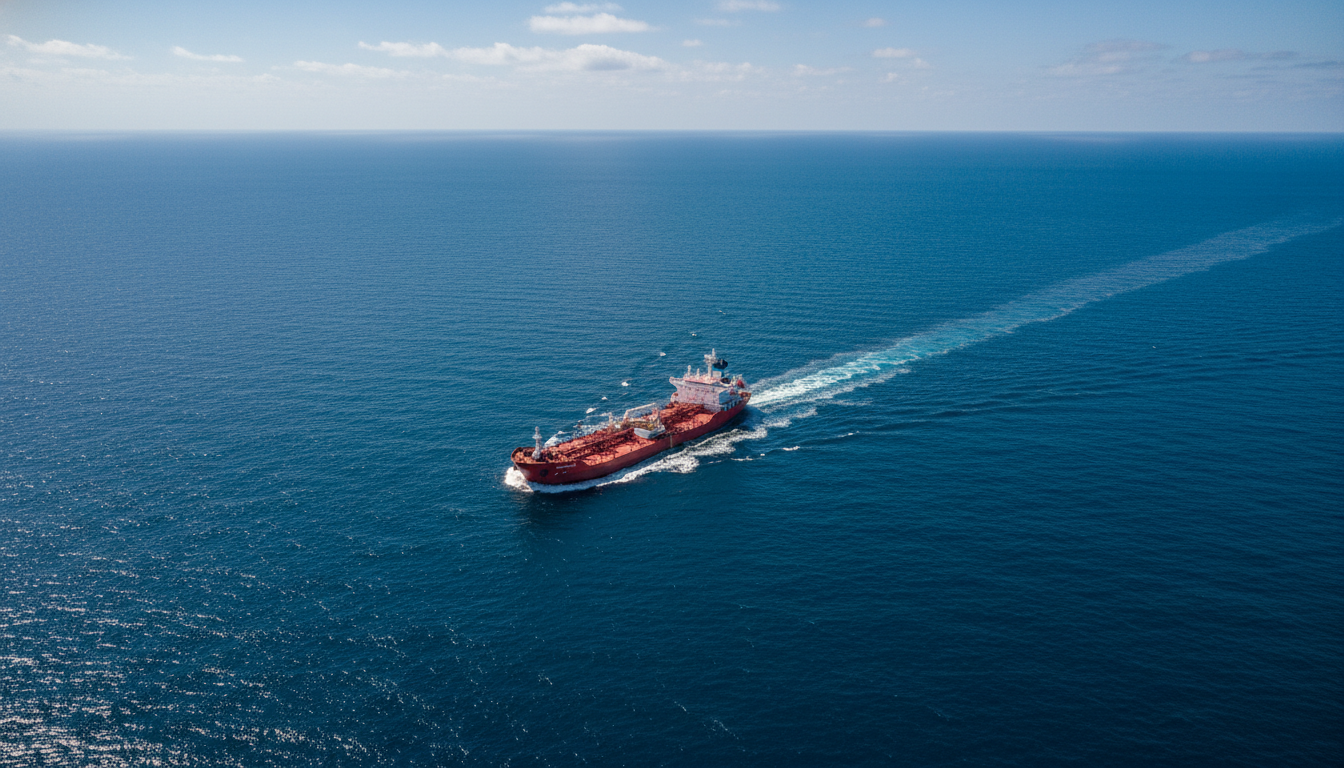

Despite the Iranian declaration of free passage, maritime traffic in the Strait of Hormuz remains nearly paralyzed — the tanker Argo Maris was the only non-Iranian vessel to cross in 24 hours
Iran announced on Friday (17) that the Strait of Hormuz was completely open for commercial ships.
But maritime traffic data tells a different story.
In the 24 hours following the declaration, only 1 non-Iranian tanker managed to cross the strait, according to CNN Brasil.
-
Ayatollah Ali Khamenei’s Funeral Draws 15 to 20 Million in Tehran, Calls for Revenge Against Trump After Joint Israel-U.S. Attack

-
U.S. Establishes Permanent Embassy in Jerusalem, Reigniting International Debate Over Israel’s Capital
-
OPEC+ Boosts Oil Supply by 188,000 Barrels per Day in July 2026, Leading to Price Drop from $112 to $89 per Barrel in Under Two Months

-
TotalEnergies Signs 20-Year Deal to Purchase 2 Million Tons of LNG from Alaska, Boosting Project Viability



Before the blockade, 100 ships passed daily.
Who was the tanker that passed
The Argo Maris, operated by a company from the United Arab Emirates and flying the flag of Curaçao, departed from the port of Bandar Abbas.
The ship briefly disappeared from public tracking panels and reappeared around 2:54 PM (Brasília time).
During the same period, three Iranian tankers — Deep Sea, Sonia I, and Diona — left Khark Island carrying about 5 million barrels of crude oil.
The three vessels are under American sanctions, marking the first shipments of this kind since the U.S. blockade.
What this means for the market
The “paper” reopening caused oil prices to drop more than 10% on Friday.
However, actual traffic shows that normalization is far from happening.
The Strait of Hormuz is only 33 km wide at its narrowest point and carries one fifth of the world’s oil production.
The reopening is conditioned on a ceasefire between Israel and Hezbollah, which is due by Tuesday (April 21).
Iran already threatens to reverse
On Saturday (18), the Iranian Parliament Speaker, Mohammad Bagher Ghalibaf, warned that “with the continuation of the U.S. naval blockade, the Strait of Hormuz will not remain open“.
The statement was published by Euronews.
According to Veja, the Iranian Armed Forces threatened to expand blockades to other regions if Washington does not lift the naval siege.
Note: the reopening can be reversed at any moment if negotiations between the U.S. and Iran fail. The ceasefire expires on Tuesday and there is no guarantee of an extension.