






 Portuguese
  Spanish


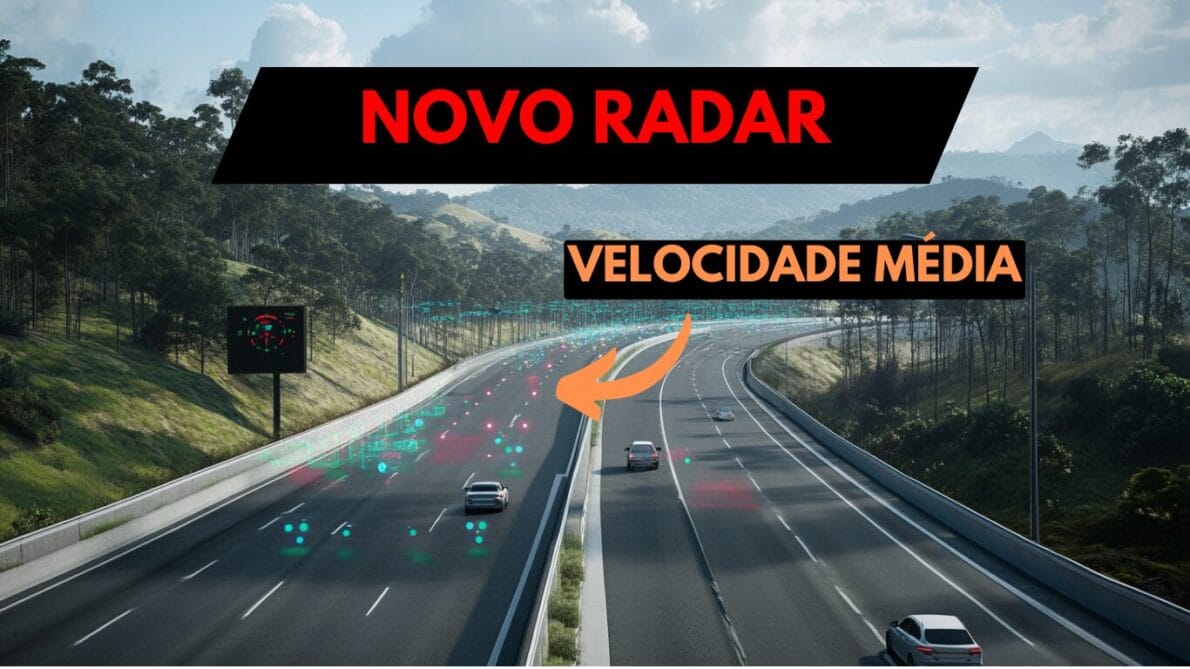

New Enforcement System Promises to Increase Safety on Brazilian Highways with Advanced Technology
Starting this Monday (14), those traveling on the highway should be aware: the highway will be the first federal concession in Brazil to feature a radar system that measures the average speed of vehicles. It began operating experimentally this week, introducing a new level of enforcement for drivers in the region.
How Does Average Speed Measurement Work?
Unlike traditional radars, which capture speed at a specific point, the new system monitors the time it takes for the driver to cover a stretch. On the BR-050, for example, two radars are positioned at miles 171 and 182, heading Uberaba to Delta. As the vehicle passes the first radar, the time is recorded. If the driver completes the journey faster than the minimum allowed time, they will be deemed in violation. Sounds simple, right? And it really is!
The speed limit on the monitored stretch is 80 km/h, which means the journey must be completed in at least eight minutes. Any driver who travels the distance in less time will be automatically flagged for exceeding the speed limit. And it won’t help to “speed up” at the beginning and then try to disguise it, as the system calculates the average speed of the entire route.
-
China Develops Custom 140-Ton Electric Mining Truck with 770 kWh Swappable Battery, Deploys 290 Units in Xinjiang’s Largest Zinc Mine

-
Meta to Launch Arena, a New Prediction App Targeting 3.56 Billion Users, Competing with Polymarket and Kalshi

-
Scientist Challenges Famous Human Evolution Theory, Argues Homo Sapiens Evolved Gradually Over Thousands of Years
-
15-Year-Old American Builds Ocean Generator with PVC Pipe and 3D-Printed Propeller for $12, Wins National Prize, Presents at White House, and Makes Forbes 30 Under 30 List




Traffic Safety: What Changes with the New Radar?
The major advantage of this model is that it “prevents” the notorious trick of slowing down only when approaching a fixed radar. With average speed measurement, drivers will be required to adhere to the speed limit throughout the entire route, thus enhancing safety on the highway. According to Bruno Araújo Silva, operations manager at Eco050, “this system expands the enforcement area, which means drivers will have to stay within the limit all the time, with no escape.”
Countries like Italy have been using this technology for years and have reported a reduction of up to 50% in traffic accident fatalities within the first 12 months of use. In other words, it’s not just about fines: it’s about saving lives.
Educational Action for Offending Drivers
On the launch day, the Eco050 expedition, together with the Federal Highway Police (PRF), will carry out an educational action at kilometer 193 of the BR-050. Drivers caught above the speed limit will be selectively informed and guided on how the new technology works. After all, besides being an innovative system, it ensures that everyone travels more safely on the highway.
So if you usually travel the BR-050, you now know: respecting the speed limits will be essential to avoid fines and, of course, to ensure your safety and that of other drivers.
Stay alert and have a safe trip!





