Portuguese
  Spanish


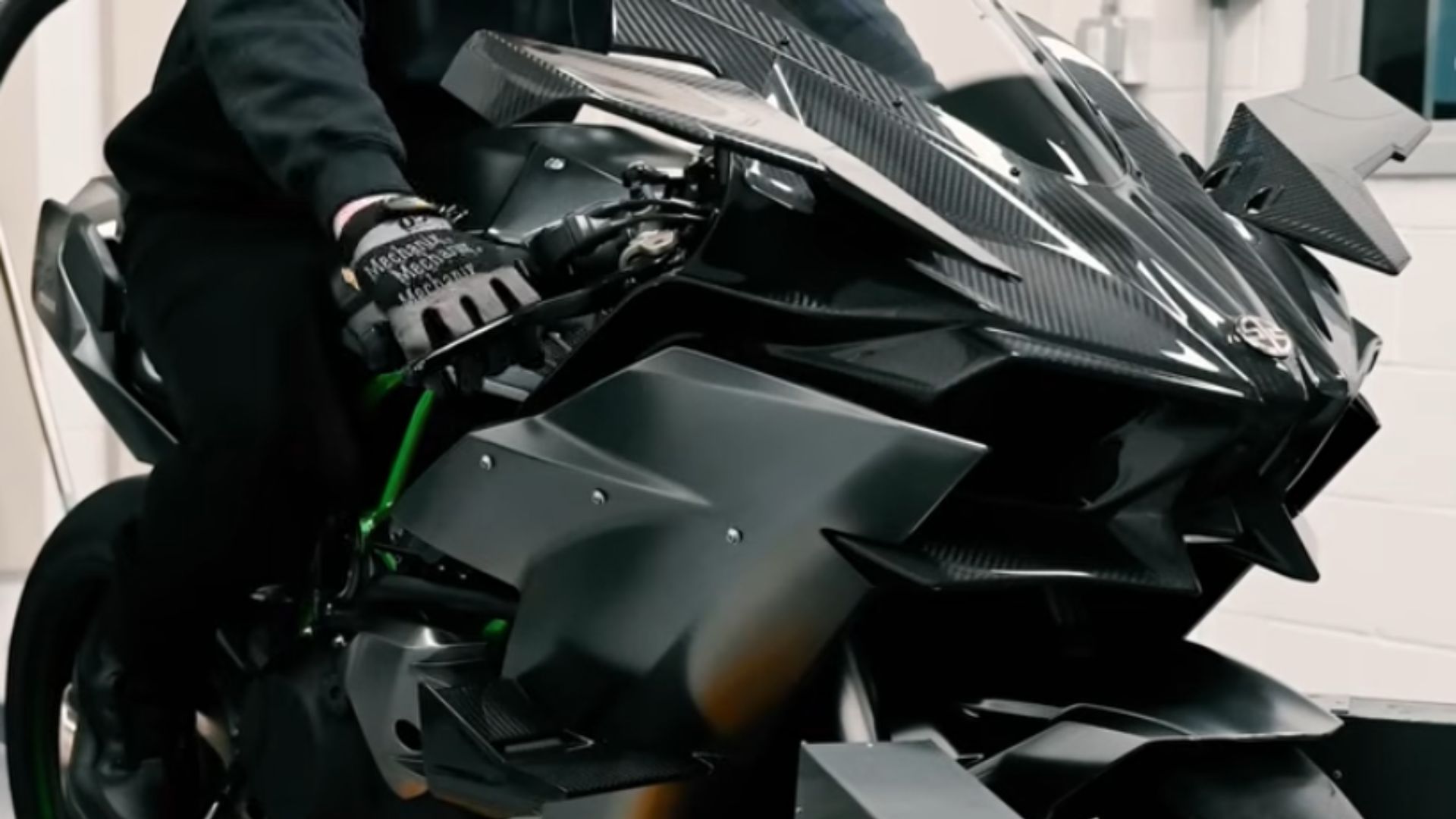


Produced with almost artisanal techniques at the Akashi factory in Japan, the Kawasaki Ninja H2 combines aerospace engineering, manual assembly, and a supercharged engine that has transformed the superbike into a world reference for extreme performance
There are fast motorcycles, luxurious models, and machines built to impress. Still, few can achieve the status of the Kawasaki Ninja H2. More than a superbike, it has become the ultimate symbol of high-performance engineering, exclusivity, and Japanese technology applied to two wheels.
The information was originally disclosed in a specialized report published by Fabrício Mainenti on the Xataka portal, which revealed rare details about the motorcycle’s manufacturing process inside the historic Akashi factory, located in the Hyogo province, Japan. The location is considered a true temple of Kawasaki engineering, responsible for producing the brand’s high-performance engines and models.
What draws the most attention, however, is not just the brutal power of the Ninja H2. The real spectacle happens during its manufacturing. Instead of a common and fully automated assembly line, the motorcycle is born in an environment where millimetric precision, manual inspection, and artisanal techniques still play a central role.
-
End of an era in Brazil: beloved sedan by Brazilians is discontinued despite having a 2.0 engine with 151 hp, CVT transmission, 466-liter trunk, and up to 650 km of range.

-
New Law Proposal in Brazil Could Heavily Penalize Drivers: Dangerous Overtaking May Become a Serious Offense with Fines Increased Tenfold and a 12-Month License Suspension; Update on 2026 Progress

-
Electric Revolution: Watts W125 Motorcycle Offers 160 km Range, 90 km/h Speed, and Affordable Price Starting at $3,000
-
General Motors Replaces Over a Thousand Workers with 50 Cobots at Electric Vehicle Plant, UAW Union Criticizes Move Amid Industry’s Automation Push
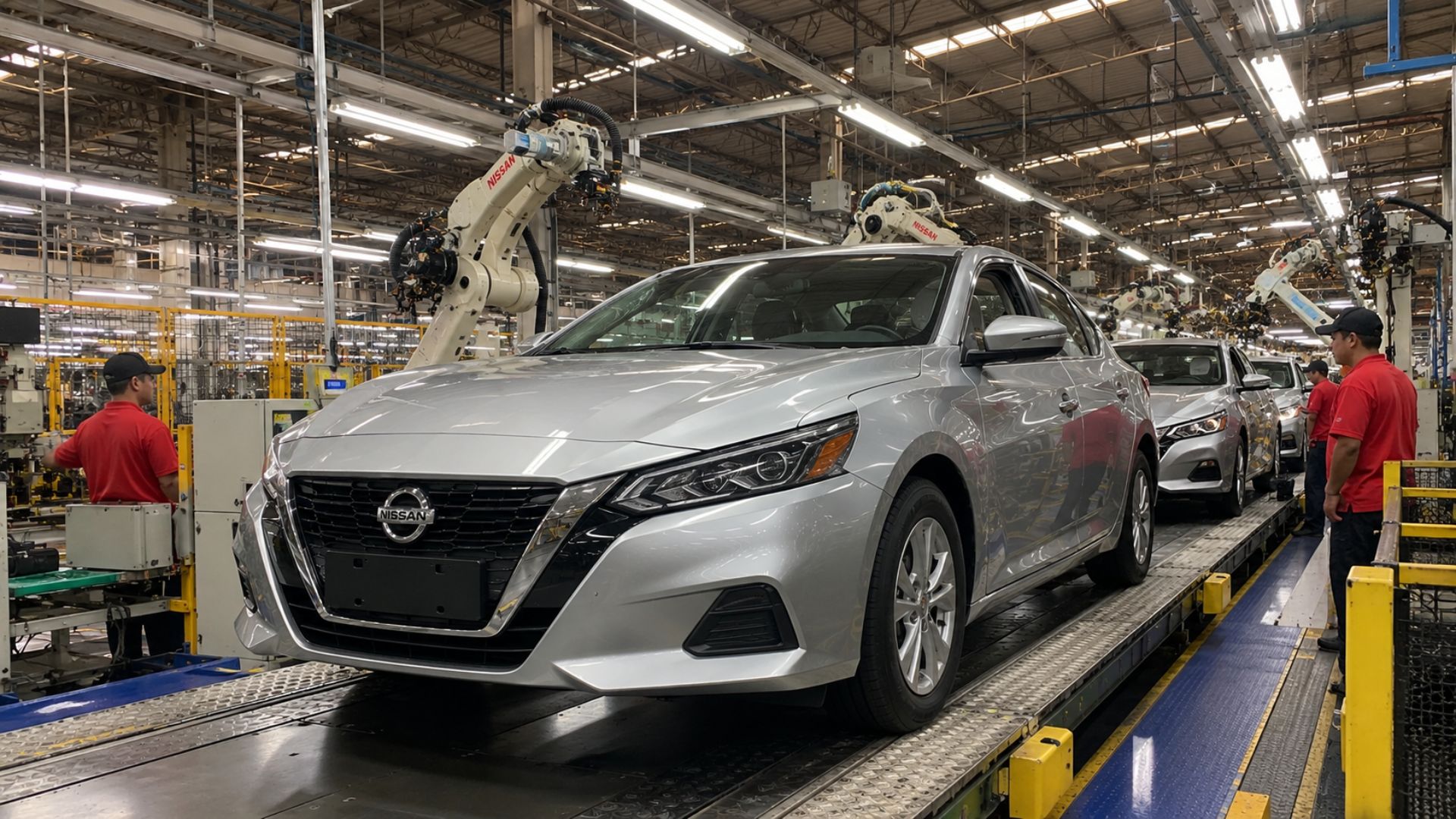


Akashi factory maintains Japanese tradition in the construction of the Kawasaki Ninja H2
Contrary to what many imagine about large modern manufacturers, Kawasaki preserves an extremely careful process in the production of the Ninja H2. Inside the Akashi factory, specialized workers operate in almost surgical stages to ensure that each unit leaves perfectly calibrated.
Internal engine parts are manually positioned one by one in specific metal structures. In addition, gears, internal shafts, and rotating subassemblies receive individual adjustments before final fixation. Vertically calibrated tools help ensure minimal levels of mechanical tolerance.
This care transforms the production of the H2 into something very different from conventional mass manufacturing. Each component undergoes constant checks, while dial indicators and precision instruments analyze mechanical fits and alignments with extreme rigor.
In this sense, the process resembles much more traditional Japanese craftsmanship than a simple modern industrial line.


Supercharged engine inspired by Kawasaki’s aerospace division changes everything
The great heart of the Kawasaki Ninja H2 is its famous supercharged four-cylinder engine. And it is precisely here that the motorcycle enters an almost exclusive territory within the global market.
While many people call the system a “turbo,” Kawasaki actually uses a proprietary mechanical compressor developed in-house. The project was born with direct inspiration from the Japanese company’s aerospace division, responsible for advanced technologies used in aircraft.
This solution delivers an extremely aggressive characteristic to the motorcycle. Unlike conventional engines, the Ninja H2 offers brutal power even at low revs, creating violent accelerations and an almost immediate throttle response.
During assembly, the machined crankcases begin to receive transmission, gears, and internal shafts until the enormous clutch and primary transmission assembly is completed. Only after this is the engine installed in the motorcycle’s characteristic tubular frame.
From this moment, the Ninja H2 finally begins to gain its definitive visual identity.
Manual assembly includes handcrafted welds, electronic systems, and individual inspections
With the engine installed, one of the most detailed phases of manufacturing begins. Specialized workers then start installing hoses, electrical harnesses, electronic systems, and components related to the engine intake.
At the same time, the large dark panels of the fairing begin to be fitted between the tubular structures of the frame, forming the aggressive look that made the H2 recognized worldwide.
Additionally, other teams work on the installation of wheels, radiators, brake systems, and exhaust. In fact, some parts of the exhaust collectors receive manual welding, further reinforcing the motorcycle’s almost handcrafted character.
This entire combination of human labor and advanced engineering helps explain why the Ninja H2 is seen as one of the most sophisticated bikes ever produced by the Japanese industry.
Final tests ensure extreme performance before delivery
After complete assembly, Kawasaki begins the phase considered the most important of the entire process: individual functional tests.
Each Ninja H2 undergoes its own mechanical and electrical checks before leaving the Japanese factory. Then, the motorcycle is placed on a dynamometer, where the engine is started for the first time under specialized technical supervision.
Therefore, no unit leaves the production line for immediate transport. Before this, Kawasaki conducts detailed inspections to ensure that all systems are functioning perfectly.
This level of demand helps explain why the Ninja H2 has established itself as one of the fastest production motorcycles on the planet, as well as a global benchmark in high-performance engineering.
Kawasaki Ninja H2 became a global symbol of power, exclusivity, and Japanese engineering
Far beyond performance numbers, the Kawasaki Ninja H2 represents a Japanese philosophy based on perfectionism, precision, and mechanical excellence.
While much of the global industry bets on total automation, Kawasaki maintains artisanal elements that transform each unit into an almost unique piece. The result is a motorcycle that impresses not only with its extreme speed but also with the obsessive care present in every detail of its construction.
Not surprisingly, the Ninja H2 remains one of the most desired bikes in the world, bringing together aerospace technology, competition engineering, and Japanese tradition in a single project.
And you, would you have the courage to ride a Kawasaki Ninja H2, considered one of the most extreme and impressive motorcycles ever produced by Japanese engineering?