Portuguese
  Spanish


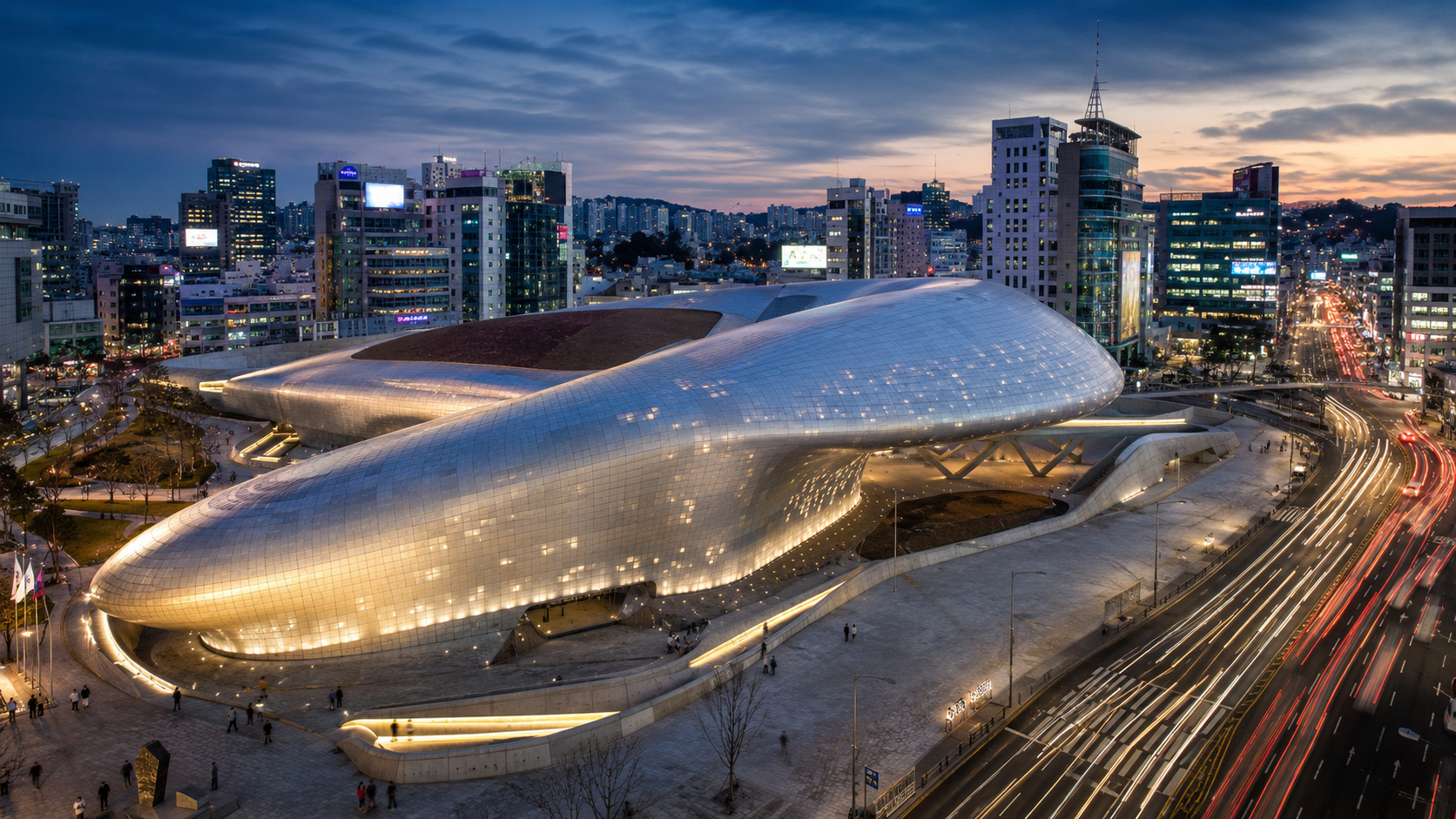

The Dongdaemun Design Plaza in South Korea shows how a curved metallic facade, aluminum panels, 3D modeling, and precise fabrication can transform a complex project into a world reference in architecture.
The Dongdaemun Design Plaza in Seoul draws attention with a facade that seems to flow over the terrain like liquid metal. The cultural center was clad with about 45,000 different aluminum panels, in a project marked by curves, customized pieces, and digital 3D construction.
The information was released by Zaha Hadid Architects, the architecture firm responsible for the project. The work shows that a curved facade of this scale does not rely solely on a beautiful design but on digital planning, precise fabrication, and controlled assembly.
For the average reader, the most curious aspect is imagining the assembly. Instead of repeating identical plates on a straight wall, the building required thousands of pieces with variations in size and curvature to form a continuous skin.
-
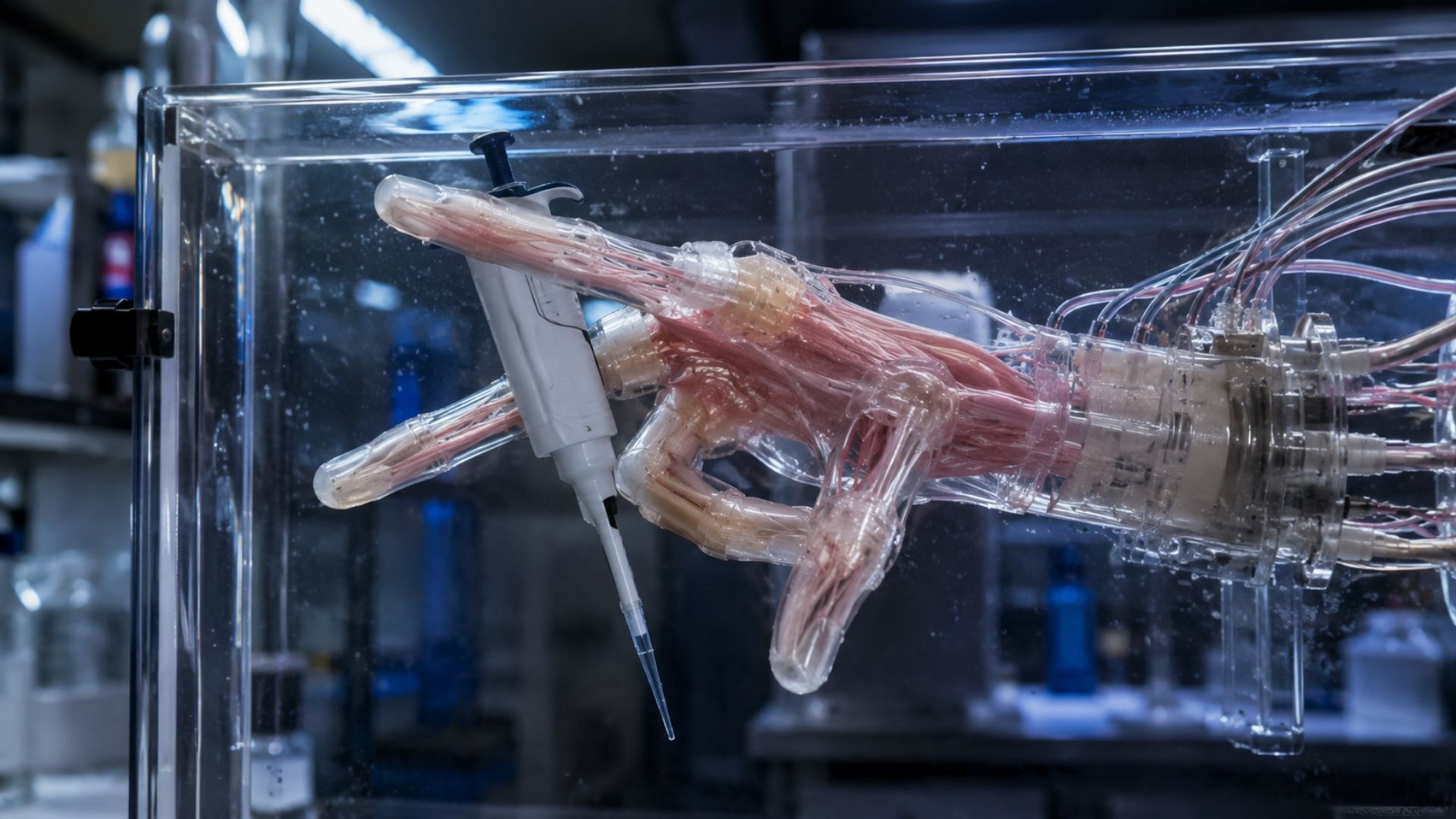
Tokyo Scientists Create First 18cm Biohybrid Hand Using Human Muscle, Capable of Scissor Gesture and Holding a Pipette

-
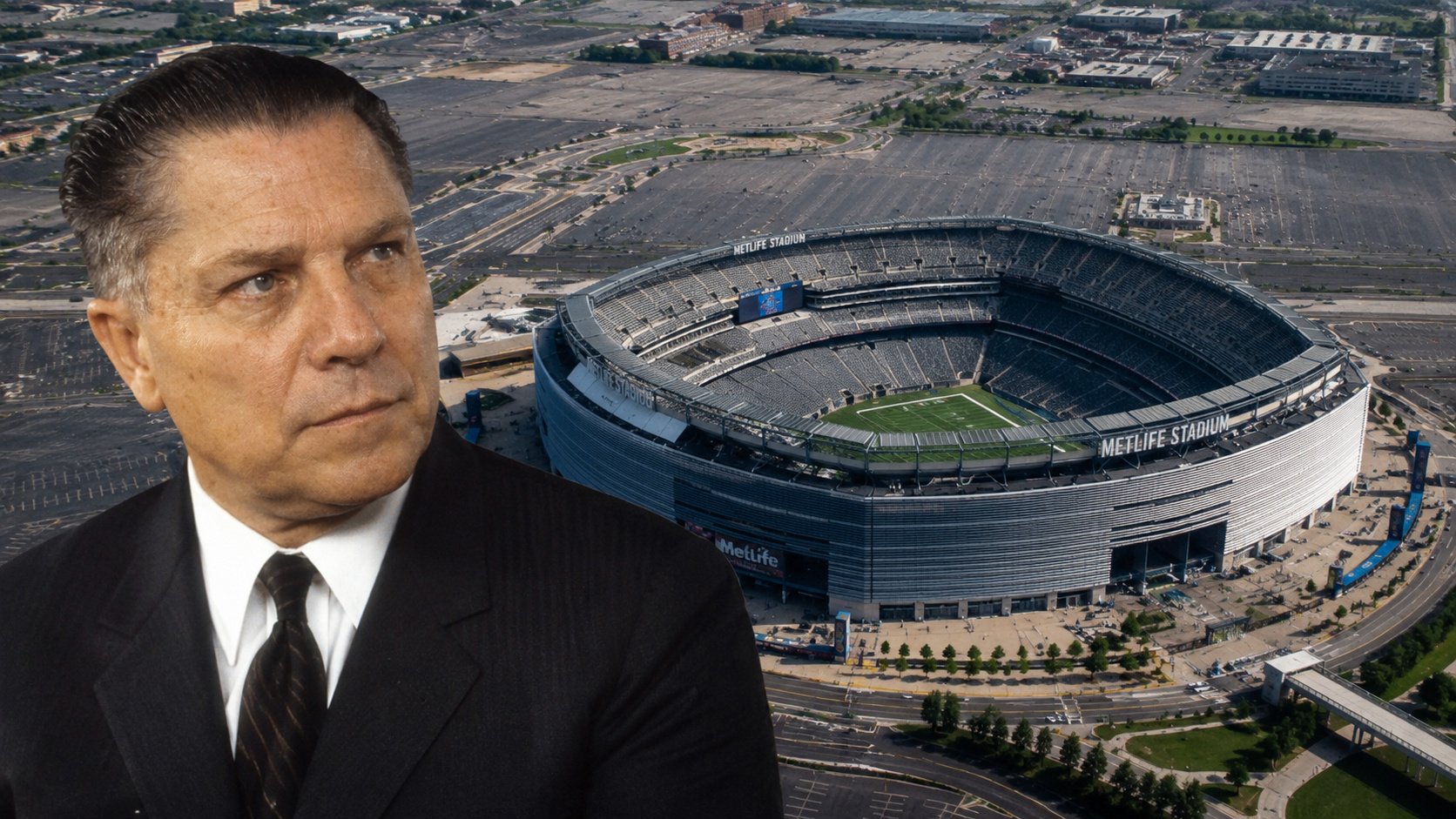
Brazil Faces Norway in World Cup at Stadium Linked to Jimmy Hoffa’s Mysterious Disappearance

-
Retired Woman Leaves French Public Housing Due to Fear, Lives in Van for Weeks, Prompting Response from Local Authorities and a Priest
-
9-Year-Old Fabio Isaac Wins Gold at Copernicus Math Olympiad in Singapore, Representing Peru Against Global Young Talents


How a facade with about 45,000 aluminum panels went from computer to real construction
Assembling a common facade already requires care. In the case of the Dongdaemun Design Plaza, the challenge was much greater because the building does not follow the logic of a straight block. The construction features smooth curves, rounded volumes, and a surface that changes shape along the way.


Therefore, the project required 3D modeling. This modeling functions like a digital model. It allows for visualizing the building before construction and transforming the curved shape into measurements that can be manufactured.
The difference is simple to understand. In a straight facade, many pieces can be repeated. In a facade like that of the DDP, each section needs to connect with the next so that the result appears as a single metallic surface.
This process helps explain why digital 3D construction has become so important in complex projects. It reduces improvisation and brings the design closer to the reality of the factory and the construction site.
Why the aluminum panels could not follow a common logic of repetition
The facade of the Dongdaemun Design Plaza uses about 45 thousand aluminum panels in different sizes and curvatures. This number is impressive because it shows the scale of the work needed to cover a building with an organic shape.
It’s not just about placing metal on the exterior. Each piece needs to respect the curve of the building, fit with neighboring panels, and align with the overall design of the facade. If one part is out of position, the error appears in the whole.
Therefore, the use of customized panels was essential. They allowed for the creation of a continuous surface, without the appearance of a facade assembled from disconnected parts.
The result is a construction that seems simple to the eyes but hides a highly precise technical process. The facade only appears fluid because there was control at every stage.
3D digital construction helped reduce errors in a difficult-to-execute form
3D digital construction allows architects, engineers, and manufacturers to work with the same information base. This helps transform complex curves into pieces that can be produced.
At the Dongdaemun Design Plaza, this method was decisive because the building has an uncommon shape. The surface does not follow a straight and predictable sequence. It changes, bends, follows the terrain, and creates a sense of movement.
Zaha Hadid Architects, the architecture firm responsible for the project, detailed that the DDP was the first public project in Korea to implement advanced three-dimensional digital construction services. This point reinforces the importance of the work beyond aesthetics.
In simple language, the computer helped dictate how each part should exist in the real world. It was not just used to create beautiful images but to guide manufacturing, fitting, and assembly.
The building looks futuristic, but the great innovation is in the way of building
Many people look at the Dongdaemun Design Plaza and see just a futuristic building. However, the strongest point of the work lies in the method used to make that shape possible.
Parametric architecture comes into this context. The term may seem difficult, but the idea is simple. The project uses digital rules to control shapes, curves, and variations without relying solely on manual drawing.
This allowed for organizing a facade with thousands of metallic pieces in a continuous composition. The beauty of the building arises precisely from this connection between calculation, manufacturing, and assembly.
Therefore, the DDP shows that technology in construction does not just mean machines on the site. It also means better planning, more precise manufacturing, and reducing the risk of error in complex forms.
The urban impact in Seoul goes beyond the curved metallic facade
The Dongdaemun Design Plaza is located in Seoul, a city closely associated with technology, fashion, and pop culture. Even so, its importance also lies in facade engineering and digital construction.
The building functions as a cultural center and helps create a strong presence in the urban space. Its curved shape catches the eye and changes the way people perceive the surroundings.
The metallic facade reinforces this sensation. During the day, the aluminum highlights the shape of the building. From different angles, the surface seems to change, as if the volume is in motion.
This type of architecture helps to showcase another side of South Korea. Beyond the popular culture known worldwide, the country also emerges as a stage for works with a high level of design and manufacturing.
Why this type of work still seems underexplored in Brazil
In Brazil, constructions with very complex facades still attract attention precisely because they are less common in everyday life. The cost, specialized manufacturing, and integration between design and industry can make this type of solution challenging.
The case of Seoul shows that the facade needs to be born along with the execution process. It’s not enough to create a bold shape and try to solve everything on-site later.
When digital design, panel manufacturing, and assembly work together, a difficult shape becomes more feasible. This is the point that makes the Dongdaemun Design Plaza so relevant for those observing architecture, engineering, and technology.
The work also helps explain why 3D digital construction has gained ground in projects with a significant visual impact. It allows transforming a complex idea into a sequence of real pieces, manufactured and fitted with precision.
The Dongdaemun Design Plaza shows that a facade can be much more than a finish. In the case of Seoul, it became the most visible part of a process that united architecture, industry, and digital technology.
The image of the metallic and curved building draws attention, but the true impact is behind the scenes. There were about 45,000 different aluminum panels working together to create a continuous form, difficult to imagine in a common construction.
Do you think works with such complex facades should appear more in Brazilian cities, or does this type of architecture still seem distant from our reality?