





 Portuguese
  English
  Spanish
  4 min of reading
  0 comments


With an Investment of R$ 443 Million, Suzano Transformed the Port of Santos into a Giant Exporter of Pulp. Check Out How This Expansion Was Possible and What It Means for the Country.
With an ambitious vision for growth and modernization, Suzano Papel e Celulose inaugurated yesterday, on the 8th, the expansion of one of Brazil’s most important port terminals: Terminal T32, at the Port of Santos, in São Paulo.
With investments of around R$ 443 million, the company promises to transform the capacity for pulp export in the country, with an unprecedented structure that is expected to impact billions of lives around the world.
The now-expanded terminal marks a new moment for the country’s logistics and economy, while Santos solidifies its position as the largest exporter port of raw material for paper on the planet.
-
While 14.8 million workers await the end of the 6×1 schedule, Flávio Rocha, owner of Riachuelo, claims that retail costs will rise by up to 20%, says companies will pass everything onto prices or resort to mass layoffs, and calls the debate ‘populism’ in an election year.

-
After Luciano Huck’s statement about Bolsa Família, the minister responds with data and asserts that the movement is the opposite: about 15 million people have left the program after improving their income.

-
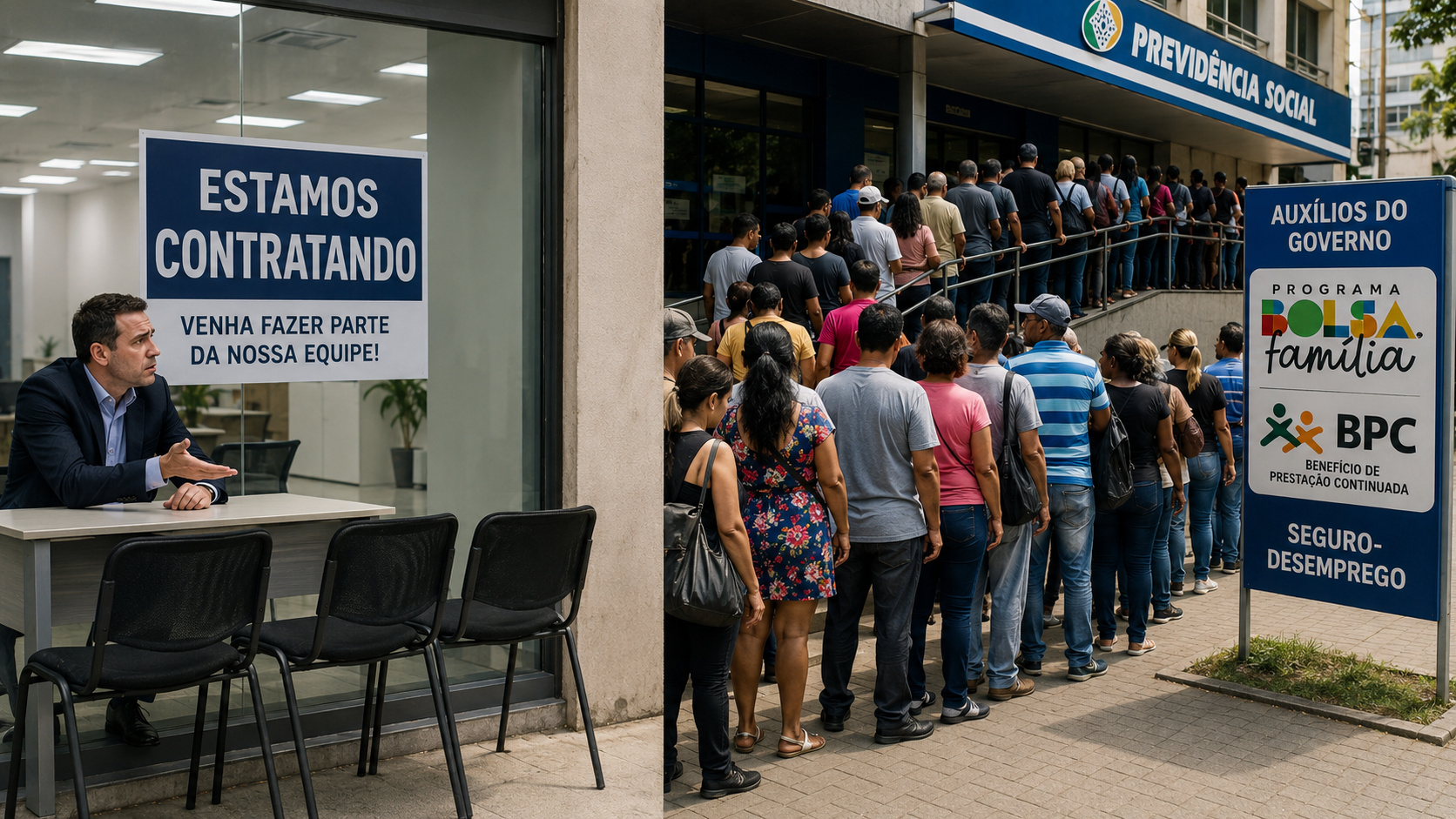
Commerce, supermarkets, and bakeries experience a “labor shortage,” and merchants blame Bolsa Família, BPC, and unemployment insurance as major culprits, while workers outside the market avoid minimum wage jobs for fear of losing benefits.

-
While criticizing retail costs and warning of the risk of “bankruptcy” in the country, Luciano Hang invests R$ 100 million in a new Havan megastore in Serra Gaúcha, creates 200 jobs, and accelerates the plan to reach 200 units in Brazil by the end of 2026.



With the new terminal, Suzano will increase its short fiber pulp handling capacity by 43%.
In practical terms, this means a considerable jump, from 4.6 million to 6.6 million tons per year.
According to the company, this growth makes it possible to ship Brazilian pulp to more than 100 countries, impacting around two billion people directly or indirectly with the essential raw material for the production of paper and other fiber-based products.
Modern Structure and New Equipment for Agility and Safety
In addition to expanding the physical infrastructure of the terminal, Suzano invested in cutting-edge equipment to increase operational efficiency.
Two new rail-mounted gantry cranes were acquired at a cost of R$ 70 million each.
Capable of unloading up to 48 tons in a single move, the cranes replace the traditional use of forklifts, allowing a railcar to be unloaded in about a minute.
The new technology significantly accelerates the process, as each crane can unload up to 44 railcars per hour, optimizing operations and increasing safety.
This innovation, however, brings a controversial side: the mechanization of unloading eliminates the need for forklift operators, generating a negative impact on jobs for these professionals.
“This enterprise demonstrates the capability of Brazilian companies to execute transformational projects,” stated João Alberto Abreu, president of Suzano.
As he emphasized during the inauguration, the project received support from the Ministry of Ports and Airports (MPOR) and the Port Authority of Santos, which have encouraged new investments in the private sector and boosted records in port operations across the country.
Expansion and Strategic Partnership with Portocel and DP World
The terminal expansion included increasing the pulp warehouse area from 21,000 to 28,000 square meters and constructing four railway branches, each 300 meters long.
Suzano also has a strategic partnership with Portocel for the operation of T32 since the beginning of the year, consolidating cooperation among major industry players.
Suzano further expanded the DP World terminal warehouse from 36,000 to 51,000 square meters, raising the annual cargo handling capacity from 3.6 million to 5 million tons.
These investments encompass the modernization of administrative areas and the expansion of the control room, and they have generated 580 direct jobs during the construction and implementation of the new structures.
Integrated Logistics Between Mato Grosso do Sul and the Paulista Coast
The recent logistics expansion is not limited to the coast of São Paulo.
In July of this year, Suzano inaugurated a new production unit in Mato Grosso do Sul, with a high-capacity industrial plant for eucalyptus pulp production.
With an area of 150,000 hectares dedicated to eucalyptus cultivation, the plant has an annual production capacity of up to 2.5 million tons of pulp.
To transport this production to the ports, an intermodal terminal was built in the municipality of Inocência (MS).
This terminal, with an area of 24,200 square meters and 8,800 meters of internal and external railway lines, connects the plant to the rest of the country through the Northern Network, allowing trains to transport pulp for a thousand kilometers to the Port of Santos.
This complex operation involves about 5,200 loaded railcars monthly, demonstrating the breadth of the logistics implemented by Suzano.
Transport is done along a combined route, using trucks and trains.
Production travels from Ribas do Rio Pardo (MS) to Inocência by truck, and from there it is transferred to trains that travel the long route to the Paulista coast.
The railway network is an efficient and sustainable alternative, minimizing environmental impacts and reinforcing connectivity between the interior and the ports.
The Global Impact of the Terminal and Its Relevance to Brazil
The new structure places Suzano in a prominent position in the global market, consolidating Brazil as one of the largest exporters of short fiber pulp in the world.
The impact of the project goes beyond economic and logistical issues: the capacity to supply international markets allows Brazilian products to be present in countries across all five continents, reflecting the importance of the sector for the national economy and for Brazil’s image as a major exporter of commodities.
As explained by the president of Suzano, the MPOR’s public policy has encouraged the private sector to invest in Brazilian ports, breaking records and modernizing national operations. This encouragement helps the country remain competitive in an increasingly contested international market.
Suzano’s expansion in the Port of Santos is a significant step for Brazil in the global pulp scenario and reinforces the country’s strategic role as a global supplier of sustainable products, essential for the paper and packaging industries.
The new operational phase represents a milestone in Brazil’s capacity to meet global demand with efficiency and sustainability.
And you, do you believe that Suzano’s new terminal will be a game changer for port logistics in Brazil? Comment and share your opinion!


Be the first to react!