






 Portuguese
  Spanish


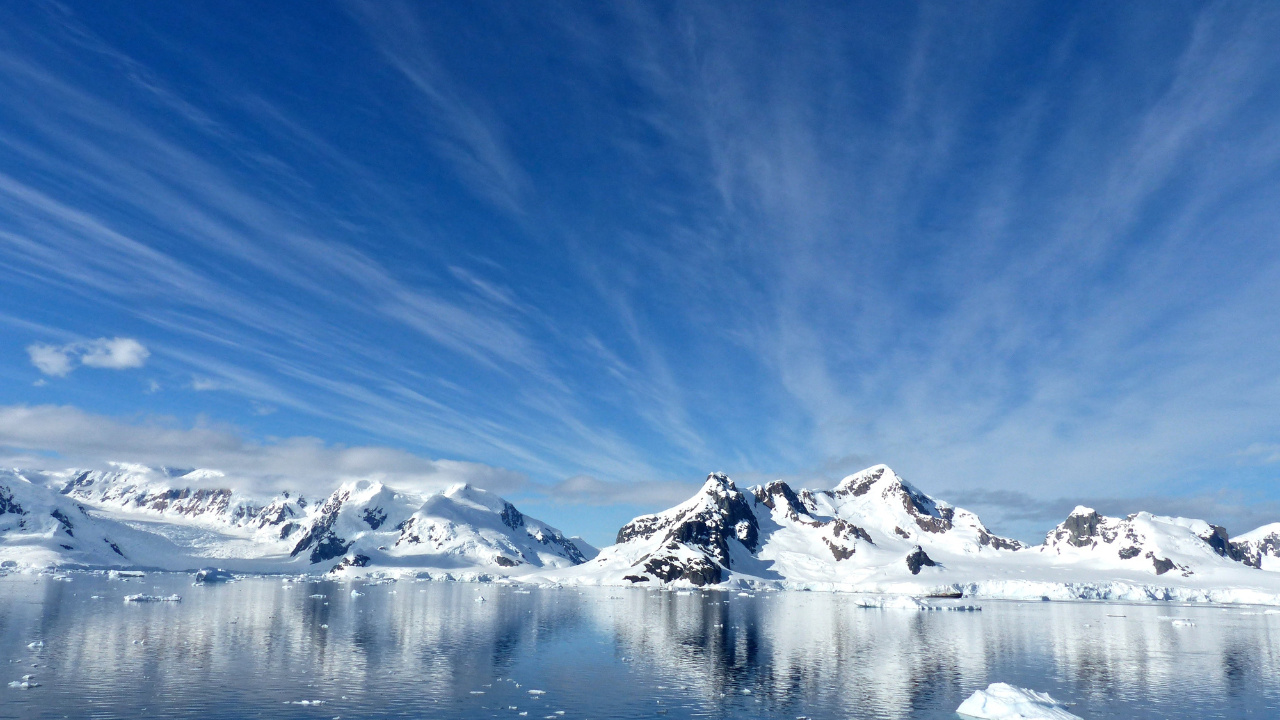


Researchers Identify –98°C in Antarctica, The Coldest Place on Earth. Extreme Climate Challenges Limits of the Planet!
One of the most fascinating mysteries about Earth’s climate has just been updated: scientists have detected the lowest temperature ever recorded on our planet, an impressive –98°C. The achievement took place in a remote point of Antarctica, now considered the coldest place on Earth, where the rarefied air, clear sky, and absolute silence reveal almost alien conditions.
The measurement, made by satellites during the harsh Antarctic winter, surpassed the previous record of –89°C, recorded in 1983 at the Russian Vostok station. The new milestone was published in the scientific journal Geophysical Research Letters, and puts the limits of Earth in question.
An Extreme Environment at the Limit of the Planet
“It’s a place where Earth is so close to its limit that it feels like another planet,” described Ted Scambos, a researcher at the National Snow and Ice Data Center at the University of Colorado. For scientists, East Antarctica — where the new minimum was recorded — is more than just a frozen desert: it’s a natural laboratory for understanding climate extremes.
-
Viral Video of Giant Gold Nugget in Brazil’s Oiapoque Revealed as Painted Rock by French Guiana Miner

-
18th-Century Treasure Uncovered in Brazilian Amazon: 20 Réis Coin and Dutch Pipes Found at Construction Site
-
New York Resident Uncovers Complete Mastodon Jawbone in Backyard After Spotting Teeth Emerge from Ground
-
Young Treasure Hunter from Brazil’s Balneário Camboriú Finds $22,000 in Jewelry with Metal Detector, Aims for $1 Million, and Returns iPhone Found in Ocean


Contrary to what many think, Antarctica’s ice sheet is not completely flat. It forms a sort of dome, like a frozen turtle shell. And it was at the highest point of this dome, where cold air naturally accumulates in small depressions of ice, that satellites identified the pockets of extreme cold.
These depressions are so shallow that they can barely be seen with the naked eye. However, they act like real thermal traps, where cold, denser air settles and remains stagnant for days, creating the ideal conditions for this extreme freezing.
The Coldest Place on Earth: Air So Cold It Becomes Deadly!
To give an idea of the risk these temperatures represent, air at –98°C is so cold that a simple breath can cause pulmonary hemorrhage. Scientists operating at nearby bases, such as the Vostok station, need to use special masks that warm the air before inhalation, given the harshness of the environment.
At the surface of the snow, satellite sensors recorded the absolute minimum. However, about 1.5 meters off the ground — a height equivalent to that of the human head — temperatures would be “less severe,” yet still frightening: around –94°C.
Clear Skies, Dry Air, and No Wind: The Recipe for Extreme Cold in Antarctica
According to researchers, only a specific combination of factors allows Earth’s climate to reach such low temperatures. It requires that winter be at its peak, with no wind for several days, extremely dry air, and a completely clear sky — no clouds, no dust, no atmospheric coverage of any kind.
These rare conditions cause the weak heat radiated by the ice — which would normally be reflected back by atmospheric moisture — to escape directly into space. The result is a sharp and impressive drop in temperature at the surface.
The Telescope Where Cold Reigns
The extreme dryness has also made the region one of the best spots on the planet for astronomical observations. Just a few kilometers from the coldest locations, the High Elevation Antarctic Terahertz Telescope (HEAT) has been installed, which takes advantage of the absence of water vapor in the atmosphere to capture images of space with greater clarity.
Craig Kulesa, an astronomer at the University of Arizona and leader of the HEAT project, explains: “Water vapor is our biggest enemy. Here, we are practically at the driest and most ideal place to look at the universe.”
A Record That May Not Last
Despite the scientific achievement, experts warn that global climate change may make records like this increasingly rare. With rising concentrations of greenhouse gases and water vapor in the atmosphere, Antarctica is also likely to warm — even if slightly.
“We expect an increase of 3 to 4°C in the coming decades,” says John Turner, a climatologist at the British Antarctic Survey. “Which means that seeing such low temperatures again will become less and less likely.”
The discovery is impressive but also serves as a warning: Earth’s extremes are changing. And, perhaps, the coldest place on the planet is gradually losing its icy throne.


