






 Portuguese
  Spanish


Honda Elevate combines 1.5 aspirated engine, Honda Sensing, 220 mm ground clearance, and aggressive pricing in the Indian market.
While medium and compact SUVs have become increasingly expensive in Brazil, Honda decided to take a different path in some Asian markets. The Honda Elevate has become one of the brand’s most talked-about launches because it combines a 1.5 aspirated engine, Honda Sensing package, generous interior space, and a relatively low price by current automotive industry standards.
In India, the model starts at around ₹11.6 lakh, approximately R$ 60,000 in direct conversion as of May 2026, without considering Brazilian taxes, freight, or import costs. Even in this range, the SUV already offers six airbags, multimedia center, rear camera, and one of the highest ground clearances in the segment.
The Elevate stands out because it represents exactly a type of Honda that has practically disappeared from the Brazilian market: a rational SUV, focused on space, mechanical reliability, and cost-effectiveness, without relying on small turbo engines or overly sophisticated proposals.
-
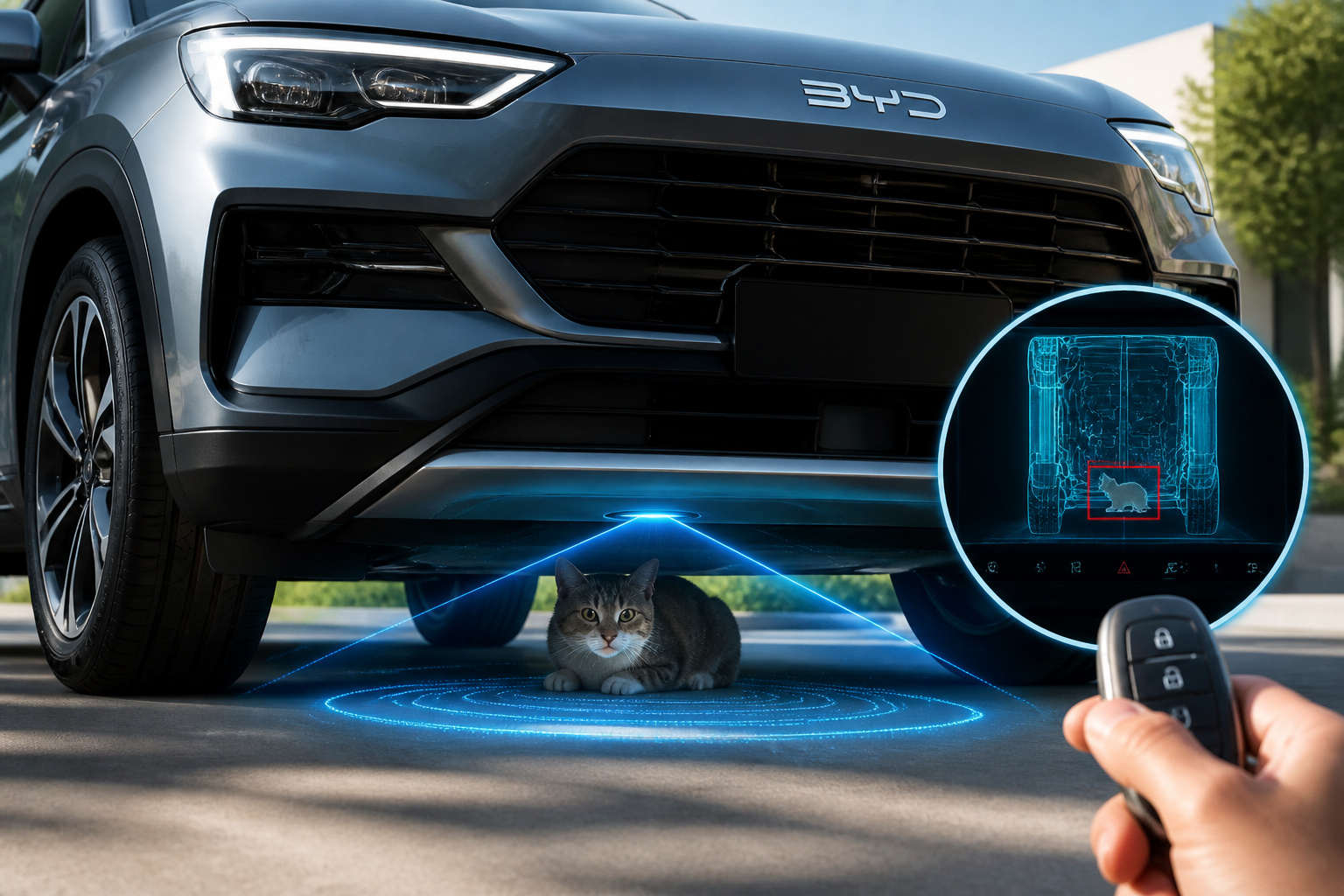
BYD Patents Revolutionary System Using Computer Vision to Detect Animals Under Cars Before Starting, Preventing Tragedies

-
Study Reveals Why Cars Are More Expensive to Produce and Buy in Brazil Compared to Mexico, Highlighting Taxes, Logistics, and Industrial Costs as Key Factors.
-
Toyota to Open New Factory in Brazil by November 2026 with $2.2 Billion Investment, Creating 2,000 Jobs, and Ending Corolla Production in Indaiatuba

-
Brazilian Factory Restores Truck Engines and Parts, Reducing Raw Material Use by Up to 85% After 80 Years in Business




The Honda Elevate was created to compete in India’s most competitive segment
The Elevate was launched to face models like Hyundai Creta, Kia Seltos, Volkswagen Taigun, Toyota Hyryder, and Suzuki Grand Vitara in the Indian market. Honda knew it needed to quickly enter the country’s largest automotive segment: urban compact SUVs.
Unlike some competitors focused on aggressive looks and multiple turbo engine options, Honda chose a more traditional strategy.

The Elevate uses a platform derived from the Honda City and bets on interior space, elevated height, mechanical robustness, and comfortable drivability. The result is an SUV that tries to balance simplicity with modern technology.
The 1.5 i-VTEC engine maintains Honda’s classic formula
The heart of the Elevate is a well-known 1.5 i-VTEC engine aspirated four-cylinder. According to official data from Honda India, the engine delivers approximately 121 hp and 145 Nm of torque, and can work with a 6-speed manual gearbox or CVT transmission.
Honda clearly prioritized smoothness and reliability over extreme power. While many automakers have migrated to 1.0 turbo three-cylinder engines, the Elevate maintains a traditional naturally aspirated set that often appeals to consumers concerned with long-term durability and maintenance.
This type of engine still has an enormous positive reputation in emerging markets.
The SUV bets on interior space and elevated height to tackle bad roads
One of the strongest points of the Elevate is its dimensions and practical proposal. The SUV is approximately 4.3 meters long, with a wheelbase of 2,650 mm and a trunk capacity of 458 liters. Additionally, the ground clearance reaches 220 mm, a number higher than many SUVs sold globally.


This makes a difference especially in countries with irregular infrastructure, high speed bumps, and bad roads. Honda also worked on the rear interior space, trying to create a comfortable cabin for families without turning the car into a too-large SUV for urban use.
Honda Sensing has become one of the main differentiators of the model
Another important point of the Elevate is the Honda Sensing package. According to Honda, the system includes advanced driver assistance technologies such as autonomous emergency braking, lane-keeping assist, adaptive cruise control, and road departure mitigation.
This type of technology usually appears in more expensive vehicles in various emerging markets. The presence of the ADAS package helps the Elevate appear more sophisticated without abandoning the rational proposal of a family SUV.
In higher versions, the model can also feature LaneWatch camera, electric sunroof, wireless charger, and larger multimedia system.
The fuel consumption of the Honda Elevate tries to balance performance and efficiency
Honda claims a fuel consumption of approximately 15.31 km/l in manual versions and up to 16.92 km/l in locally homologated CVT configurations.

The numbers are not record-breaking for a modern compact SUV, but they remain competitive considering the naturally aspirated 1.5 engine and the size of the vehicle. Honda’s focus seems to be more on smoothness, linearity, and reliability of the set rather than extreme efficiency.
This behavior also reinforces the traditional identity of i-VTEC engines.
The Elevate shows how Honda still bets on naturally aspirated SUVs outside Brazil
While the Brazilian market accelerates the transition to smaller turbo engines and increasingly expensive SUVs, the Elevate follows a different philosophy.
Honda kept the naturally aspirated engine, 6-speed manual transmission, ample interior space, and focus on mechanical robustness. Instead of betting solely on performance or sporty appearance, the SUV tries to convince through overall balance.

This ends up creating a curious feeling for the Brazilian public: the Elevate seems like a modern, technological, and rational SUV at the same time, something that many consumers miss in the current national market.
Technical specifications of the Honda Elevate
| Item | Honda Elevate |
|---|---|
| Category | Compact SUV |
| Engine | 1.5 i-VTEC naturally aspirated |
| Cylinders | 4 inline cylinders |
| Displacement | 1,498 cm³ |
| Maximum power | 121 hp |
| Maximum torque | 145 Nm |
| Fuel | Gasoline |
| Manual transmission | 6 speeds |
| Automatic transmission | CVT |
| Drive | Front |
| Manual consumption | up to 15.31 km/l |
| CVT consumption | up to 16.92 km/l |
| Length | 4,312 mm |
| Width | 1,790 mm |
| Height | 1,650 mm |
| Wheelbase | 2,650 mm |
| Trunk | 458 liters |
| Ground clearance | 220 mm |
| Fuel tank | 40 liters |
| Airbags | 6 |
| Honda Sensing | available |
| Sunroof | available |
| Multimedia center | up to 10.25 inches |
| Android Auto / Apple CarPlay | Yes |
Data may vary according to version and market.


