






 Portuguese
  Spanish


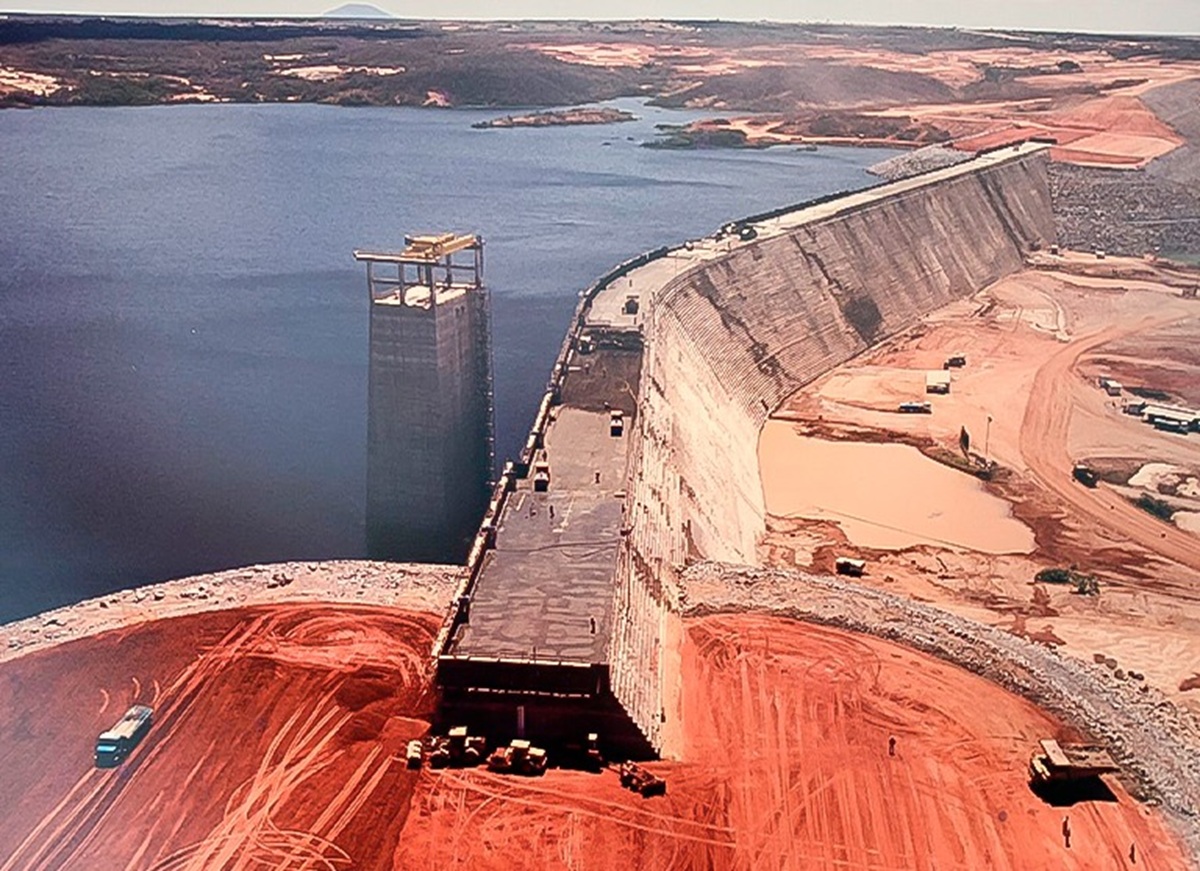


With Almost Seven Billion Cubic Meters of Water, the Largest Reservoir in the Country Changed the Geography of Ceará, Submerged the Old Headquarters of a Municipality, and Redefined the Water Supply of the Entire Region
The Castanhão Reservoir, officially called the Padre Cícero Public Reservoir, marks one of the greatest transformations in the relationship between the people of the hinterland and water.
The construction over the bed of the Jaguaribe River in Ceará crowns a journey that began in the 19th century when the droughts of the Northeast already posed a great national challenge.
The landscapes ravaged by the drought revealed cracked ground, thin cattle, and dusty roads, elements that defined the daily life of a people seeking lasting solutions for survival.
-
How Many Outlets Should Each Room Have? Guidelines Suggest 6 to 10 in the Kitchen, One Every 3.5 Meters in Living Rooms, and Specific Recommendations for Bedrooms, Bathrooms, Laundry Rooms, and Outdoor Areas

-
Family Turns Homemade Cheese Bread Recipe into a $17 Million Frozen Foods Business with 200 Tons Monthly Production and Over 1,400 Clients

-
Ancient 4,000-Year-Old City in Brazil Grew Wealthier and Reduced Inequality, Study Finds
-
Lost Page from Archimedes Palimpsest Resurfaces in French Museum After Decades, May Reveal Hidden Mathematical Calculations with X-ray and Multispectral Imaging




The policy of reservoir construction emerged in this scenario when Dom Pedro II decided to tackle the phenomenon with the construction of the Cedro Reservoir in Quixadá.
The effort intensified throughout the Republic, multiplying reservoirs of various sizes.
Within this movement, the idea of building a large dam in the Jaguaribe Valley began to take shape, capable of regulating floods, facing long droughts, and ensuring water for various economic activities.
The Choice of Boqueirão do Cunha

The first studies that indicated the feasibility of the project occurred around 1910, conducted by the then Inspection of Works Against Droughts.
The choice of the location was not by chance. Engineer Stanford Roderic Crandall identified geological markers in Boqueirão do Cunha that indicated it was the best region to receive the dam.
He even lived in a cave in the area, known as the Doctor’s Cave, which served as both residence and office.
Interestingly, during the excavations, Crandall found a stone block with the enigmatic phrase: “Region São Salvador cave of mystery, work of the end of times 1893.”
The record was preserved as a historical curiosity of the place that, decades later, would house the water intake of Castanhão.

The Prominence of the Cunha Family in the Initial Design
According to the City Hall of Alto Santo, the Cunha family was the first to conceptualize the reservoir project.
José Holanda Cunha, an influential figure in the region, led the local oligarchy and owned the lands of the Castanhão farm and the Boqueirão do Cunha village.
The reservoir received this name precisely because it occupies almost the entire property of the family.
The initial concept gained strength when the technical studies by the government pointed the same area as ideal for the dam.
The Start of the Construction and the Displacement of Jaguaribara

The construction of Castanhão officially began in 1995, during the government of Tasso Jereissati, in partnership with DNOCS and the Ceará Secretary of Water Resources.
The project was completed on December 23, 2002, during the management of Beni Veras.
Before execution, DNOCS had already developed, throughout the 1980s, the basic and executive projects, based on preliminary studies of the Transposition of Flows of the São Francisco River.
The advancement of the construction brought an unavoidable consequence: the flooding of the old headquarters of the municipality of Jaguaribara.
The area became submerged, leading to the creation of Nova Jaguaribara, with replicas of the main church and the church of Poço Comprido, preserving part of the architectural memory of the city.
The Engineering That Moved Mountains
Between May 1996 and August 1997, teams worked on excavations in soil and rock for the implementation of the spillway.
After the completion of this phase, in September 1997, the concreting of the structure began, which continued until October 1999. The company Andrade Gutierrez executed the work under the direct supervision of DNOCS.
The grandeur of Castanhão is evident in the numbers. It holds 6.7 billion cubic meters of water, making it the largest multi-purpose reservoir in Latin America.
Alone, it represents 37 percent of the storage capacity of all over eight thousand reservoirs in Ceará. Before it, the title of the largest reservoir belonged to Orós, which holds just over half that amount.
Multiple Uses and Regional Impact
Castanhão supplies the Jaguaribe Valley, supports irrigation agriculture projects, fishing, aquaculture, and water leisure activities.
Its waters also assist in supplying the Metropolitan Region of Fortaleza whenever necessary.
Additionally, through the Integration Canal, the reservoir plays a strategic role for the Pecém Port Complex and the establishment of an industrial hub, increasing its value for all of Ceará.
Despite its size, Castanhão does not have hydroelectric use. Its function is concentrated on controlling seasonal droughts and floods, ensuring water security for the state.
The Importance of Zita Timbó in Leading the Work
The history of Castanhão also includes the prominence of a woman who broke barriers: engineer Maria Zita Timbó Araújo. Graduated from the Federal University of Ceará, she joined DNOCS in 1980 and, in 1995, received the invitation to oversee the dam’s construction.
Leading a team of 1,200 people in one of the largest infrastructure projects in the country was not a common task for a woman in the 1990s.
Zita balanced this role with motherhood, as her son was only nine months old when she took office. Her journey inspires women facing multiple challenges, balancing professional and family life while occupying historically male spaces.
Castanhão as a Landmark of the Hinterland

Drought has always accompanied the hinterland inhabitants throughout the centuries. When the rains failed, the struggle for survival remained. The old prophecy that said “the hinterland will turn into the sea” gained symbolic meaning when the reservoir took shape.
For many residents, Castanhão represented that “sea” that came with walls, damming the natural course of water to ensure life and hope.
The reservoir has become an emblematic work of modern engineering. It combines studies that began in the 19th century, planning in the 20th century, and execution completed in the 21st century.
A result of decades of efforts, debates, research, and displacements, the reservoir today integrates the daily lives and livelihoods of thousands of Cearese people.
A Heritage That Transcends Generations
The construction of Castanhão transcended distinct political periods, incorporated national and foreign knowledge, and mobilized entire communities.
The submersion of Jaguaribara, the creation of Nova Jaguaribara, the work of thousands of people, and the leadership of an engineer at a historic moment form a human mosaic that goes beyond engineering.
The curiosities of Boqueirão do Cunha, such as the ancient cave inhabited by Crandall, reinforce how the history of Castanhão encompasses layers of symbolism and collective effort. The enigmatic record found in the stone, the technical choices, the geological studies, and the territorial changes broaden the cultural dimension of the dam.
The Great Work That Redefined Water Supply in Ceará
With its monumental capacity and multiple uses, Castanhão became an essential part of the state’s water infrastructure.
It helps to face periods of drought, enables economic activities, and sustains human supply. Its construction represents the continuity of a policy initiated in the Empire, adjusted throughout the 20th century and solidified at the end of the last century.
The history of Castanhão is, above all, a story of resilience, engineering, strategy, and transformation. Each stage reveals the importance of a project that changed the hinterland and continues to be essential for the future of Ceará.




Pois é, e hoje em dia com tantos métodos de energias renováveis, sem agredir o meio ambiente, energia eólica, energia solar e ainda precisam lavar dinheiro com essas megas construções, mexendo em toda a fauna, flora, e devastando até cidades.
Infelizmente hoje se encontra com nível crítico, o que não deveria esta acontecendo se tivesse chegando as águas do São Francisco, águas essa desligadas no dia 2 de janeiro de 23 pelo atual governo ao desligar as bombas do açude Jati. Era pra esta cheio e hoje se encontra quase seco.
Um fenômeno o Castanhão, não sei porque a transposição do São Francisco demorou tanto para ser concluída, a qual deveria ter seguido o exemplo extraordinário do açude em questão, até padre fez greve de família me para q ninguém tocasse o Velho Chico e q suas águas se perdessem para sempre nas águas salgadas do mar e não fossem acumuladas nos açudes q fazem a felicidade dos nordestinos.
A demora não é surpresa,anos e anos de governos de esquerda,que tiraram e tiram do povo nordestino o direito a água,e a usando como moeda de troca.