






 Portuguese
  Spanish


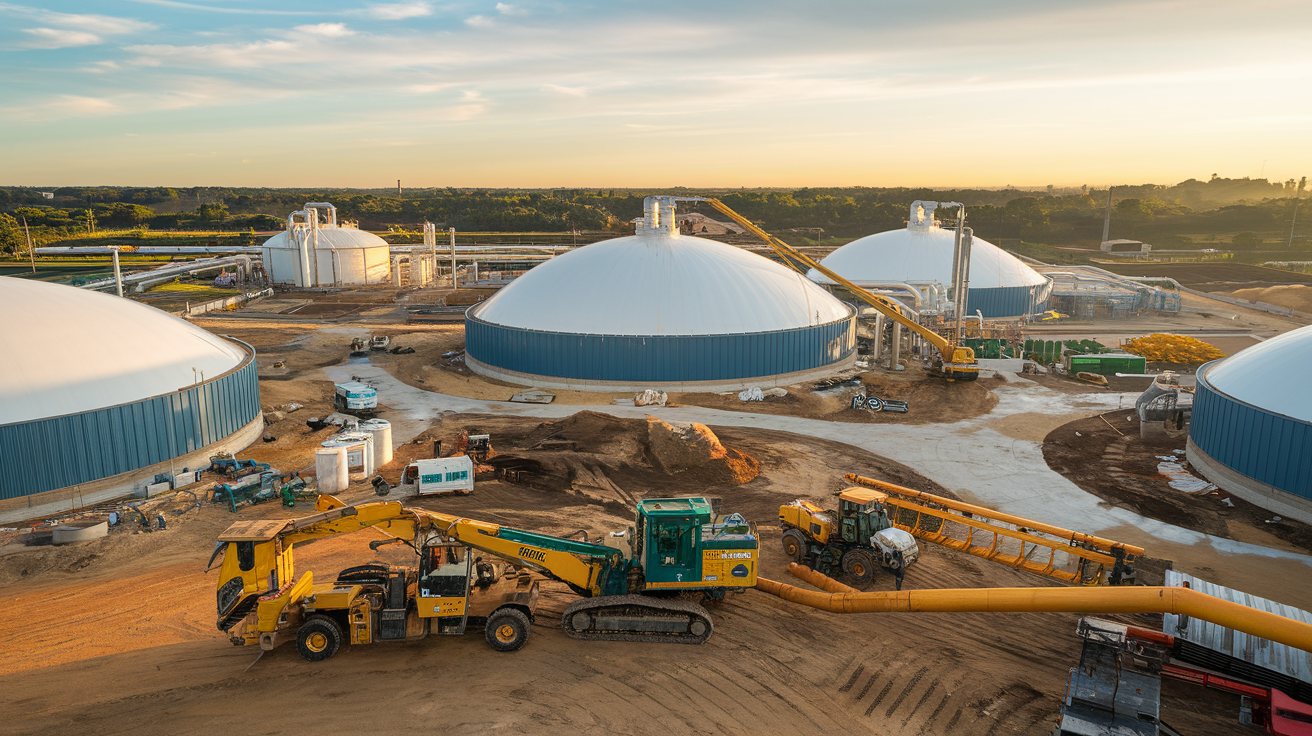

Citrus Waste Gains Visibility With The Arrival Of The World’s Largest Biogas Plant: French Multinational Invests In New Unit To Reduce 20% Of Emissions In A City In SP.
On Tuesday (11), Louis Dreyfus Company (LDC), a multinational from France and one of the global leaders in the production and sale of citrus juices, officially launched the construction of the world’s largest biogas plant produced from citrus waste, located in Bebedouro, São Paulo state.
Learn How The New Biogas Plant In Brazil Will Be
The new unit that will use citrus waste occupies a total area of approximately 200,000 m² and has an initial capacity to treat 400 m³/h of citrus effluents generated at the company’s local unit, potentially generating over 50,000 Nm³/day of sustainable gas. The expectation is for a reduction of over 20% in CO2 emissions from operations in Bebedouro, aligned with the company’s global commitment to sustainability.
The major differentiator of the world’s largest biogas plant is the use of a specific inoculum developed by LDC itself, which efficiently decomposes citrus waste from processing, such as oranges and lemons.
-
California Project Aims to Store Heat Underground in Former Oil Reservoir to Generate 100 kW of Electricity for Over 12 Hours

-
Brazilian Company in Minas Gerais Innovates by Using Electric Currents to Extract Critical Metals from Industrial Waste
-
French Port Harnesses Industrial Waste Heat to Power Up to 30,000 Homes
-
Belgian Port to Install Shore Power for Cruise Ships by 2027, Cutting Dock Emissions by Up to 5% and Meeting EU Regulations



During the pilot testing phases, LDC achieved results that surpassed existing market technologies by up to 16% efficiency. The fuel produced will replace the natural gas traditionally used in the company’s industries, representing an estimated 50% savings in fossil fuel consumption for the unit.
The treatment process for citrus waste at the world’s largest biogas plant will start in a homogenizing tank, moving on to anaerobic lagoons where the inoculum decomposes organic matter. Subsequently, the material is transferred to aerated lagoons for final filtration. The resulting water, fully treated, will be returned entirely to the Rio Paiol, ensuring no contamination or waste occurs.
The World’s Largest Biogas Plant Is Expected To Be Completed By The End Of The First Semester Of 2026
It is noteworthy that the sludge generated by the process can be reused as organic fertilizer on the more than 30,000 hectares of orchards managed by the company. The construction of the unit is expected to be completed by the end of the first semester of 2026, with expansion potential, considering that the total acquired land encompasses 10,000 hectares, allowing for expansion if demand increases.
According to Paulo Hladchuk, Global Head of LDC’s Juice Platform, the world’s largest biogas plant makes a real circular economy model possible and will also reduce the emission of polluting gases by 20%.
Another important aspect of the project is the potential future production of biomethane, provided that the fuel undergoes a purification process that increases its methane concentration to 96%, allowing for commercial use and in the company’s vehicle fleets.
The World’s Largest Biogas Plant Receives Support From The Government Of SP
The project using citrus waste has significant institutional support from the Government of the State of São Paulo, which has been fostering investments in renewable energy and biofuels.
The Secretary of Agriculture and Supply of the State, Guilherme Piai, highlighted that this investment of millions of dollars demonstrates confidence in the business environment in São Paulo, which offers legal security, research, and availability of credit for agribusiness.
The multinational’s investment reflects confidence in the Brazilian citrus sector, especially in São Paulo, where seven out of every ten cups of juice consumed in the world are produced. The citrus sector in São Paulo generated over 45,000 jobs in the 2023/2024 harvest, a growth of 10% compared to the previous year, demonstrating the positive impact of the sector on the regional economy.
Source: Globo Rural


