Portuguese
  Spanish


Unind will be headquartered in Brasília, may create campuses in indigenous regions, and foresees its own selection processes, quota reservations, and leadership held by indigenous faculty
A historic decision for Brazilian indigenous education was approved by the National Congress this Tuesday, May 5, 2026, after a vote in the Federal Senate Plenary. The project that creates the Federal Indigenous University (Unind) received a favorable opinion from Senator Eduardo Braga (MDB-AM) and now proceeds to presidential sanction. The proposal, sent by the Palácio do Planalto through PL 6.132/2025, establishes a public university aimed at indigenous peoples, with administrative headquarters in Brasília and the possibility of implementing campuses in different regions of the country, according to the demands of indigenous communities.
The creation of Unind represents an institutional advancement focused on higher education, research, and university extension, but also on the valorization of traditional cultures, languages, and knowledge. The text foresees that the university will develop actions related to socio-environmental sustainability in indigenous lands and promote the production of scientific and technical knowledge in dialogue with knowledge transmitted through generations. This movement reinforces the attempt to bring academic training, territorial management, environmental protection, and cultural strengthening closer together within a structure designed for the reality of indigenous peoples.
National structure strengthens indigenous presence in higher education
The future university will be an autonomous institution linked to the Ministry of Education, with its headquarters and jurisdiction in Brasília, but organized in a multicentric format. The proposal allows for the creation of campuses in different Brazilian regions, respecting the specificities of the indigenous presence in the national territory. With this, Unind will be able to reach communities distant from large university centers and expand access to higher education in strategic areas for indigenous peoples.
-
City Hall opens selection process with free registration, salaries up to R$ 3,622.31, and positions for teacher, driver, speech therapist, assistant, and other roles in education in Juazeiro.

-
Work as an Enem exam supervisor and earn R$ 864 per day: Inep opens national selection for Enem, PND, and Enamed 2026 certifiers with applications from June 8 to 28 and strategic roles in exam supervision throughout Brazil.
-
Navy opens competition for the Technical Corps of Naval Ratings with strategic positions in military submarines and nuclear facilities, expanding the technological role of the naval force in 2026 with highly specialized training and impact on Brazilian defense.
-
Attention exam candidates: Maranhão accelerates public competitions in 2026 after the announcement by Governor Carlos Brandão with 3,350 confirmed vacancies, the definition of the organizing committee, and expected notices, expanding opportunities in security, education, and administration with a direct impact on the state economy.

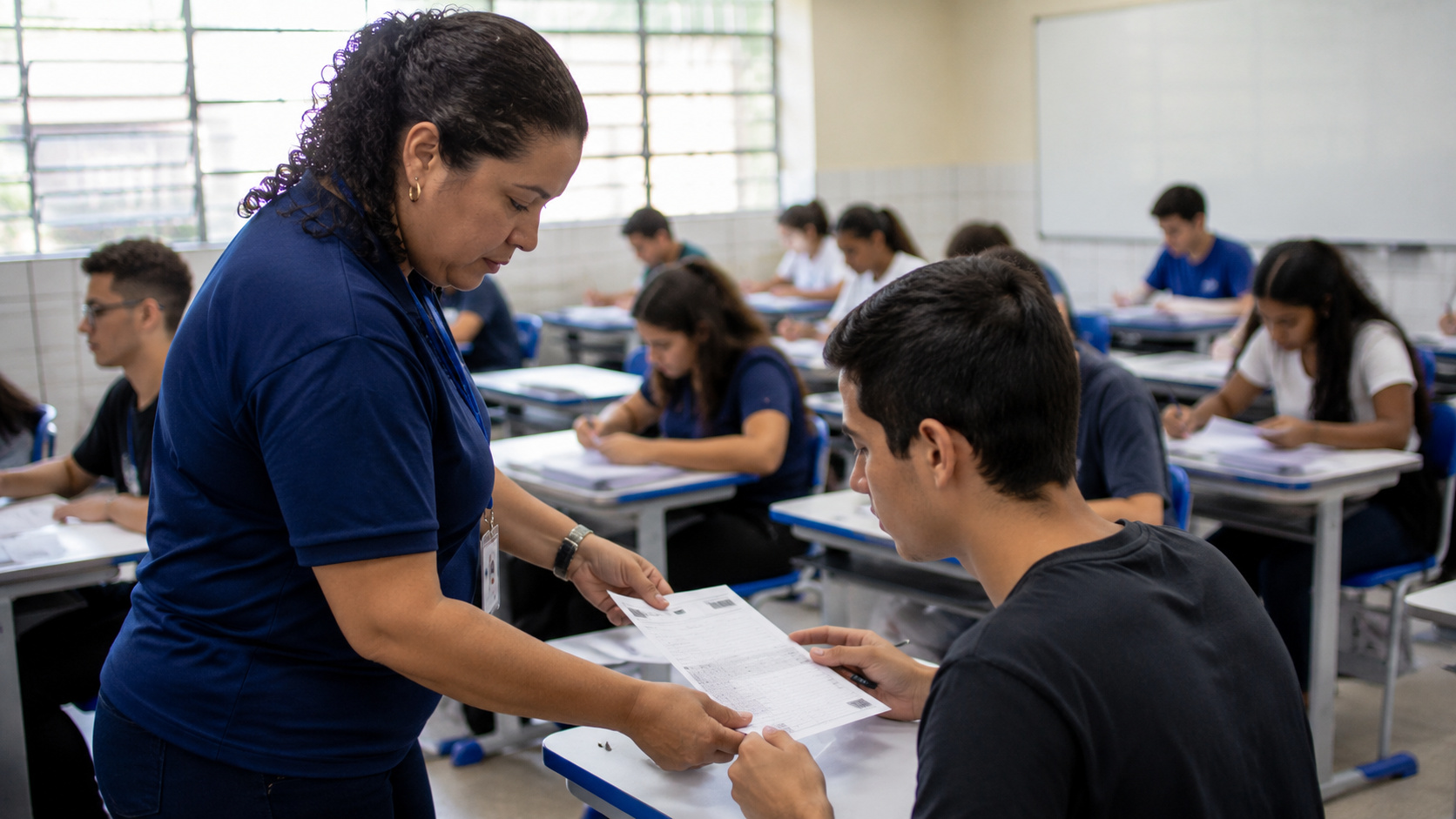


The project foresees the offer of ten undergraduate courses in the areas of teacher training, educational management, indigenous collective health, and territorial and environmental management. The forecast is to serve 2,800 students within four years, according to the details presented in the approved text. In addition, the university must promote research, extension, technological innovation appropriate to indigenous contexts, and the dissemination of the cultures, histories, and languages of indigenous peoples of Brazil and Latin America.
Own selection processes expand access and representation
Unind may create its own selection processes, provided that indigenous communities are consulted and linguistic and cultural diversities are considered. The criteria must ensure a minimum percentage of indigenous candidates selected, in dialogue with the Quota Law (Law 12.711/2012). This structure seeks to adapt university admission to the realities of indigenous peoples, without abandoning legal parameters already applied in Brazilian higher education.
Admission to permanent positions for professors and administrative technicians will occur through public examinations of tests or tests and qualifications, also with a minimum percentage for indigenous candidates, in accordance with Law No. 15.142, of June 3, 2025. The positions of rector and vice-rector must be obligatorily held by indigenous faculty. The first rector and vice-rector will be temporarily appointed by the Minister of Education, until the university is organized through its statute, which must be sent to the ministry within 180 days after the appointment.
Debate in Congress highlights historical reparation
In the Chamber of Deputies, the rapporteur was Deputy Célia Xakriabá, who led the discussions with a focus on respect for cultures, territories, and knowledge passed down through generations. In the Senate, Eduardo Braga declared the inadmissibility of PL 3.003/2023, authored by former Senator Mecias de Jesus (RR), which also dealt with the creation of an indigenous university. The senator emphasized that Brazil still does not have a university essentially focused on the reality of indigenous peoples.
During the plenary debate, Senator Randolfe Rodrigues (PT-AP) congratulated the federal government on the initiative and classified the proposal as a measure of historical reparation. The discussion reinforced the symbolic weight of Unind in a country that recognizes, since the 1988 Constitution, the social organization, customs, languages, beliefs, traditions, and rights of indigenous peoples over traditionally occupied lands.
Consultation with indigenous peoples supported the proposal
The proposal results from a long listening process conducted by the Ministries of Education and Indigenous Peoples, following a request from the National Forum for Indigenous School Education. Since 2012, working groups have been established to discuss the creation of an indigenous university. In 2024, seminars in 20 locations across different regions and states sought to broaden the consultation to the largest possible number of peoples.
The implementation of Unind, however, will be conditional on the existence of specific allocation in the General Union Budget. Even so, congressional approval puts the university at a decisive stage, with the potential to reorganize indigenous presence in higher education, strengthen scientific production linked to territories, and broaden the recognition of traditional knowledge within Brazilian public universities.