






 Portuguese
  Spanish


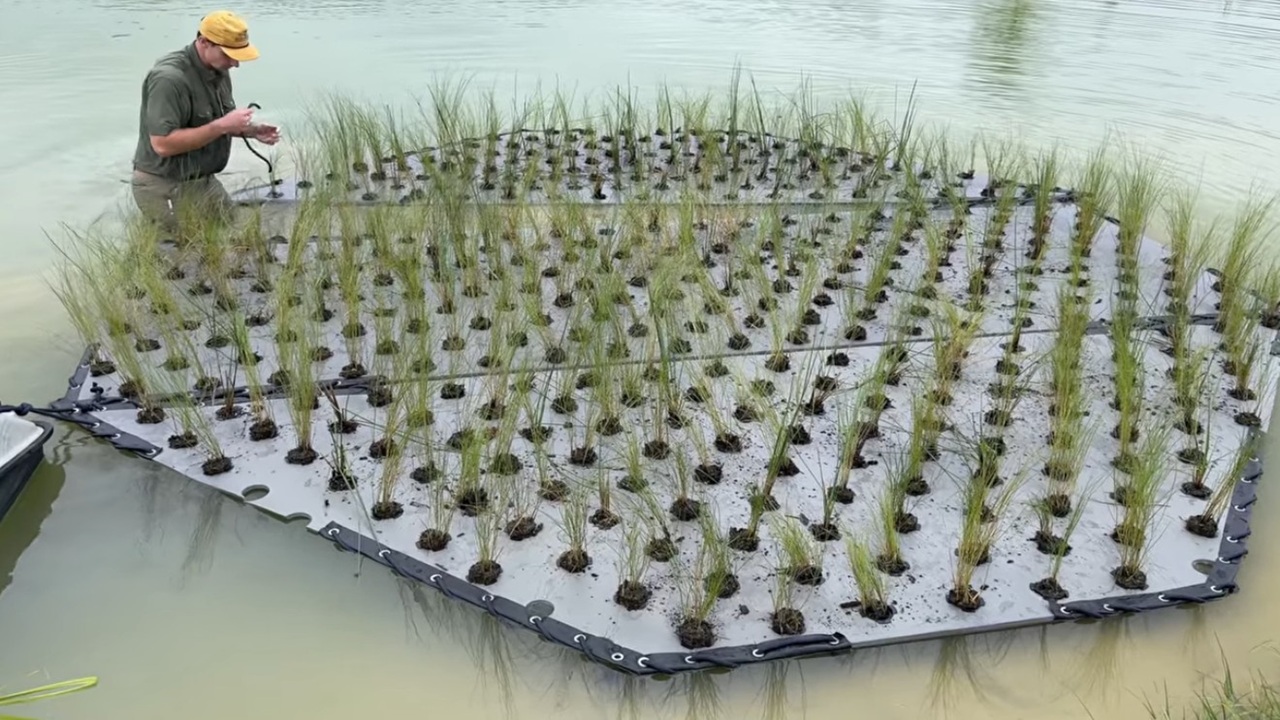


Project at Crimson Oak Pond uses floating islands to create shelter, filter nutrients, and improve the fish environment, while 10,000 shads enhance the feeding of bass and wildlife yields unexpected scenes
On the BamaBass channel, the audience was taken back to the Crimson Oak Pond to follow a new stage in lake management: the installation of floating islands with aquatic plants, the reinforcement of the food chain with 10,000 baitfish, and a series of curious encounters with the property’s wildlife.
Since the five-acre lake was built, one of the most frequent questions from followers was why there was no aquatic vegetation in the area. The answer, according to BamaBass himself, always came from the consulted biologists: in larger lakes, rooted plants can get out of control, spread quickly, and require spraying, which could harm the fish.
The solution found was to use floating islands known as BMATS. Instead of rooting in the clay bottom, the plants remain suspended on the surface, with roots submerged in the water. Thus, they help filter nutrients, provide shade, increase coverage for fish, and create shelter for smaller organisms.
-
Billionaire says the most valuable skill will help overcome job elimination caused by AI, following Bill Gates’ fears

-
A Dutchman created a ‘box’ that makes trees grow in the desert almost without water and without irrigation: the invention has already brought seedlings to dozens of countries and achieves up to 90% survival where common planting did not exceed 10%.

-
Abandoned warehouse hid a giant collection of rare computers, with over 2,000 artifacts from the 1930s to the 1980s.
-
Scientists warn that melting ice is triggering an alarming chemical transformation in preserved areas, and the first signs are already concerning researchers worldwide.




Plants become shelter and hunting ground for fish
Patrick Rogers, from BMATS, explained that the system works like a kind of natural filter. The plants absorb excess nutrients, such as nitrogen and phosphorus, and then part of the biomass can be removed. At Crimson Oak Pond, three islands of 175 square feet each were installed, with native grasses and hardy plants.
The structures were connected, taken by boat to the chosen spots, and secured by an anchoring system that allows circular movement, without letting the islands touch the shores. The expectation is that, in about a month, the plants will fully cover the mats.
In addition to the vegetation, the lake received 10,000 threadfin shad, small fish used as food for bass. The idea is to reinforce the food base for new generations, especially smaller fish, which depend on bait that is easier to swallow and digest.
Eagle, turtle, and Moby’s offspring draw attention
The movement of the fish also attracted predators. A bald eagle was filmed capturing one of the shads, but the most surprising scene came later: the bird appeared eating a small turtle. BamaBass himself commented that if he hadn’t recorded it on video, he might not have believed it.
Another exciting point was the update on Moby’s offspring, a bass raised for nine years and known for its aggressiveness. Before dying, Moby managed to reproduce, and three fry were taken to a 300-gallon aquarium. The little ones already show the same intense behavior as their father, attacking food, pellets, and even the breeder’s finger.
The routine at the pond also included maintenance of water lilies, observation of giant bluegills, turtles, frogs, traps, raccoons, a possible fox or coyote, and even a rare beaver in the area. To conclude, BamaBass caught some bass identified by scanner, showing how the pond continues to be closely monitored.
Among plants, fish, birds, and memories of Moby, the episode showed how each detail of the ecosystem is connected within the farm.





