






 Portuguese
  Spanish
  5 min of reading
  0 comments


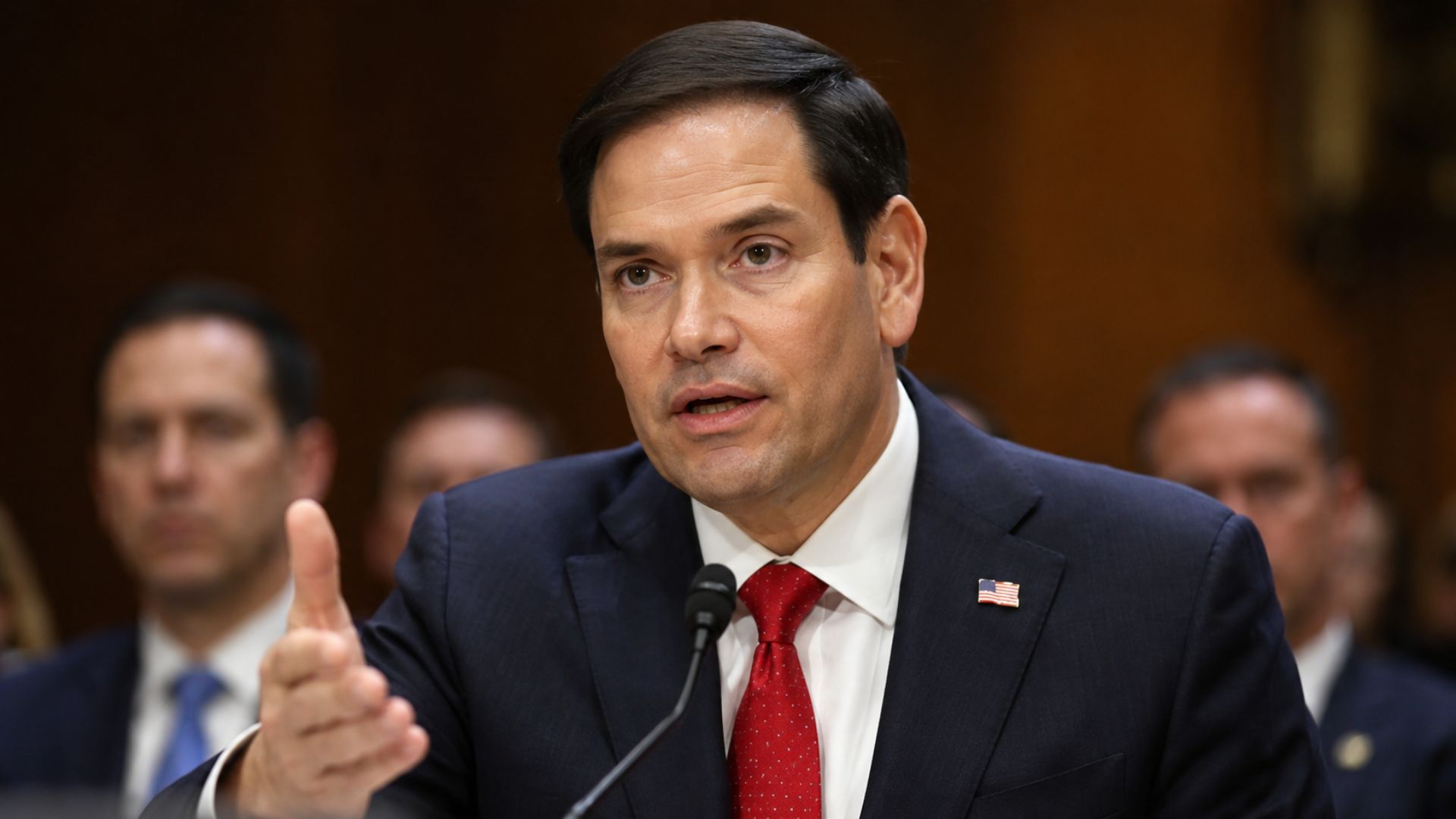
When listing the United States’ partners on the continent, the head of American diplomacy made a point of highlighting who was left out. Brazil appeared on the list of exceptions, alongside regimes historically rivals of Washington. The statement was not the focus of the testimony, but it resonated strongly in Brasília.
The United States Secretary of State, Marco Rubio, classified Brazil as a country that, in his assessment, is not among Washington’s friends on the continent. In testimony to the American Senate, Marco Rubio placed Brazil alongside Cuba, Nicaragua, and Venezuela when listing the exceptions in a region that, according to him, is mostly allied with the United States, amid escalating tensions with President Lula’s government.
The statement was made on Tuesday, June 2, 2026, during a hearing in the United States Senate Foreign Relations Committee, which was analyzing the State Department’s budget. It is important to make clear from the outset that this is the political assessment of the American secretary, and not a consensual fact: this report seeks only to accurately report what was said and the context in which the statement occurred, without passing judgment on the merit of the statement or on the governments involved.
What Marco Rubio said about Brazil
The mention of the country came in a section about American influence on the continent. When speaking about the Western Hemisphere, Marco Rubio stated that the region today has a coalition of more than a dozen friendly countries, aligned with the United States on security and economic prosperity issues, but made a point of highlighting the exceptions to this scenario, among them Brazil.
-
Survivor of 1966 SS Daniel J. Morrell Shipwreck in Lake Huron Recounts 38-Hour Ordeal in Extreme Cold

-
The Greatest Hoax in World Cup History? The Film That Denied Brazil’s 1958 Victory and Exposed How Fake Evidence Can Seem Convincing on TV
-
Fake South Korean Online Stores Offer Shopping Thrill Without Spending Money or Receiving Products
-
The War of Jenkins’ Ear: How a Severed Ear Sparked One of the 18th Century’s Most Unusual Conflicts


According to the American news agency The Associated Press, Rubio summarized his view by stating that, in general, it is a region full of allies and leaderships friendly to the United States, a statement made right after excluding from this list Cuba, Nicaragua, Venezuela, Brazil, and the President of Colombia. Regarding the Brazilian case, the secretary noted that the country is “in the middle of an electoral cycle.”
Brazil alongside Cuba, Nicaragua, and Venezuela
What drew the most attention was precisely the company in which Brazil was placed. By grouping the country with Cuba, Nicaragua, and Venezuela, nations historically treated by Washington as adversaries or governed by regimes opposed to American interests, Rubio’s statement gained considerable symbolic weight in the diplomatic debate, even though he mentioned Brazil in a milder manner than these other countries.
In the case of Colombia, Rubio classified the president, Gustavo Petro, as “problematic,” and the country is also going through an electoral period. It is worth noting that, in the tone of his speech, the secretary seemed to distinguish situations: while Cuba, Nicaragua, and Venezuela are treated as consolidated antagonistic regimes, Brazil and Colombia were associated with specific political moments and divergences with the current U.S. government.
A statement that was not the highlight, but resonated


Despite the noise it caused in Brazil, the statement played a secondary role in the testimony. The main focus of Marco Rubio’s speech to the American Congress was other foreign policy issues, such as the war with Iran, relations with Taiwan, and the situation in Europe, and the mention of Brazil appeared only in passing within a broader overview of the continent.
Even so, the excerpt resonated strongly in Brazil, precisely for placing the country on a list of exceptions to American influence in the region. Rubio also highlighted what he classified as two decades of U.S. neglect with the continent, during which, according to him, China and other global powers expanded their presence in Latin America, which he considered a detriment both to American interests and to the peoples of the region.
The context of tension between the two countries
The statement does not occur in a vacuum, and understanding the background helps to dimension it. The relations between the governments of Donald Trump and Luiz Inácio Lula da Silva have been going through a period of friction, which includes trade disputes and diplomatic divergences, in a scenario of distancing between Brasília and Washington in recent times.
It is in this tense environment that Rubio’s statement is interpreted by analysts as another chapter in the distancing between the two countries. It is worth remembering that Brazil is experiencing an election year, a factor cited by the secretary himself, and that statements like this tend to generate reactions both in the diplomatic field and in the internal political debate. It is up to the Brazilian government, if deemed necessary, to present its official response to the classification made by the American secretary.
The statement by Marco Rubio placing Brazil outside the group of friends of the United States on the continent is an episode that reflects the delicate moment in the relations between the two countries. Rather than drawing hasty conclusions, it is worth observing how Brasília will react and how the issue will evolve in the diplomatic scene, especially in a year marked by elections in Brazil and tensions with Washington. As with any issue of international politics, there are multiple possible interpretations, and the reader deserves access to the facts to form their own opinion on the matter.
And you, what did you think of Marco Rubio’s statement about Brazil? How do you assess the current moment of relations between Brazil and the United States? Leave your comment, respecting different opinions, participate in the debate cordially, and share the article with those who follow international politics and the relations between the two countries.





-

1 person reacted to this.