Portuguese
  Spanish


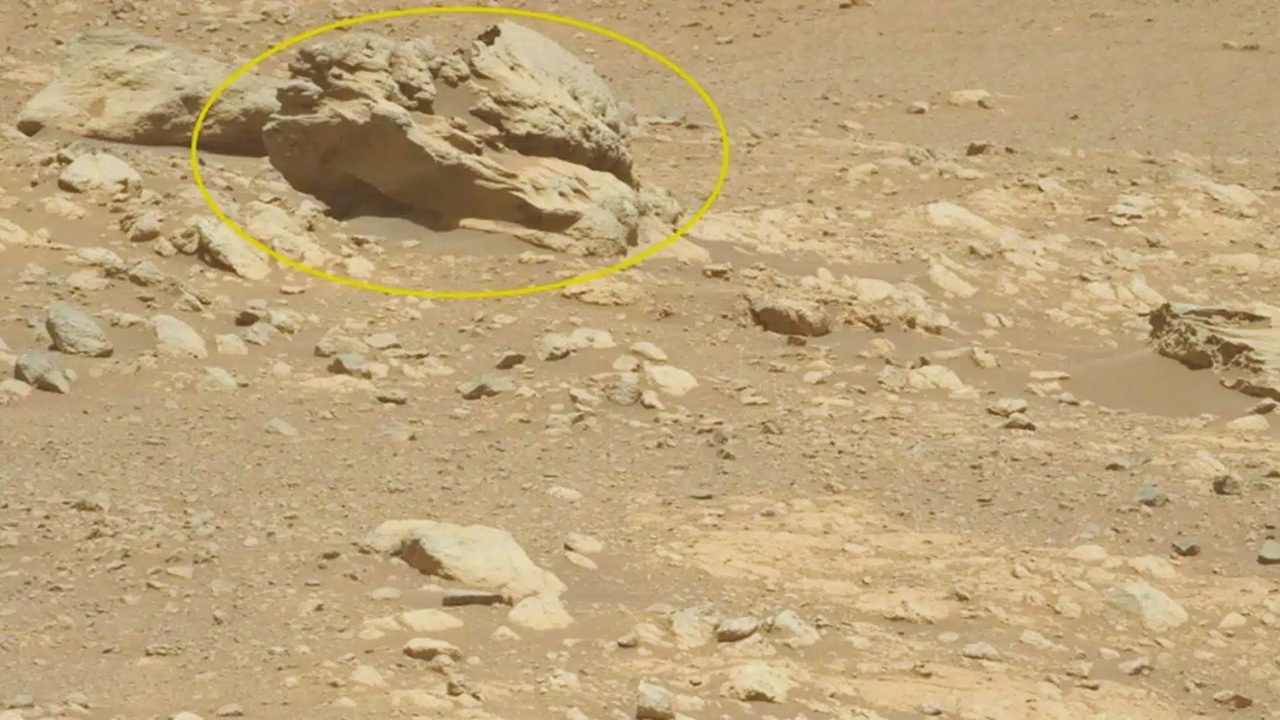

The Finding of the Phippsaksla Rock by Perseverance Reinforces the Possibility That Meteorites Play a Decisive Role in Understanding Martian Geology and Analyzing Ancient Environments of Jezero Crater
Perseverance recorded a discovery that expanded the list of Martian finds. After five years of operations, the rover observed a unique rock called Phippsaksla, identified in a flat and fragmented terrain.
The detection was announced on November 13, 2025, in a NASA blog, reinforcing scientific interest in the circulation of space debris on Mars.
The rock drew attention due to its unusual shape. The object stood out from the landscape and exhibited features different from the surrounding formations. Although the mission had not prioritized locating meteorites, the finding added a new point of interest for the team monitoring the rover.
-
Japanese Manufacturer Dominates Global Bicycle Gear and Brake Market, Supplying 70% of Mid to High-End Bikes, Including Tour de France Winners

-
German Startup Raises €8 Million to Build Robot for 24/7 Harvesting of Tomatoes, Cucumbers, and Peppers Without Human Labor

-
The Pharmaceutical Glass Invented by a German Chemist in 1884 Was Crucial for 75% of Global COVID Vaccine Projects
-
Dinosaur Bone Found in 1985 on James Ross Island Identified as First Confirmed Titanosaur Fossil from Antarctica, Shedding Light on a Once-Green Continent


The Encounter on September 2
The approach of Perseverance on September 2, 2025, allowed for a more detailed observation of the rock. The equipment recorded a tall, sculpted structure that contrasted with the nearby Martian surfaces. Candice Bedford, a researcher at Purdue University, stated that the shape immediately caught the team’s attention.
The rover used Mastcam-Z to capture new angles. The images indicated that the rock could be a meteorite. NASA reported that the name Phippsaksla refers to a location in Svalbard, Norway. This was the first time Perseverance identified a possible meteorite, although other vehicles had already encountered similar structures.
Curiosity, for example, had observed iron-nickel meteorites in Gale Crater. Bedford expressed surprise at the absence of equivalent finds in Jezero Crater, considered similar in age to the region explored by Curiosity.
The Importance of Meteorites on Mars
The study of meteorites is not at the core of Perseverance’s mission. The central objective has always been to investigate signs of ancient life in Jezero Crater and collect samples for future analysis on Earth. Nonetheless, meteorites help scientists understand how space debris interacts with the Martian environment.
Jezero Crater has a geological history that includes lake beds and river deltas. These features suggest that meteorites could have struck the site over the eons. Impact craters scattered throughout the region reinforce this possibility and make the identification of Phippsaksla consistent with the scenario expected by researchers.
The observation by Perseverance adds an additional reference for analyses on the interactions between the planet and space rocks. The textures and surface patterns of the rock may assist in reconstructing the conditions present when the impact occurred.
Observations on Possible Signs of Life
Jezero Crater remains one of the environments considered most promising for identifying traces of ancient life. Studies indicate that the site may have harbored a lake, creating conditions favorable for microscopic organisms.
The rover’s instruments analyze sediments and rocks from the region. The measurements seek compounds that may be related to past biological activity. The previous month, Perseverance detected chemical reactions between organic matter and sediments, raising the possibility of microbial presence in a remote period.
The interpretation of these data still does not allow for definitive conclusions. The samples collected by the rover are expected to provide more accurate information when examined in laboratories on Earth. Researchers believe that future analyses will be essential to confirm or dismiss any hypotheses about Martian life.
A New Chapter for the Mission
The record of Phippsaksla expands the list of phenomena that Perseverance has documented since landing. Although meteorites are not the operational focus, their identification reinforces the diversity of the environment explored by the rover. Each observed element can contribute to understanding the processes that shaped the planet’s surface.
The mission continues to collect samples and document geological elements of Jezero Crater. NASA teams monitor the discoveries and assess how each new data point integrates into the accumulated set. The rock identified in September adds an unexpected aspect that now becomes part of the scientific history of Perseverance.
The search for structures that reveal the planet’s evolution remains a priority. The records made so far show that Mars still harbors characteristics capable of surprising researchers. In this scenario, Phippsaksla emerges as yet another component that may help clarify important stages of Martian history.