






 Portuguese
  Spanish


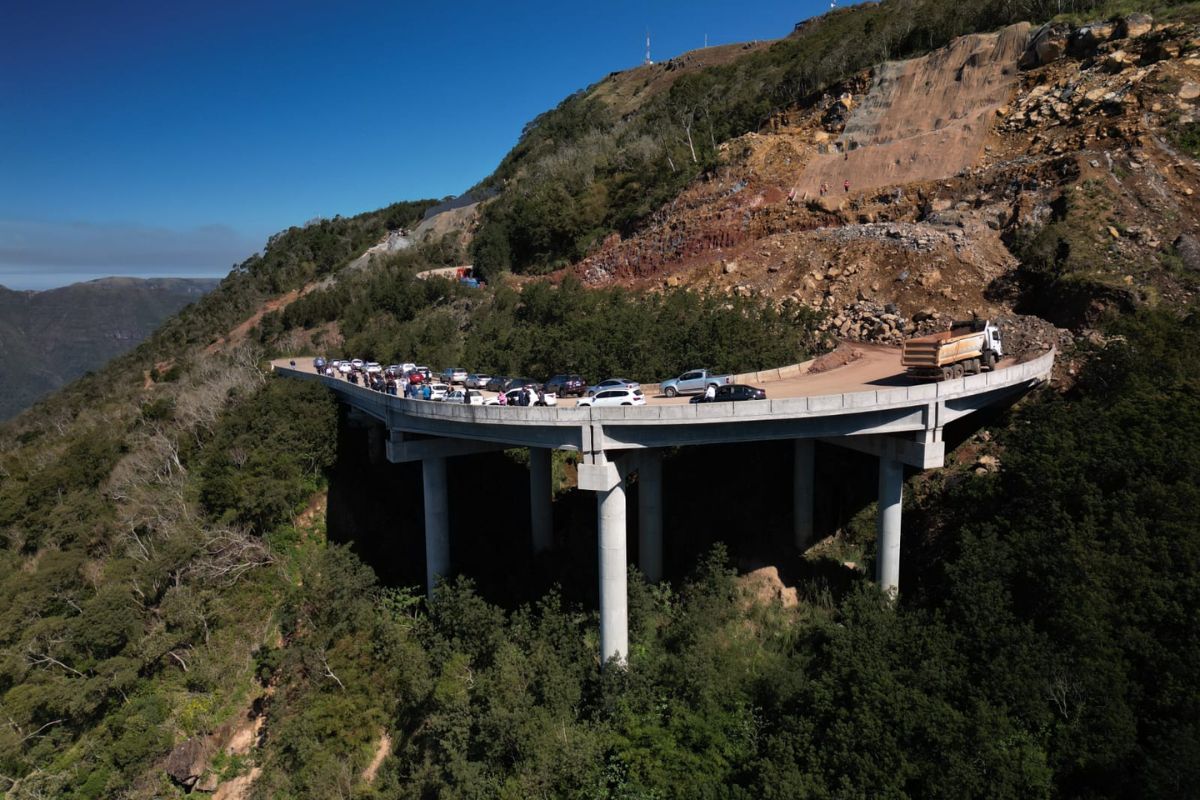


With 85% of the works completed, the paving of BR-285 in Serra da Rocinha is a mega project that promises safety, regional development, and unprecedented logistical integration between Santa Catarina and Rio Grande do Sul.
For decades, Serra da Rocinha was synonymous with fear and isolation. The winding stretch of BR-285 between Timbé do Sul (SC) and São José dos Ausentes (RS) was avoided even by experienced truck drivers. But this reality is about to change. The mega project currently underway there promises to radically transform one of the most critical points of the country’s road network.
With over 85% of the work completed by July 2025, the intervention is already considered one of the most complex roadworks in Santa Catarina. The paving of the mountain will leave behind decades of risks and neglect, opening a new corridor of development in Southern Brazil.
Precision Engineering to Overcome Geography
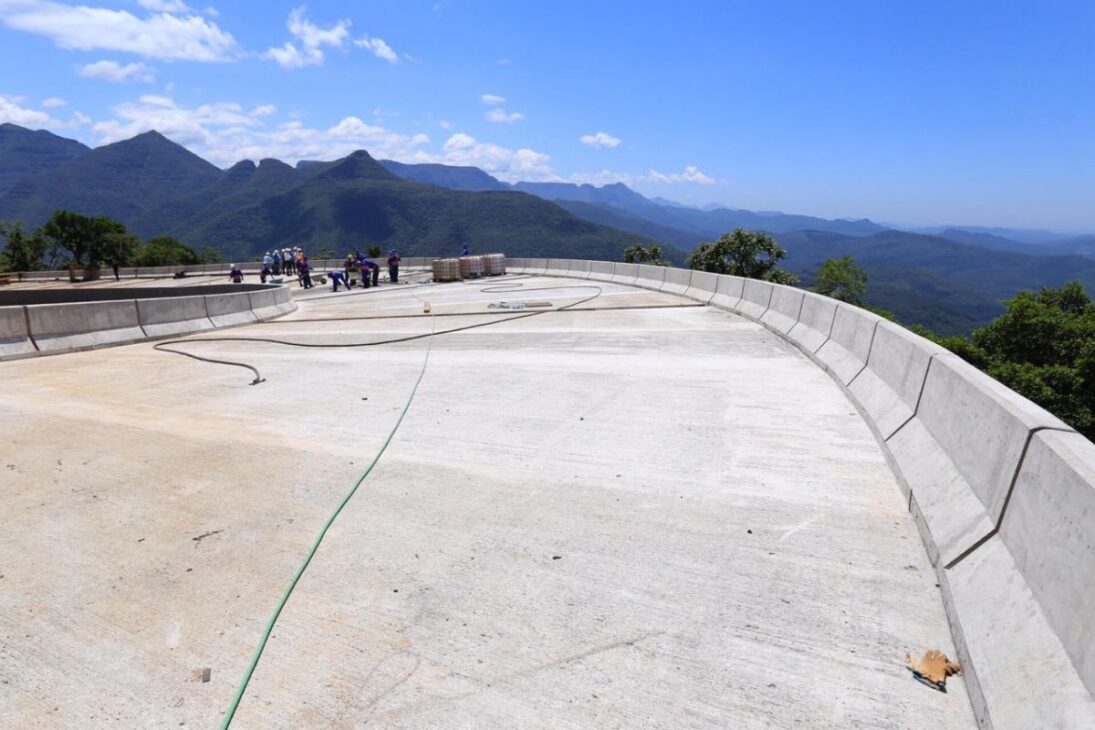
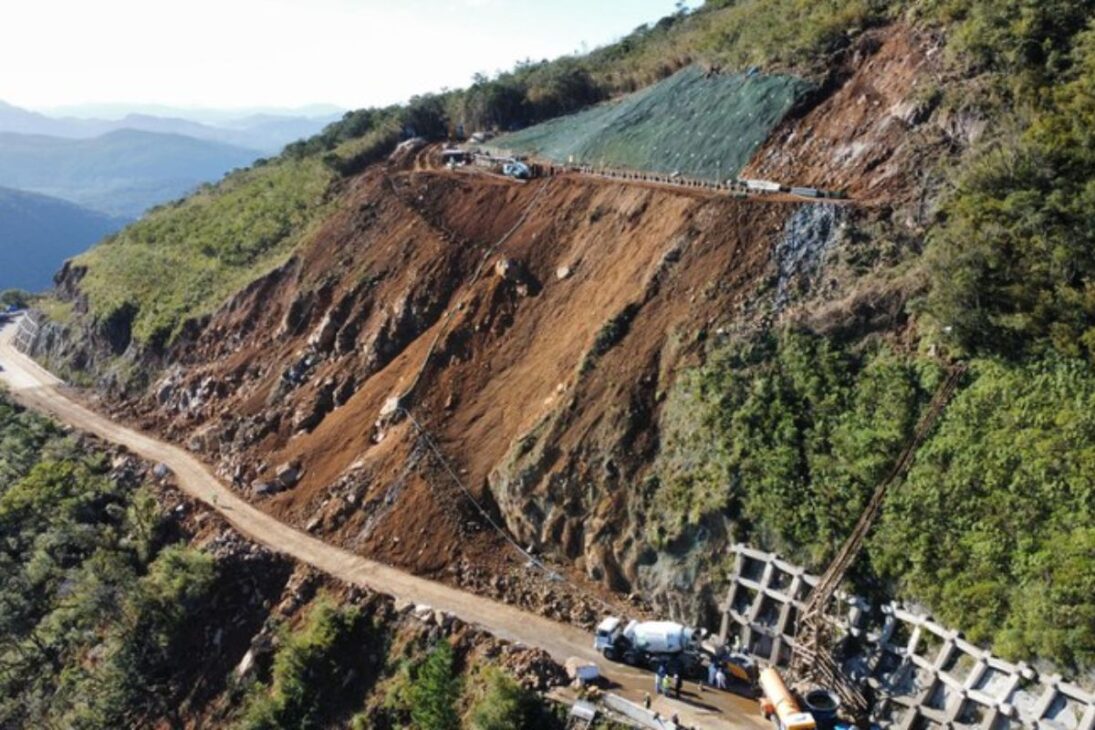
BR-285 connects the Santa Catarina coast to the inland, but crossing through Serra Geral has always been a geotechnical challenge. There are 8.3 km of critical stretch amid dense vegetation, unstable terrain, and steep elevations. To overcome this, the project included concrete containment, gabion walls, deep drainage, and over 6,000 meters of New Jersey type barriers.
-
Egypt Partners with China to Build 2 GW Wind Turbine Factory and 2,000 MW Wind Farm in Gulf of Suez, Aiming to Export Across Africa

-
Family of Six Leaves Georgia to Live in a $300,000 Cold War-Era Underground Bunker Since 2020: Unlikely 557 m² Home with 60 cm Concrete Walls
-
Self-taught Brazilian Mechanic Builds 10-Ton Aluminum Sailboat in Backyard, Now Navigates the Brazilian Coast at 50
-
Santa Catarina Launches $1.4 Billion, 145-Kilometer Highway Project with Six Lanes and Speeds Up to 120 km/h



The paving also followed high-resistance standards. The soil was stabilized with granular base and covered with asphalt concrete (CBUQ), ideal for facing the thermal variations of the mountain. The winding design required precise interventions, real-time geological monitoring, and trained teams to operate under extreme humidity and fog conditions.
Project Overcame Historical Hindrances and Became a Symbol of Overcoming
Officially announced in 2011 by DNIT, the mega project of Serra da Rocinha faced delays, contractual disputes, and environmental barriers for years. The progress gained momentum only from 2017, with new planning, resource allocation, and continuous technical support from the Ministry of Transport and the Federal Court of Accounts (TCU).
Today, the physical progress exceeds 85%, with an expected delivery still in 2025. The mountain section alone received over R$ 100 million in investments, a figure that rises to R$ 173 million considering the entire 22.5 km lot. Despite the high costs, the regional impact and logistical benefits justify every cent.
Comparisons and Strategic Impact of the Mega Project
To understand the significance of the mega project of BR-285, one only needs to compare it with similar projects. The Serra do Faxinal, for example, also in SC, had a lower cost per kilometer but faces less intense challenges. Meanwhile, the Serra do Rio do Rastro, despite being paved, still requires million-dollar investments in containment.
In contrast, Rocinha combines competitive cost with effective engineering and environmental responsibility. Smaller trucks, narrow work sites, and minimal vegetation suppression have been adopted to preserve the region’s Atlantic Forest, elevating the project to a nationally recognized technical standard.
A New Logistic and Tourist Axis for Southern Brazil
The mega project of Serra da Rocinha is not just an infrastructure achievement. It represents the logistical rebirth between the Catarinense Plateau, Serra Gaúcha, and the Southern coast. The section will shorten distances, reduce transportation costs for agribusiness, and allow safe circulation of goods, people, and tourists.
In addition, the modernized layout of BR-285 paves the way for eco-based tourism in the mountain ranges, one of the most beautiful regions in the country. With the new paving, the expectation is to relieve traffic on BR-101 and stimulate private investments in logistics, hospitality, and services.
Do you think other dangerous mountains in Brazil should also undergo such transformations? Where else would a mega project like this be necessary? Comment and participate!


