






 Portuguese
  Spanish


Hong Kong approves law to combat tiny apartments where 220,000 people live, aiming to improve housing conditions without displacing poor families from one of the most expensive real estate markets in the world.
Hong Kong is often portrayed as a showcase of wealth, futuristic skyscrapers, and some of the most valued real estate on the planet. But behind the image of a global financial center lies a housing crisis that has challenged governments and urban planners for decades. In September 2025, the city’s lawmakers passed a law to combat one of the most visible symbols of this problem: the so-called subdivided apartments, extremely small units where about 220,000 people live.
The new legislation sets minimum standards for these dwellings, including a minimum size of 8 square meters, a private bathroom, a window, and basic safety requirements. The goal is to eliminate conditions deemed unsuitable for habitation, but the measure has also sparked a delicate debate: how to improve housing quality without pushing even more low-income families out of the real estate market?
The city of million-dollar apartments houses dwellings smaller than a parking space
Hong Kong has one of the most expensive real estate markets in the world. As a result, thousands of owners have started dividing conventional apartments into smaller units to increase rental income.
-
Australia Builds Entire Airport from Scratch to Spark Development of New City

-
17-Story Building with 112 Apartments Opens in Australia to House Homeless Population, Offering Fully Equipped Units with Daily On-Site Support

-
81-Meter Bridge Made from Over 7 Tons of Recycled Plastic Connects Isolated Communities in Panama Canal Basin, Allowing Safe Passage for Over 300 Residents
-
Australia’s First Two-Story 3D-Printed House Built in 18 Hours, 22% Cheaper Than Traditional Methods, Uses Concrete That Hardens in 3 Minutes



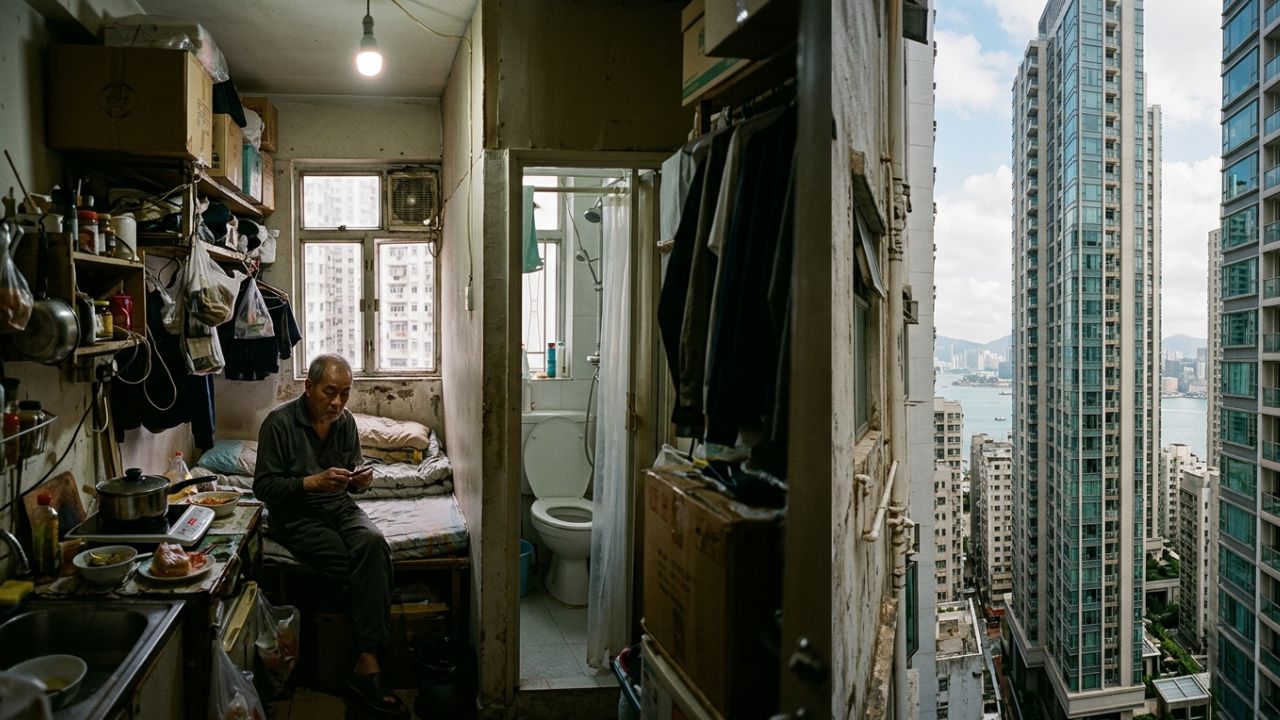
These spaces have become known as subdivided apartments. Many are only a few square meters, with areas so small that the resident can reach practically everything without leaving the bed. In some cases documented by the international press, the toilet is next to the stove or the area used for food preparation.
According to official data used by the Hong Kong government, there are approximately 110,000 subdivided apartments in the city. They house workers, students, immigrants, the elderly, and families who simply cannot afford the prices demanded by the traditional market.
The new law created a minimum limit of 8 m² to try to eliminate the worst housing conditions
The approved legislation requires that subdivided apartments meet minimum requirements. Among them is the requirement of a minimum area of 8 square meters, equivalent to about 86 square feet. For comparison, a standard parking space in Hong Kong is approximately 10 square meters, meaning that some of these dwellings were smaller than the space allocated for a car.


In addition to the minimum size, the units must have a private bathroom, a window with adequate ventilation, a smoke detector, and other items considered basic for safe housing. The measure is part of a broader strategy to gradually eliminate so-called inadequate housing in the coming decades.
About 33,000 apartments will need major renovations
Although the new legislation has been welcomed by housing advocacy groups, its implementation will not be simple. Government estimates indicate that approximately 33,000 units, equivalent to about 30% of existing subdivided apartments, will need to undergo significant renovations to meet the new requirements. Other units will require minor adaptations.
Owners will have an adaptation period to adjust the properties to the new requirements. In case of non-compliance, they may face heavy fines and even prison sentences as provided by the legislation. The challenge is that many of these constructions have been adapted over the years to meet a growing demand for cheap housing in a city with extremely limited space.
The fear now is that rents will increase even more
While the law aims to improve the quality of housing, it also raises concerns among low-income residents. Experts and social organizations warn that the reduction in the supply of subdivided apartments may further pressure rental prices. Some families fear losing the only housing they can currently afford.
The government argues that it intends to expand the supply of public housing and transitional homes to reduce this impact. Even so, many residents fear that the transition will be slow given the enormous demand for affordable housing. The concern is not just economic. For thousands of people, finding a new property in Hong Kong can mean facing queues that last for years.
The housing crisis has become one of Hong Kong’s greatest social challenges
The problem of subdivided apartments did not arise overnight. For decades, the combination of high real estate prices, population growth, and scarcity of developable land created an environment where extremely small housing became seen as the only alternative for many residents.
In some cases, the so-called “coffin homes” have even emerged, spaces so small they resemble individual compartments. Although the new legislation represents an important advance, some of these extreme forms of housing continue to be a topic of debate among experts and authorities.

The situation has become so relevant that the Chinese government has started to treat the housing issue as one of the structural problems that need to be resolved to ensure long-term social stability in Hong Kong.
The contrast between wealth and precarious housing continues to impress the world
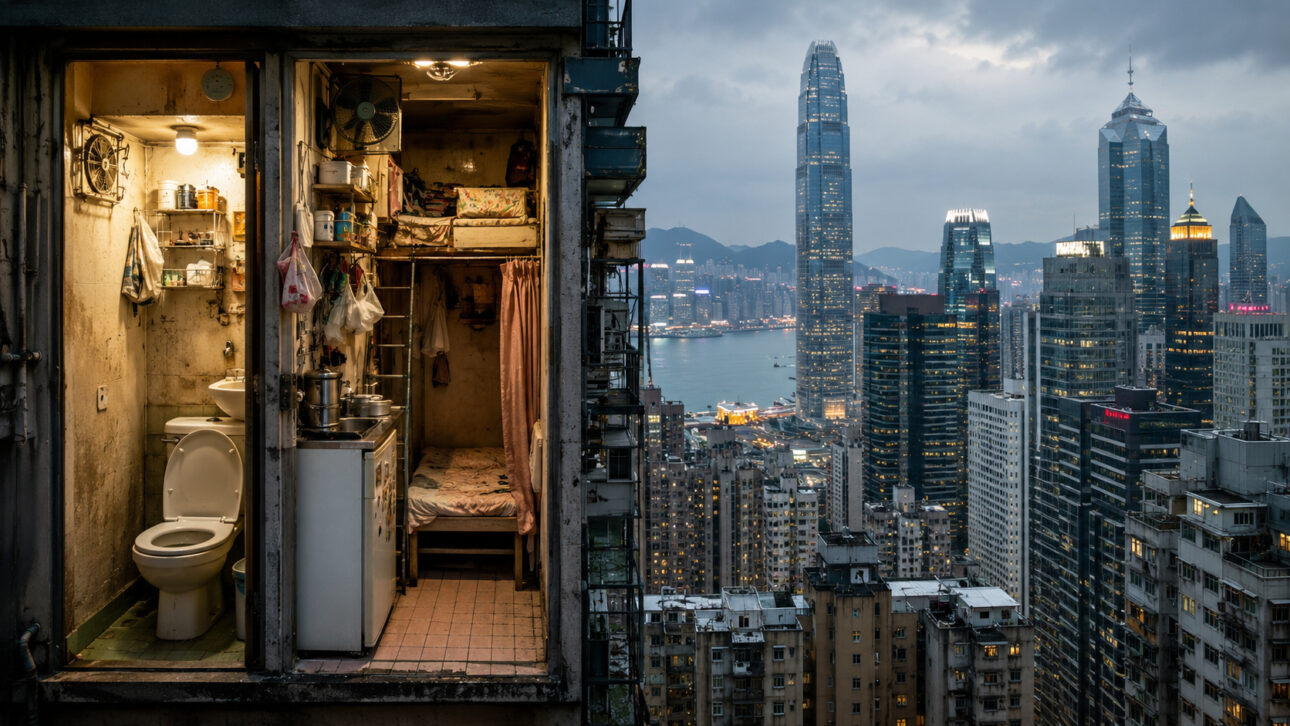
Few cities so clearly represent the contrast between economic prosperity and housing difficulties as Hong Kong. On one side are some of the most expensive and luxurious buildings on the planet. On the other, thousands of people live in spaces where bed, kitchen, and bathroom practically merge within a few square meters.
The new law attempts to correct part of this imbalance by establishing minimum standards for housing. But it also highlights a dilemma that challenges cities worldwide: improving the quality of housing without making life even more difficult for those already struggling to pay rent.
In the end, the discussion goes far beyond the 8 square meters. It reveals how one of the richest cities on the planet continues to search for an answer to a simple and uncomfortable question: how much space does a person need to live with dignity?


