Portuguese
  Spanish


Indonesia zeroed rice imports, produced 34.7 million tons and now targets soy and wheat in a plan that could affect Brazilian agribusiness
According to ANTARA News, Indonesian President Prabowo Subianto announced on January 7, 2026, during a national harvest event in Cilebar, Karawang, that Indonesia’s food self-sufficiency had been achieved in 2025. The statement drew attention because, upon taking power in October 2024, Prabowo had promised to achieve this goal in four years but claimed to have done so in just one.
The main symbol of this progress was rice. National production reached 34.7 million tons in 2025, exceeding by more than 3 million tons the estimated domestic consumption of 31 million. As a result, Indonesia did not import a single ton of rice that year. In 2024, it had imported 4.52 million tons.
The leap was confirmed by the Minister of Agriculture, Andi Amran Sulaiman, who stated that the increase of 4.1 million tons in rice production occurred without the need for imports. National stocks at the beginning of 2026 reached 12.5 million tons, including a record government reserve of 3.25 million tons.
-
In Rural Brazil, José Sirval Operates a Water-Powered Mill Grinding 125 Kilograms of Corn Daily Using His Great-Grandfather’s Century-Old Monjolo

-
From Market Stall to Agribusiness: Patagonian Fruit Grower Owns 550 Hectares and Processes 18 Million Kilos of Pears and Apples Annually, Exporting Directly to Brazil
-
At 93, Brazilian Farmer Restores 56 Hectares of Forest and Revives Spring in the Amazon, Installs First Climate Tower in the Region
-
Brazilian Cheesemaker Wins European Award for Ant-Infused Cheese with Nutty Flavor Inspired by Indigenous Tradition


Indonesia exited the global rice market and changed the map of one of the world’s largest importers
The sudden exit of Indonesia from the international rice market has global significance. The country had been among the largest rice importers on the planet in recent years, alternating positions at the top of the ranking depending on the harvest and domestic demand.
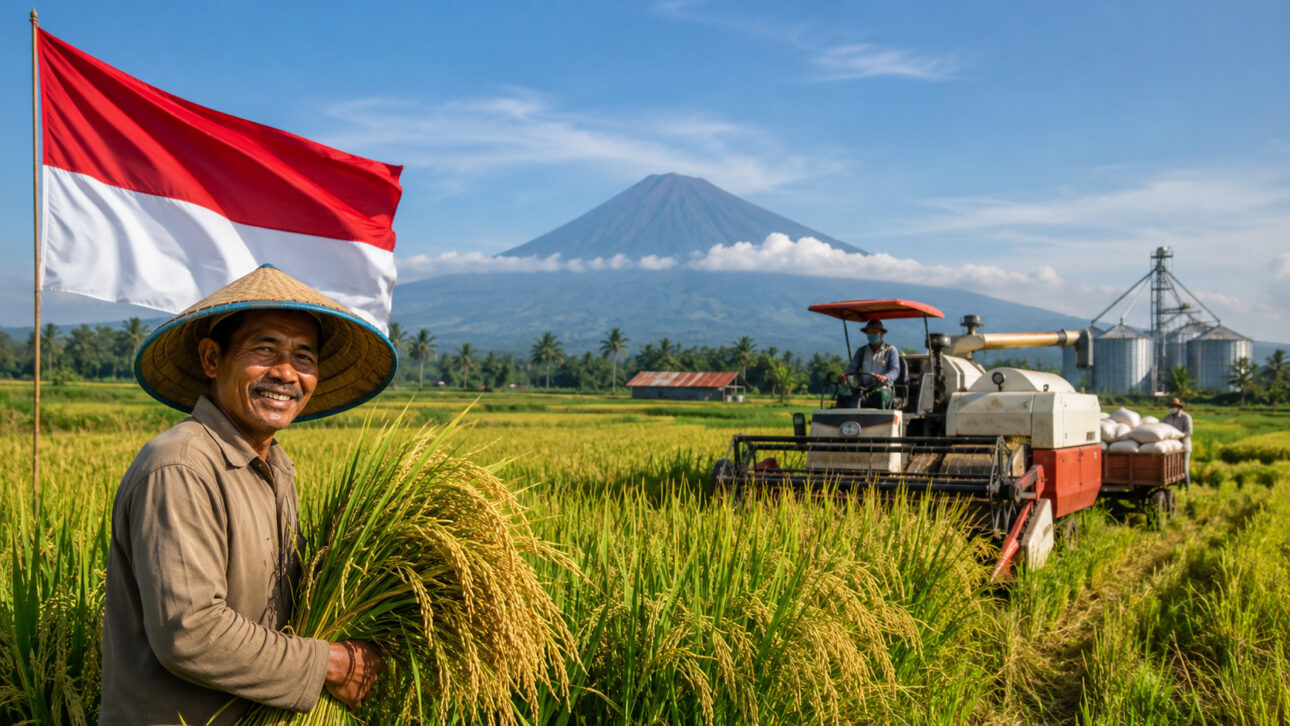
The change is even more significant because it involves a country with about 280 million inhabitants, the fourth most populous in the world, and one of the largest consumer markets in Southeast Asia.
When a buyer of this scale simply disappears from the commodity market, the effect goes beyond domestic policy and begins to influence international trade.
Prabowo made it clear that the goal does not end with rice. According to the government, the next target is self-sufficiency in sugar by 2026, followed by new advances in corn, cassava, garlic, soybeans, and wheat, precisely two of the products in which Indonesia still heavily relies on imports.
Indonesia’s Rice Self-Sufficiency Came from Subsidies, Irrigation, and Expansion of Planted Area
The declared self-sufficiency in 2026 did not come out of nowhere. According to official data cited in the content, the government accelerated a combination of policies at an unusual pace for Indonesian standards.
Among them are the reduction of fertilizer prices for farmers, the rehabilitation of irrigation systems, the expansion of the planted area in regions outside the more traditional axis, and the creation of regional targets with monthly monitoring.


This package helped increase rice production by 13.54% from 2024 to 2025, according to BPS, Indonesia’s statistical agency. The result shows that Prabowo’s agricultural policy was designed to deliver rapid impact on a food with enormous political and social weight.
The Indonesia the world knew as a significant food importer still exists, but a new Indonesia is being built with strong state intervention, aggressive production targets, and an explicit strategy to reduce external dependency.
Food Estate Program Attempts to Open New Agricultural Frontier in Indonesia
The main instrument of this agricultural expansion received a specific name: Food Estate. The program seeks to open new productive areas in less dense regions, especially in Central Kalimantan, North Kalimantan, and Papua, focusing on commodities that still depend on imports.
The logic is clear. Instead of relying solely on traditional production areas on islands like Java and Sumatra, the government wants to expand the territorial base of Indonesian agriculture and transform less explored zones into a new food frontier.
This movement, however, does not come without costs. The debate within Indonesia itself already shows that the horizontal expansion of production can carry significant environmental, productive, and logistical risks, especially in tropical forest areas and soils less favorable to the planned crops.
Criticism of the Food Estate points to deforestation, weak soil, and low productivity
The CIPS Indonesia, the country’s political studies center, published in 2025 a critical assessment of the Food Estate. According to the institute, the program involves significant environmental costs and tends to generate low agricultural yields in areas with little natural fertility.
This criticism strikes at the heart of the strategy. Opening agricultural frontiers in tropical forest areas to plant crops like soybeans and corn means dealing simultaneously with deforestation, pressure on climate commitments, and initial productivity lower than that observed in already established agricultural areas.
CIPS argues that Indonesia should focus more on intensification, that is, increasing productivity per hectare in already cultivated areas, rather than betting so much on extensification, which means opening new areas with higher environmental and agronomic costs. This discussion will be decisive in determining how far the self-sufficiency plan can really advance.
Soybeans and wheat are the next targets and put Brazil on the radar of Indonesian agricultural policy
The most sensitive point for Brazil is on the list of the Indonesian government’s next objectives. When Prabowo mentions soybeans and wheat as future self-sufficiency goals, he directly touches on products in which Indonesia still heavily relies on the external market.
Soybeans are especially important. The country hosts a significant processing industry to produce tofu, tempeh, and soybean oil, but cultivates little internally. A large part of the grain that feeds this industry comes from abroad, and Brazil, as the world’s largest exporter, holds a strategic position in this supply.

Wheat follows a similar logic. Indonesia still does not have a sufficient production base to meet domestic demand and continues to depend on imports. If the government truly advances in programs aimed at tropical production adapted to these crops, the impact may not be immediate, but it already enters the radar of Brazilian agribusiness as a potential long-term risk.
Self-sufficiency in sugar by 2026 shows that Indonesia wants to accelerate the timeline
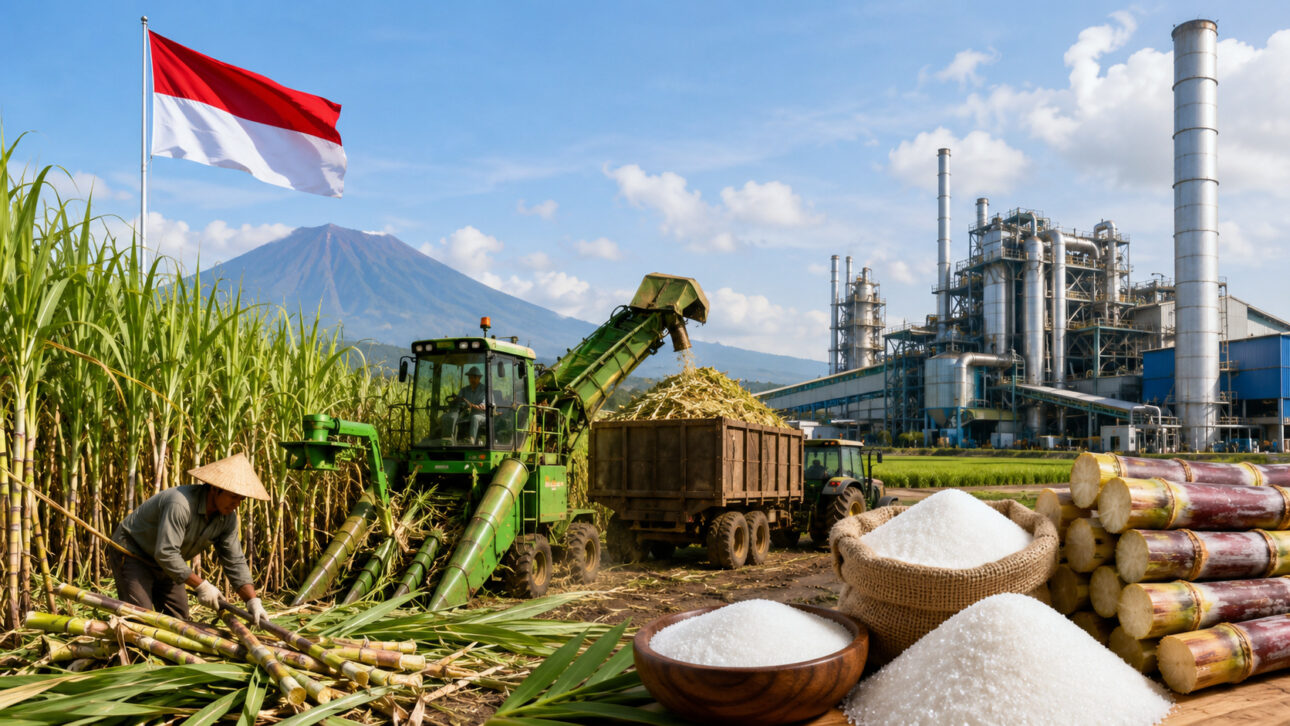
The declared goal for 2026 is white sugar for consumption. Unlike soybeans, sugar starts from an already existing production base in Indonesia. The country has a tradition in sugarcane cultivation, and the main challenge lies more in the modernization of mills, gaining industrial efficiency, and expanding the planted area than in creating a supply chain from scratch.
This detail helps to understand the timeline. Sugar is a quicker objective because the sector already exists and needs restructuring.

Soybeans will require more time, more agronomic adaptation, more logistics, and more technical knowledge in regions where the crop is not yet part of the most consolidated core of local agriculture.
Even so, recent history shows that the government is operating faster than many analysts expected. If Indonesia managed to eliminate rice imports before the promised deadline, the international market will have to take its next goals more seriously.
Brazil needs to monitor the direction of policy more than the political statement
The statement by Prabowo in January 2026 has obvious political weight. Announcing that a four-year goal was achieved in one conveys governmental strength and administrative efficiency in a country where food prices have enormous social relevance.
But the most important reading for Brazil is not just discussing whether each number already represents a definitive structural transformation.
The central point is the direction of Indonesian agricultural policy. The country is making it clear that it wants to reduce food commodity imports one by one, with public instruments, clear goals, and a willingness to accelerate the timeline.
For the Brazilian agribusiness, this means closely monitoring not only the current volumes exported to Indonesia but mainly the advancement of import substitution policies in products such as soy and wheat. The most concrete threat is not an abrupt market loss tomorrow, but the gradual erosion of space over the next decade.
What Indonesia’s new strategy can change in global agricultural trade
Indonesia is not just another food buyer. It is a continental country in terms of population, with increasing weight in Asia’s agricultural trade and the ability to alter significant demand flows when it changes its internal policy.

If it maintains the current trajectory, the country can reduce part of its dependency on imports of strategic foods and reorganize its external agenda. This affects exporters, repositions competitors, and can change the competition for markets in Southeast Asia.
In Brazil’s case, the issue is no longer just selling to Indonesia today. It’s understanding how quickly Indonesia wants to stop needing to buy tomorrow.