Portuguese
  Spanish


The green wall planned to cross the Sahel mobilizes 11 African countries against the desert and desertification, with native species, restoration of degraded lands, and the expectation of protecting farmers, increasing food security, reducing rural exodus, and tackling drought that pressures local communities and threatens rural economies throughout the region.
The green wall planned to cross about 8,000 km in the Sahel brings together Burkina Faso, Chad, Djibouti, Eritrea, Ethiopia, Mali, Mauritania, Niger, Nigeria, Senegal, and Sudan in an attempt to contain the desert and desertification in Africa. The project aims to restore millions of hectares and protect farmers pressured by drought.
According to a report by O Antagonista, the initiative gained new prominence on June 5, 2026, when it was presented as a socio-environmental response to the accelerated soil degradation in the Sahel strip. The proposal combines native trees, recovery of degraded areas, land management, and support for farmers who depend directly on the soil to survive.
A living barrier against the advance of the desert
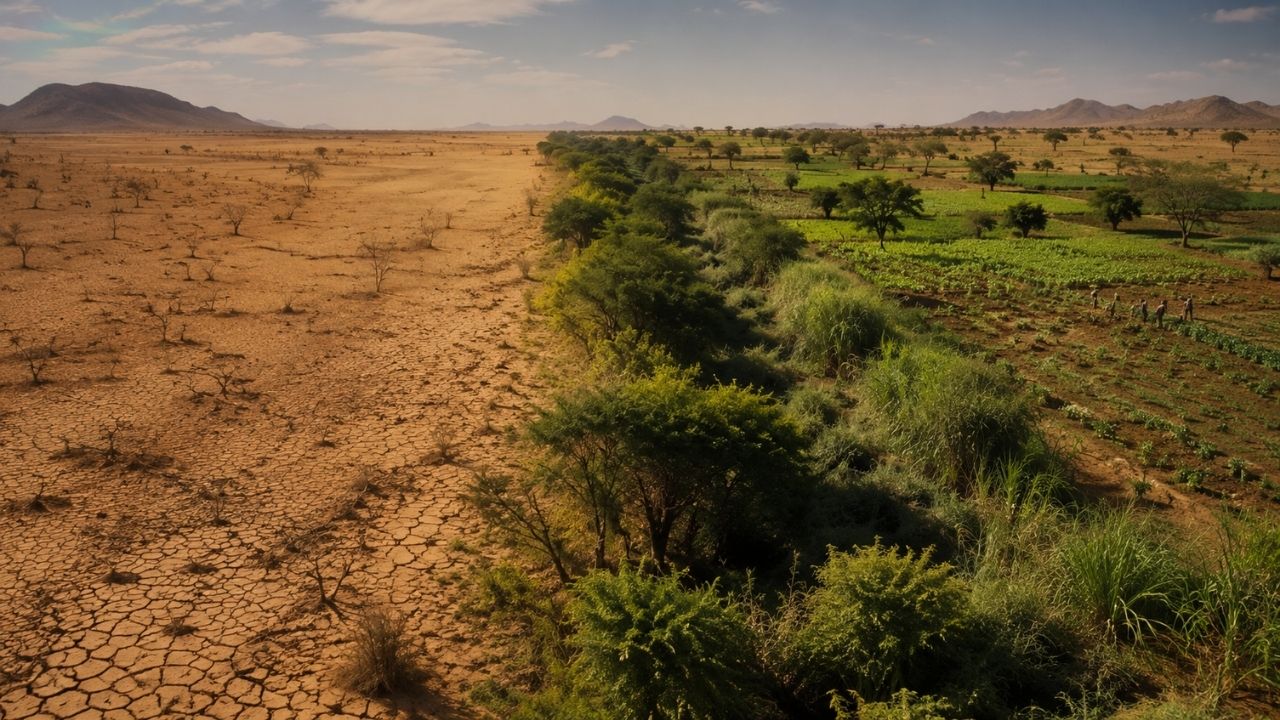
The idea of the green wall is not to erect a concrete structure, but to form a large ecological belt with vegetation capable of crossing different African territories. The goal is to use nature itself as a defense against the desert and the loss of fertile lands, in a region marked by extreme heat, low humidity, and recurring droughts.
-
NASA’s Plan to Dump ISS Debris in Ocean Sparks Environmental Concerns Among Scientists

-
14-Year-Old Invents Eco-Friendly Water Pump Using Recycled Materials to Aid Communities Without Water Access
-
Pigeons Trained to Detect Cancerous Changes in Medical Images Astonish Scientific Community

-
Plastic Waste from Beaches and Poor Communities in Kenya Transformed into School Desks, Replacing Wood in Classrooms and Turning Marine Litter into Durable Study Tables


In the Sahel, desertification threatens pastures, small plantations, and income sources for entire communities. When the land loses productive capacity, farmers are left without harvests, families leave their areas of origin, and food insecurity spreads through already vulnerable regions.
Eleven countries attempt to recover millions of hectares
The project involves 11 African countries united by a common challenge: to prevent degraded areas from advancing further in the Sahel. The green wall appears as an attempt to restore the soil, recompose vegetation, and create a strip of environmental resistance in one of the continent’s most sensitive regions.
The proposal foresees the use of native species more resistant to heat and local conditions. The choice of these trees is strategic because plants adapted to the environment tend to require less maintenance and can help in water retention, soil protection, and gradual recovery of areas affected by desertification.
Native trees can help retain water in the soil
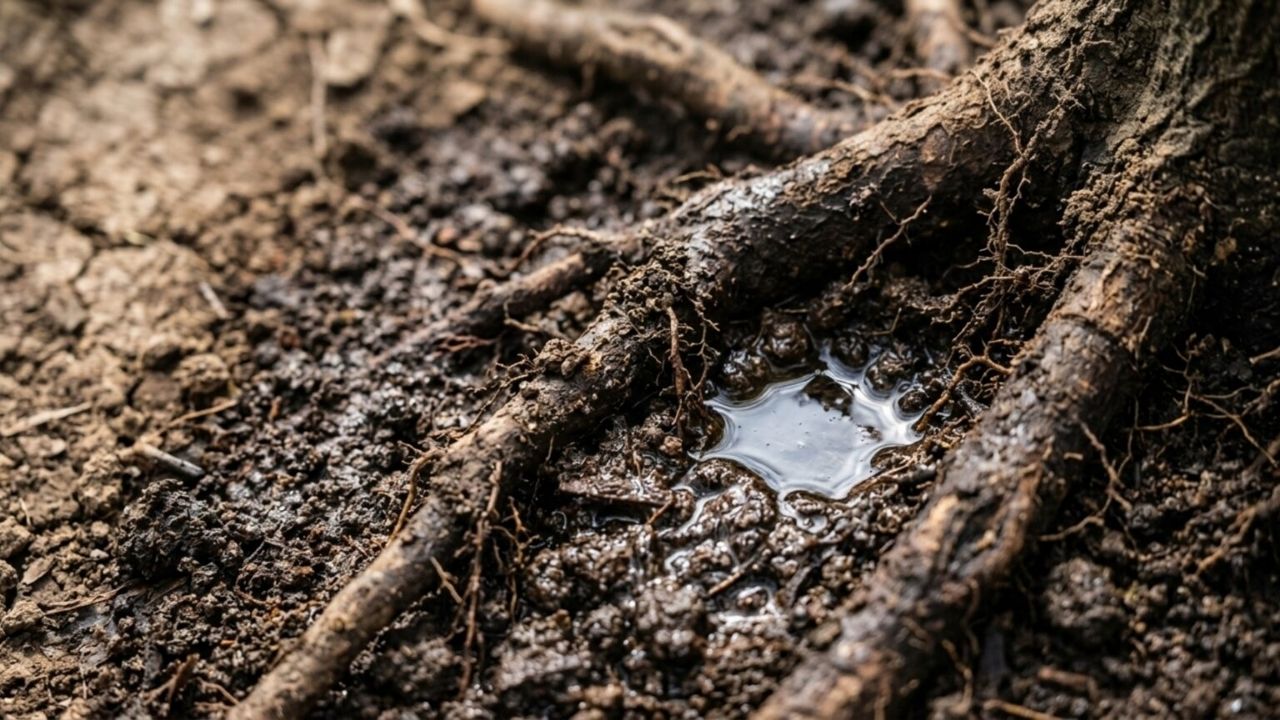
One of the central points of the project is the role of roots in land recovery. As they develop, the trees can function as a kind of natural sponge, helping the soil to better retain rainwater and reducing the speed of degradation.
This process does not happen immediately. The green wall depends on planting, monitoring, proper management, and continuity between different countries. Even so, the hope is that environmental recovery can improve local conditions and restore part of the productivity lost over the years.
Agriculture and survival are at the center of the initiative
Soil degradation in the Sahel is not just an environmental problem. It directly affects family farmers who depend on the land to plant, raise animals, feed their families, and drive small local economies.
With the recovery of degraded areas, the expectation is to favor the return or permanence of farmers in their territories. If the land returns to production, the pressure for displacement decreases, and rural communities gain a better chance of staying where they have built their lives.
Rural exodus and hunger make the project even more urgent
The loss of fertile land feeds a difficult cycle: less production, less income, more food insecurity, and greater displacement of families. In the Sahel, this process can increase social tensions and put pressure on cities that are already facing structural problems.
Therefore, the green wall is also presented as a response to rural exodus. More than planting trees, the initiative seeks to preserve livelihoods, reduce the vulnerability of farmers, and create minimal conditions for communities to remain in the countryside with some stability.
International support is crucial to maintain the project
An 8,000 km project requires resources, coordination, and constant technical support. Isolated countries can hardly sustain an intervention of this size without international cooperation, funding, and support from specialized institutions.
According to the presented approach, multilateral entities play an important role in technological support and land management guidance. Coordinated execution is essential because environmental recovery needs to cross political borders without losing ecological continuity.
The challenge is to turn environmental promise into concrete results
Despite the visual and symbolic impact, the green wall faces practical obstacles. Planting trees in arid areas is not enough if there is no maintenance, protection of seedlings, community participation, and adaptation to the conditions of each territory.
The strength of the project lies precisely in the combination of the environment and the local economy. If successful, the initiative can help restore lands, strengthen farmers, and reduce migratory pressure. If it fails, it risks becoming just a big promise in the face of a problem that advances faster than many public responses.
Do you believe that a green wall of this size can really change the future of the Sahel, or does the advance of the desert require even deeper measures? Leave your opinion in the comments.