






 Portuguese
  Spanish


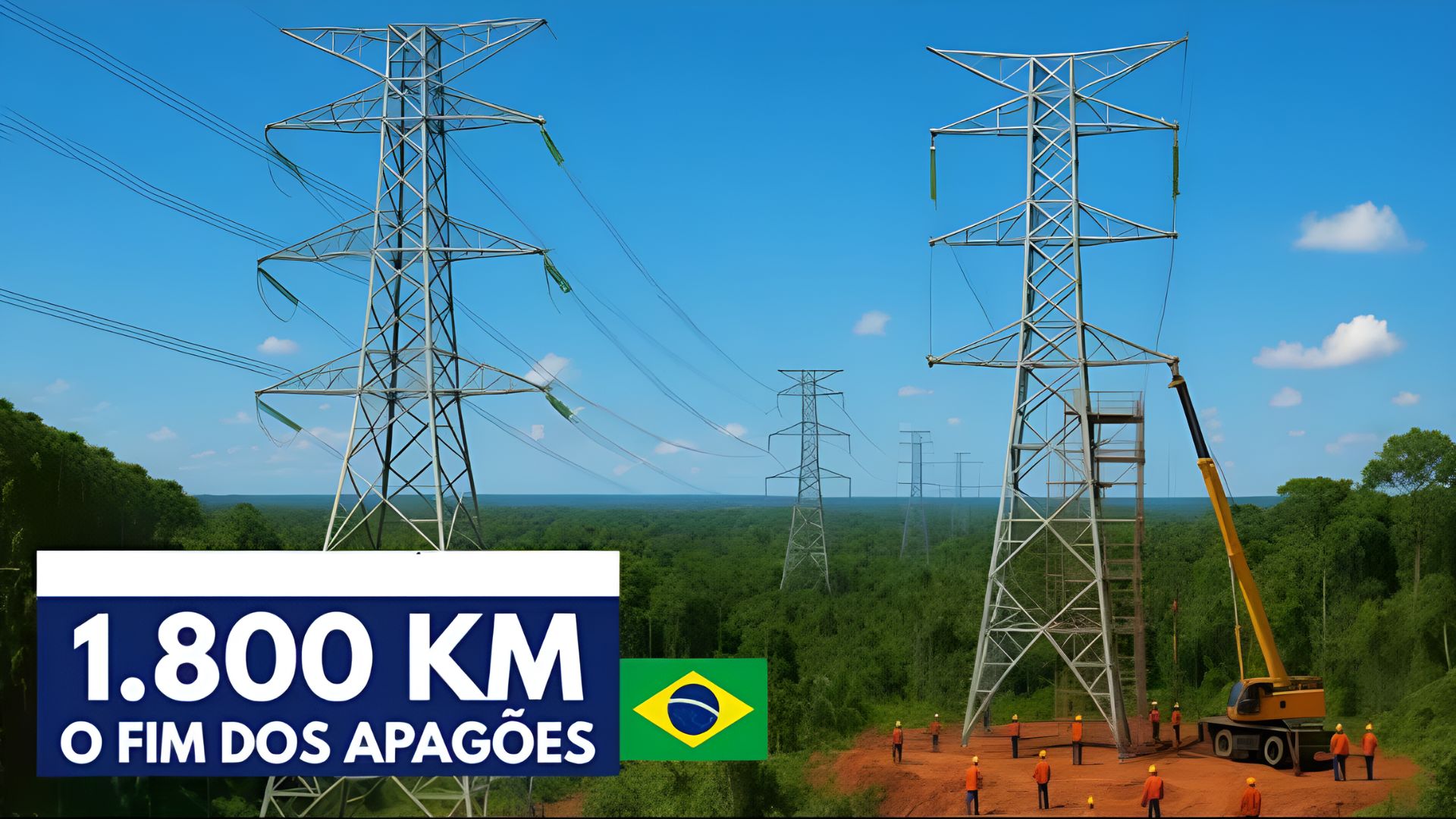


A Historical 1,800 Km Project Promises to Transform Energy Supply in the North by Definitely Connecting the Region to the National Interconnected System, Ending Decades of Electric Vulnerability.
The definitive integration of the North region into the National Interconnected System is close to becoming a reality.
According to the presenter of the Urbana channel, the completion of the Tucuruí Power Line promises to put an end to the successive supply crises that, for decades, have affected millions of residents in the Amazon, especially in states like Roraima and Amapá.
The project, which exceeds 1,800 kilometers, originates in the shadow of the Tucuruí hydroelectric plant and is expected to be inaugurated in 2025, marking one of the most important chapters in Brazilian electrical infrastructure.
-
They exchanged the idea of a large house for a 35 m² warehouse, spent US$ 12,000 on the structure, and created a tiny house in Colorado with space to live and work.

-
A newly opened terminal in the middle of the Amazon has begun transporting soy and corn through Amapá, eyeing the queue of ships that is congesting the ports in the South.

-
Goodbye to old tiles: renovation technique without construction transforms bathrooms in a few hours, eliminates debris, and reduces costs with coverings using special paints, high-resistance adhesives, and modern finishes that completely renew the space.
-
Goodbye to the traditional clay brick: Indian startup transforms burnt straw into a carbon-negative brick that costs half, insulates better, and even removes CO2 from the air.


Energy Crises in Northern Brazil
As reported in the video, energy instability has always been a hallmark of the region.
The most emblematic case occurred in November 2020, when a fire at equipment in the Macapá substation left 13 of the 16 municipalities in Amapá in a critical situation for over 20 days.
Hospitals activated generators.
Public services were interrupted.
About 90 percent of the population faced recurring outages.

Roraima, on the other hand, remains today as the only Brazilian state outside the national grid.
The presenter of Urbana highlighted that, for nearly two decades, the state relied on energy imported from Venezuela via the Guri Power Line.
The Venezuelan electrical crisis made this supply unstable until, in March 2019, after a national blackout in the neighboring country, the shipment was definitively suspended.
Since then, supply has completely depended on diesel-powered thermoelectric plants.
According to the channel, this alternative has placed Roraima in a delicate economic and environmental situation.
Daily consumption requires more than one million liters of diesel, at an estimated cost of approximately R$ 3.5 million per day, according to data cited by Eletrobras.
The scenario has brought constant risks of shortages and a long list of blackouts recorded throughout 2018.
Power of Tucuruí and Isolation of the Region
Meanwhile, the power of the Tucuruí hydroelectric plant in Pará remained underutilized for the North.
Since the 1980s, the plant—with an installed capacity of 8,370 MW and a reservoir of over 2,800 km²—has supplied a significant part of the Southeast and Northeast.
However, as the presenter of Urbana recalled, several Amazonian states remained isolated from the national electrical grid.
This disconnection is precisely what the Tucuruí Power Line seeks to correct.

Development of the Tucuruí Power Line
The conception of the interconnection took shape in the 2000s, with the region’s economic growth and the need to replace costly and polluting systems.
In 2008, the federal government held the auction that defined the consortia responsible for the three major lots of the project.
The first two, under the responsibility of the Spanish company Isolux, connected Tucuruí to Pará and later to Amapá, totaling about 1,240 kilometers.
Lot C, the most complex, was assigned to the Manaus Energy Transmission Consortium, made up of Abengoa, Eletronorte, and Chesf.
As described in the video, this section required unprecedented engineering solutions and prolonged environmental negotiations, as it crosses remote areas of the Amazon.
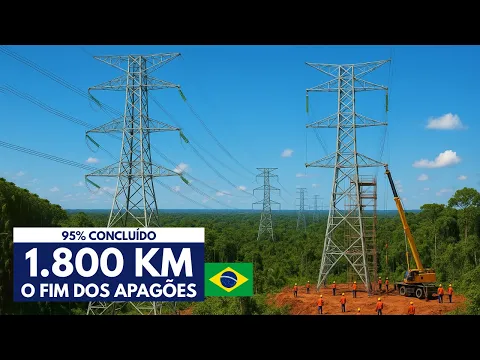
The project involves seven double-circuit transmission lines, eight substations, and approximately 3,600 metal towers.
Some of them were installed with the help of helicopters due to difficult access.
Among the biggest challenges was crossing the Amazon River, which at certain points exceeds 2.5 kilometers in width.
The structural risk required meticulous calculations and special towers designed to support long spans.

Another advancement mentioned by the channel was the inclusion of fiber optic cables along the line, allowing for a high-capacity telecommunications network.
This structure expanded internet access in isolated areas.
Final Stage Between Manaus and Boa Vista
The final stage, which will connect Manaus to Boa Vista, has already surpassed 70 percent completion in March 2025.
The work focuses on the installation of over 1,000 towers, the construction of substations like the one in Boa Vista, and the opening of accesses in densely forested areas.
As noted by the presenter of Urbana, this phase only progressed after resolving the impasses involving the crossing through the Waimiri-Atroari indigenous territory.
The advancement occurred through judicial mediation and ongoing environmental monitoring.
The Impact on the Supply of Roraima
The technical director of Transnorte Energia, Anton Zerbini, stated in an interview cited by the channel that the forecast is to start supplying Roraima shortly after the completion of the project, estimated for September 2025.
Full energization should occur by December.
With this, the state will cease to depend on thermoelectrics and will finally be integrated into the National Interconnected System.
The inauguration of the Power Line represents, according to Urbana, a structural change in the energy future of the Amazon.
Stable and continuous distribution should stimulate investments. Public costs are expected to decrease.
Essential services should gain reliability. Northern Brazil may experience a new phase after decades of instability.


Boa tarde!!!
O linhão entre Manaus e Boa Vista foi inaugurada em setembro/2025