






 Portuguese
  Spanish
  3 min of reading
  0 comments


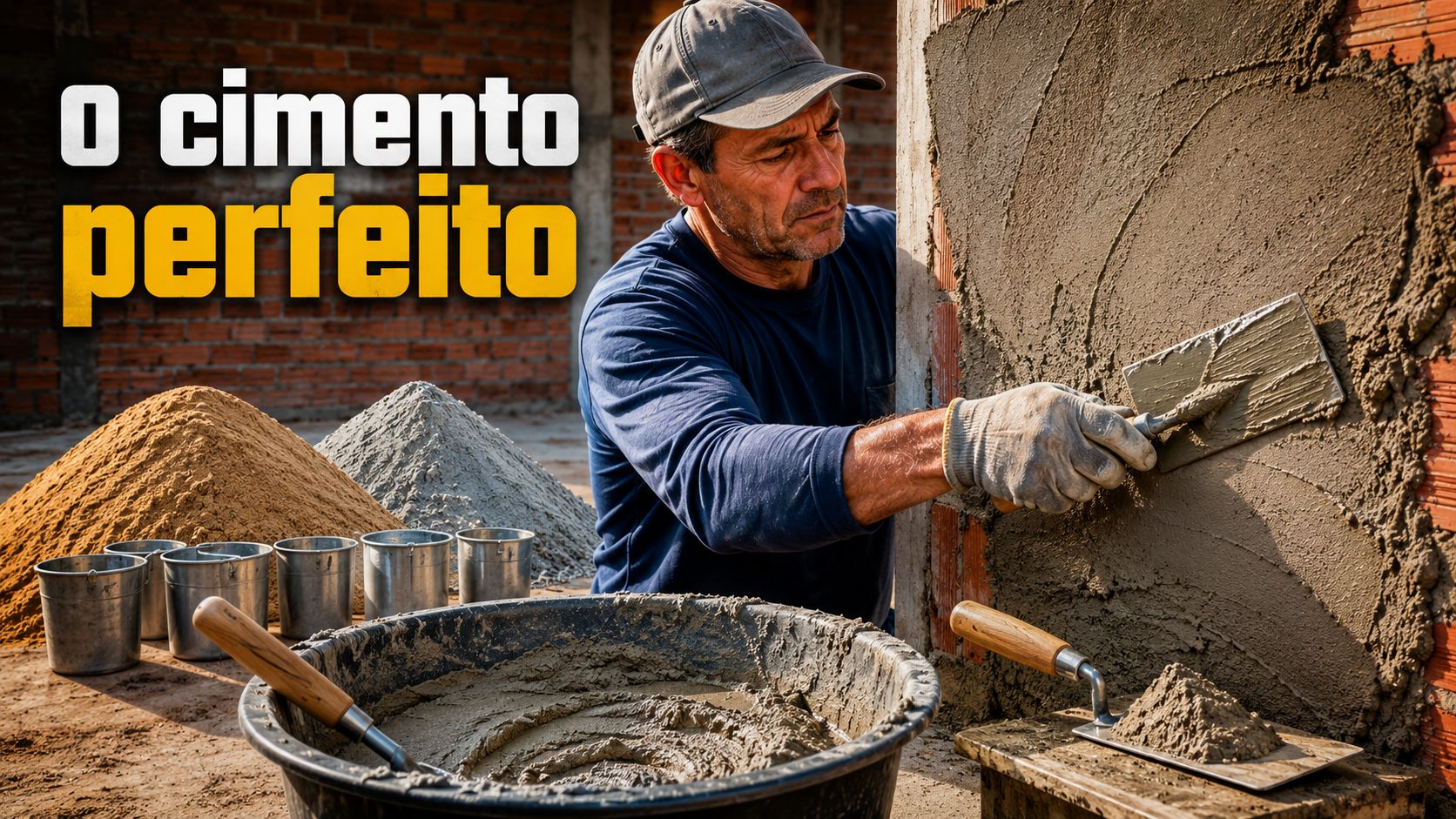
The proportion of five measures of fine sand to one of cement is presented as a practical alternative for preparing plaster mortar in small works, with attention to the type of sand, homogeneous mixture, and gradual water control during preparation
The proportion of five measures of fine sand to one of cement is presented as a practical alternative for preparing plaster mortar in small works, with attention to the type of sand, homogeneous mixture, and gradual water control during preparation.
Five measures of fine sand to one measure of cement form the plaster mix presented as a practical reference for small works, with simple preparation, intense mixing, and water adjustment according to the moisture of the material used.
The guidance was presented by Carlos Machado, from the Canal Carlos Machado, in content aimed at those who want to understand a basic way to prepare plaster mortar. He emphasizes that there are other mixes used by qualified professionals and that the indicated proportion corresponds to the method he usually uses.
-
Without a mansion, without high investment, and without a traditional classroom, a teacher living in a 22 m² house taught students to build a 9 m² studio apartment with the equivalent of R$10,000.

-
Largest bridge in São Paulo reaches 75% completion and is expected to strengthen strategic connection in the interior of São Paulo.

-
Without her own home and pressured by rent, a 25-year-old bought a small 15-meter boat, gradually renovated the interior by herself, transformed the interior with paint, new flooring, a larger bathroom, and started living on the canals, paying much less per month.
-
Tired of seeing families sleeping on the street, São Paulo delivered 18 m² furnished microhouses and took 888 people off the streets: Vila Reencontro became the model social housing for the homeless population.


Cement, plaster, and the proportion used in the mix
The basis of the preparation starts from a direct rule: use five portions of sand for one portion of cement. The measurement should be done with the same container, whether bucket, can, or another available measure at the site.
The central point is to maintain the equivalence of the measure. If five buckets of sand are used, one bucket of cement is added. The same logic applies to cans. The use of a wheelbarrow is discouraged as a reference, because the volumes can vary.
Machado states that this proportion gives the mix enough binding for the work, without the need for an additive in the case shown. The sand used was fine and already had good binding, which influenced the decision not to add lime, detergent, or another product.

Well-made mixture defines the final quality
The preparation begins with the cement placed in the container or chosen location for mixing. The mixture can also be made on the ground, provided the area is clean and free of stones, dirt, or elements that could affect the finish.
After combining sand and cement, the most important step is to mix thoroughly. The guideline is to turn the material over repeatedly, moving it from one side to the other, until the mixture is homogeneous before adding water.
This step prevents uneven concentration of cement and helps achieve a more uniform mixture. For plastering, the consistency of the mix is essential because it influences application, adhesion, and the visual result of the wall.
Water depends on the moisture of the sand
The amount of water is not presented as a fixed measure. The reason is simple: dry sand requires more water, while moist sand requires less. Therefore, the addition needs to be gradual and observed during preparation.
The goal is to achieve a consistency suitable for application. The mixture should not be too dry, as it makes the work difficult, nor too wet, as it loses firmness. The final point is identified by the texture and the binding achieved in the mixture.
In the example presented, the result was considered ready when the mixture had enough binding to plaster. The method reinforces the importance of testing the mix, observing the type of sand available, and adjusting the preparation according to the conditions of the work.
For those who will perform small tasks, the practical recommendation is to measure precisely, mix well, add water gradually, and evaluate the point before application, avoiding waste and rework during the final wall plastering.





Be the first to react!