





 Portuguese
  English
  Spanish
  3 min of reading
  6 comments


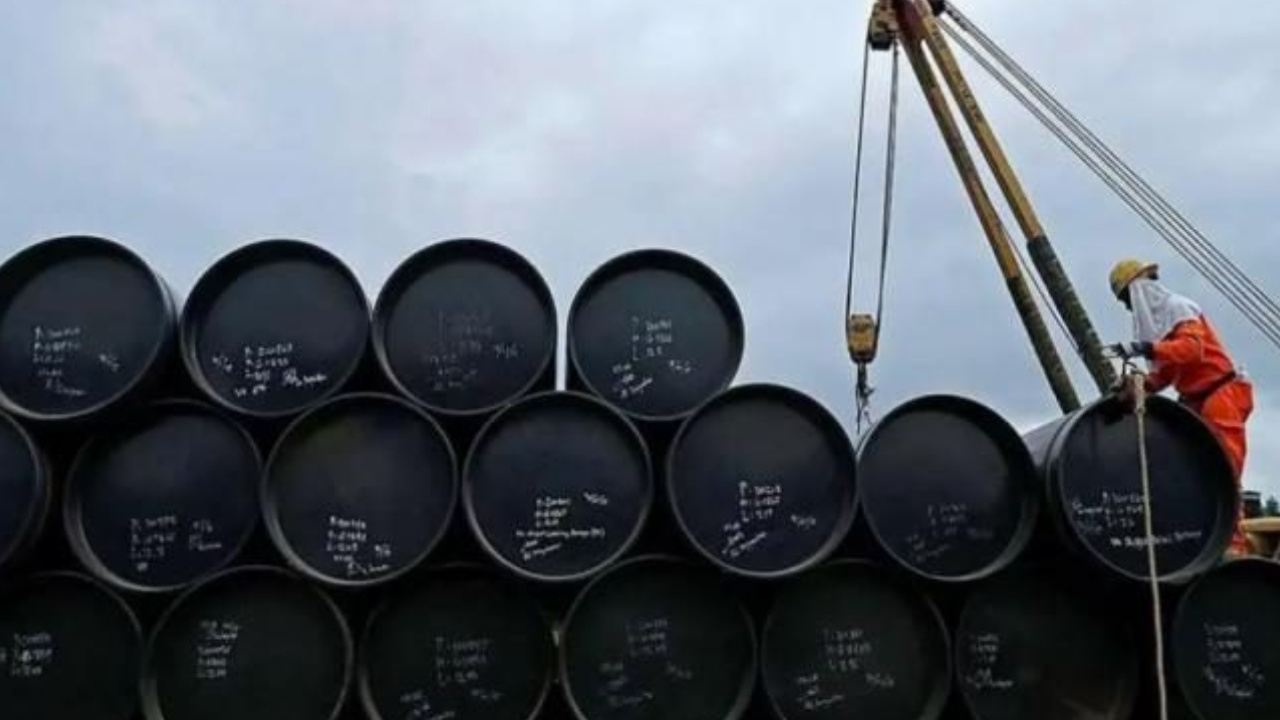


Oil Production In Brazil Grows 13.2% In 2025 And Hits Historical Record, But Country Remains Dependent On Derivative Imports, According To Ineep Bulletin Based On Anp Data.
In 2025, Brazil produced an average of 4.89 million barrels of oil equivalent per day. This figure represents an increase of 13.2% compared to 2024. This is a significant advance, driven mainly by the entry of new platforms and the expansion of production in already existing units.
According to data released by the National Agency of Petroleum, Natural Gas and Biofuels (ANP), oil production reached 3.7 million barrels per day, with a growth of 12% in the annual comparison. Natural gas advanced even further, reaching 1.1 million boe/d, an increase of 16.9%.
This performance reinforces the country’s position as a major exporter of crude oil. However, experts warn that the scenario requires caution. The increase in production does not necessarily mean energy independence.
-
Farmer drills well in Ceará in search of water, accidentally finds crude oil and sees million-dollar discovery hindered by a rule that completely changes the future of the site.

-
Family finds oil on a 49-hectare site in Ceará, but exploration has no timeline or guarantee of happening

-
When drilling an artesian well, a farmer wanted water but found oil: ANP confirms that the dark liquid found by a farmer on a site in Ceará is crude oil.

-
European stocks rise with oil drop after Trump’s remarks on Iran as investors monitor global tension




Exports Hit Historical Record And Oil Leads Brazilian Agenda
The productive advance reflected directly on exports. In 2025, Brazil sold 1.92 million barrels per day abroad. This volume corresponds to 51% of the total national oil production. It’s a new record.
For the second consecutive year, crude oil led the Brazilian export agenda. It surpassed traditional products such as soybeans and iron ore. In total, the country exported to 28 different destinations.
China was the main buyer, absorbing 45% of the annual total. Following were the United States (10.8%), Spain (7.4%), Netherlands (7%), and India (4.4%). In the fourth quarter, dependence on China increased even further, reaching 48.1% of exports.
Petrobras Dominates Production, But Relative Participation Shrinks
For the year as a whole, Petrobras was responsible for 89.9% of the national oil and gas production as an operator. As a concessionaire, it accounted for 63.4% of the total produced. Other companies accounted for 36.6%.

The bulletin from the Institute for Strategic Studies of Oil, Natural Gas and Biofuels (Ineep), released on Monday (23), highlights the centrality of the pre-salt in this growth. At the same time, it points out a relative reduction in the state-owned company’s participation over the years.
Country Exports Crude Oil, But Imports Derivatives
Despite the robust numbers, there is a sensitive point. Brazil is increasing its production and establishing itself as an exporter of crude oil, yet it remains dependent on imports of derivatives, such as diesel and gasoline.
“Without the proper strengthening of the refining sector, there is a deepening of the country’s primary-exporting condition, keeping it dependent on the import of derivatives,” states Ineep.

In other words, the country sells raw material and buys products with higher added value. For experts, expanding refining capacity is strategic. This could reduce external vulnerability, strengthen national industry, and generate more value from the extracted oil.
What do you think is needed for Brazil to become more autonomous and decrease reliance on derivative imports?





Bolsonaro = vendilhão
Vota no Flavio pra ele terminar de vender as refinarias a preço de **** como o pais fez. Ai não teremos mais nada
Os políticos tem que deixar de roubar e concluir as obras de construção de refinarias. Agora gastaram 32 bilhões para construir a refinaria de Abreu Lima e ainda não concluíram a obra, Brasil do **** Lula.