






 Portuguese
  Spanish


United States Signs $33.7 Million Contract with Lockheed Martin to Build Nuclear Spacecraft in a Strategic Partnership That Could Redefine Space Exploration
The U.S. Air Force Research Laboratory (AFRL) signed a $33.7 million contract with Lockheed Martin to accelerate the development of nuclear propulsion and energy technologies for spacecraft. The project is part of the joint program called JETSON (Joint Effort to Supply Technologies in Nuclear Orbit), which aims to “mature high-power propulsion and nuclear energy spacecraft design technologies.”
The U.S. government is investing in various nuclear technologies applied to spacecraft, both for civil and commercial use. Lockheed Martin believes these innovations will play a key role in the future of military space operations.
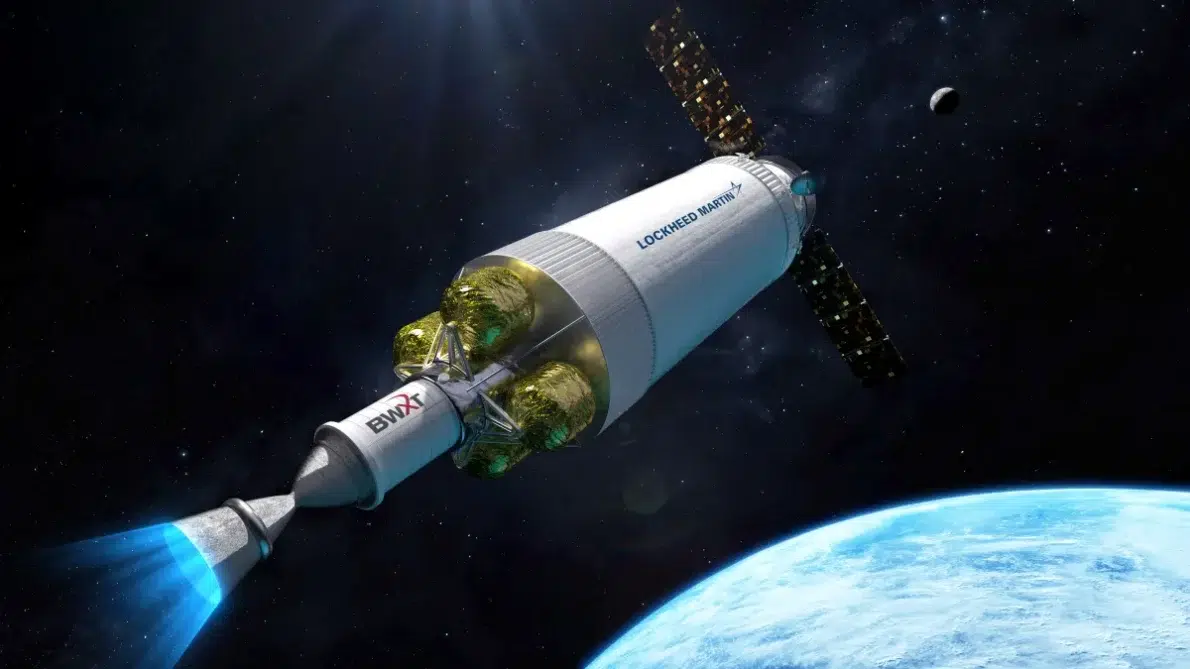
United States Heavily Invests in the Development of Nuclear Spacecraft
The company is already involved in three key nuclear spacecraft programs, working with different governmental agencies. As the United States progresses with plans for a return to the Moon and Mars exploration, each of these projects addresses different types of nuclear energy for various purposes. This includes everything from efficient transportation methods in space to sustainable energy solutions for lunar bases.
-
China Develops Custom 140-Ton Electric Mining Truck with 770 kWh Swappable Battery, Deploys 290 Units in Xinjiang’s Largest Zinc Mine

-
Meta to Launch Arena, a New Prediction App Targeting 3.56 Billion Users, Competing with Polymarket and Kalshi

-
Scientist Challenges Famous Human Evolution Theory, Argues Homo Sapiens Evolved Gradually Over Thousands of Years
-
15-Year-Old American Builds Ocean Generator with PVC Pipe and 3D-Printed Propeller for $12, Wins National Prize, Presents at White House, and Makes Forbes 30 Under 30 List




While the initial focus is on civil and commercial applications, there is a growing military interest in these technologies, especially for Space Maintenance, Mobility, and Logistics (SAML) missions, as highlighted by Jeff Schrader, Lockheed Martin’s Vice President of Global Awareness.
According to Schrader, spacecraft with nuclear propulsion can offer strategic advantages, such as increased maneuverability and operational longevity, compared to current satellites that have fuel and battery limitations.
“When launching a satellite, it is limited to that orbit, with a limited lifespan and fuel. With nuclear propulsion, these restrictions can be overcome, allowing for more flexibility in space movement and the ability to respond to threats,” said Schrader in an interview with DefenseScoop.
How the Nuclear Spacecraft Will Work
The JETSON program envisions the launch of a fission reactor that will be activated in space. This reactor will generate heat, which will be converted into electricity through Stirling energy converters. The generated power can be used to power spacecraft payloads or for electric propulsion. This technology is based on the success of the Kilopower Reactor demonstration conducted by NASA in 2018.
According to Barry Miles, Program Manager for JETSON and researcher at Lockheed Martin, the development of nuclear systems for space is crucial to transforming how we explore the universe.
“We are focused on developing advanced nuclear systems, such as electric and thermal propulsion, as well as solutions to provide sustainable energy for long-duration missions in space,” said Miles.
Space Nuclear Power Corp (SpaceNukes) and BWX Technologies, Inc. (BWXT), both specialized in nuclear energy, will be partners in developing the reactors. The project is already in the preliminary review phase, aiming to advance to the critical design review in the coming months.
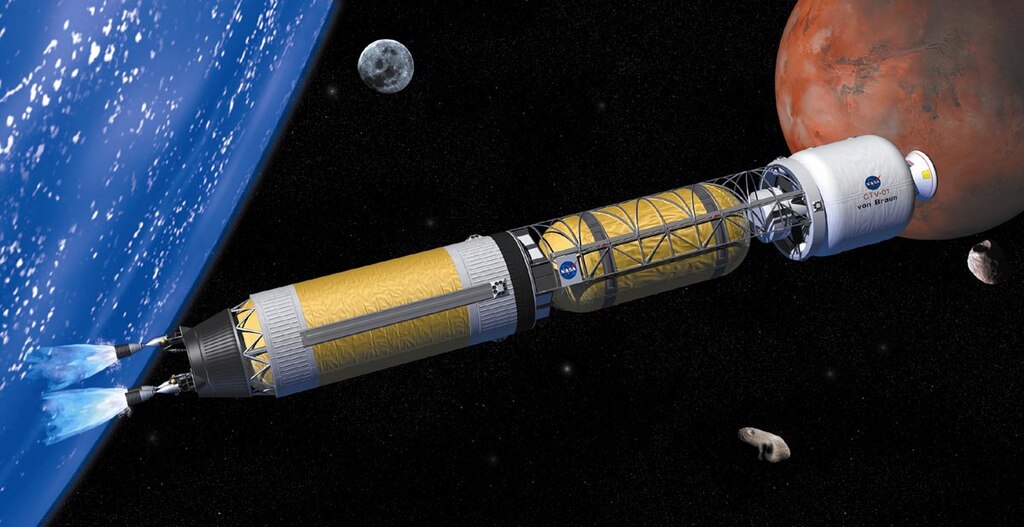
Even More Powerful Spacecraft in the Future
According to Andy Phelps, CEO of SpaceNukes, the future experimental flight of JETSON will enhance the maneuverability and power of spacecraft, paving the way for new military operations in space. Phelps emphasized that these innovations will have a significant impact on the operations of the U.S. Space Force.
The contract signed in September also includes two other key players in the field of nuclear space propulsion. The Houston-based startup Intuitive Machines received a $9.4 million contract to develop a spacecraft concept based on radioisotope energy. The company is preparing to launch its private lunar module in January, marking another important step for the private space sector.
Additionally, Westinghouse Government Services from South Carolina received a contract to continue its research on high-power nuclear fission systems, reinforcing the competitiveness of the U.S. in the space arena.
Lockheed Martin had already achieved a major milestone in July when it was selected by NASA and the U.S. military to develop and launch a spacecraft to test nuclear thermal propulsion in space through the DRACO (Demonstration Rocket for Agile Cislunar Operations) project.
This propulsion system promises to be several times more efficient than traditional chemical methods, enabling faster and more cost-effective missions in future cislunar and interplanetary explorations.
With these new contracts and developments, Lockheed Martin solidifies its leadership in the field of nuclear space energy, demonstrating the relevance of these technologies for both civil space exploration and strategic military applications.






