





 Portuguese
  English
  Spanish
 5 min of reading
  0 comments


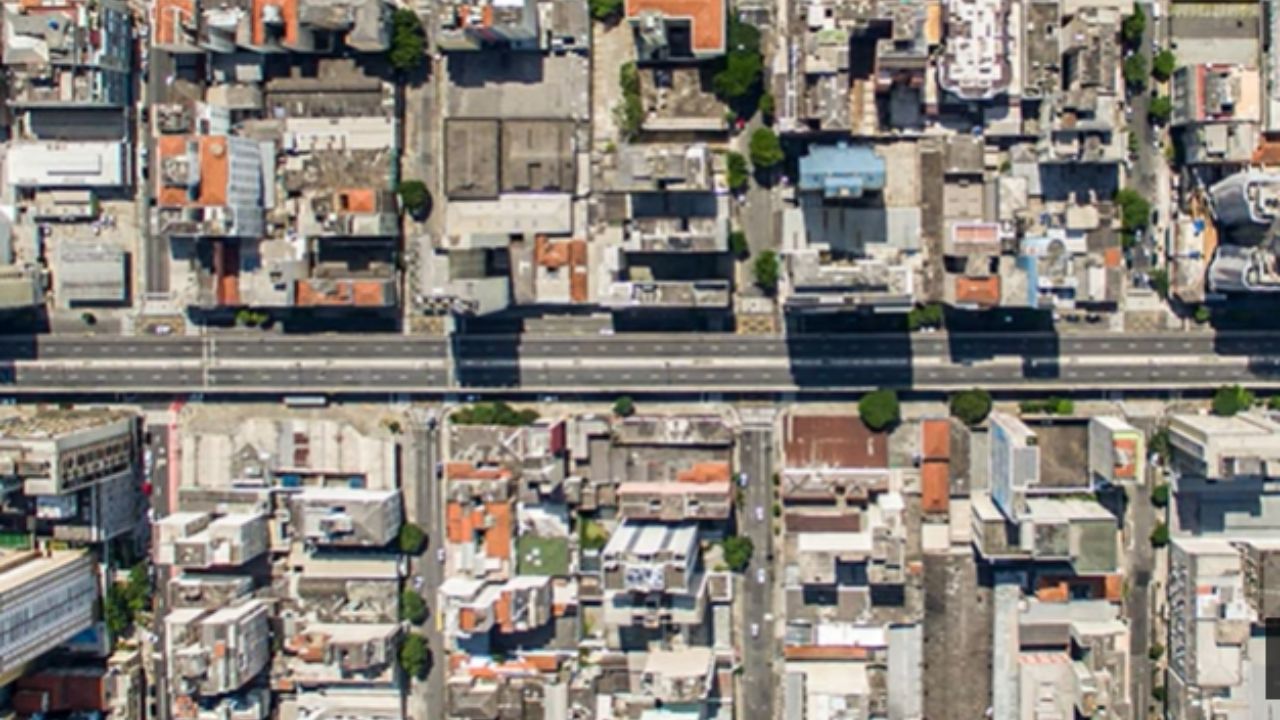
From Urban Scar to Controversial Leisure Spot, Understand the Transformation of Elevado Costa e Silva into the Most Unexpected Linear Park in São Paulo.
In the heart of São Paulo, a 3.4 km structure defines the landscape and the lives of thousands of people. Known as Minhocão, the Elevado Presidente João Goulart is a paradox: an essential expressway during the week that radically transforms on weekends. When cars are away, the asphalt gives way to pedestrians, cyclists, and families, establishing itself as the most unexpected linear park in São Paulo.
This duality is the essence of Minhocão. For some, it is a “architectural aberration”, as pointed out by the critical analysis of the portal Estado da Arte (O Estado de S. Paulo), which defines it as a “mistake of urban planning”. For others, as described by São Paulo Secreto, it is a space that “won the hearts of Paulistanos”. This article dissects the history, impacts, and the complex debate surrounding the future of this iconic structure in São Paulo.
Genesis of a Scar: The Politics and Brutalism of 1971


The construction of Minhocão was not just an infrastructure project; it was a political act, a product of the Military Dictatorship (1964-1985). The portal Estado da Arte details that the project was executed in a record time of 11 months by the appointed mayor Paulo Maluf, without prior urban impact studies, disregarding criticisms. It was an authoritarian imposition that sought to be a “mark” of management, originally named in honor of the general-president Costa e Silva.
-
The end of Japan? Population is disappearing, country loses more than 3 million inhabitants in just five years and birth rate falls for the tenth consecutive year, raising alarm about demographic collapse and lack of workers.

-
China surprises the world by inaugurating a new era: the country will create a “digital ID” for 28,000 humanoid robots from 100 manufacturers, while machines capable of cooking, doing laundry, and caring for the elderly begin free domestic testing in 2027.
-
The world’s smartest ring is now 40% smaller, measures blood pressure signals during sleep, monitors over 50 health metrics, has a battery life of up to 9 days, and features enhanced sensors for more accurate readings on any skin tone.
-
Endless Brazilian: Blumenau resident turns 107 with a lucid memory, autonomy, and more than 100 direct descendants; the secret to longevity involves homemade food, a peaceful routine in the countryside, and simple habits maintained for decades.




The declared purpose was to alleviate traffic on Avenida São João, reflecting a “road-oriented” philosophy that prioritized cars. However, Estado da Arte classifies the work as a “mistake of urban planning”, a “failed solution” that proved ineffective and deeply degraded its surroundings. The structure, merely five meters from the windows, brought noise pollution, atmospheric pollution, and immediate property devaluation to neighborhoods such as Santa Cecília and Vila Buarque.
As detrimental as the road was, the “baixio”, the dark and degraded space underneath the elevated road, was even worse. This place became a point of social marginalization, identified as the embryo of “cracolândia”, and still functions today as a physical barrier that fragments communities. Estado da Arte refers to the entire structure as a true “spatial scar” in the city center, a problem that persists decades after its inauguration.
The Weekend Metamorphosis: From Expressway to Public Square
The transformation of Minhocão into a leisure space was not planned; it was a popular achievement. The process began in 1976 with night closures to reduce the noise that plagued residents. The decisive milestone, however, occurred in 1989, when then-mayor Luiza Erundina ordered the closure of the elevated road on Sundays and holidays, considered the “embryo” of the park.
Since then, leisure hours have been progressively extended, responding to public pressure and a change in mindset about the use of urban space. Today, closed to cars at night and on full weekends, the asphalt is taken over by races, bicycles, picnics, and strolls. The portal São Paulo Secreto captures this shift in perception, noting how the structure, despite being controversial, “won the hearts of Paulistanos” as an essential gathering area. The appropriation was so strong that it forced public policy to adapt, culminating in the official creation of the “Parque Municipal do Minhocão” by law in 2018.
The Impact on Health and Cultural Re-signification
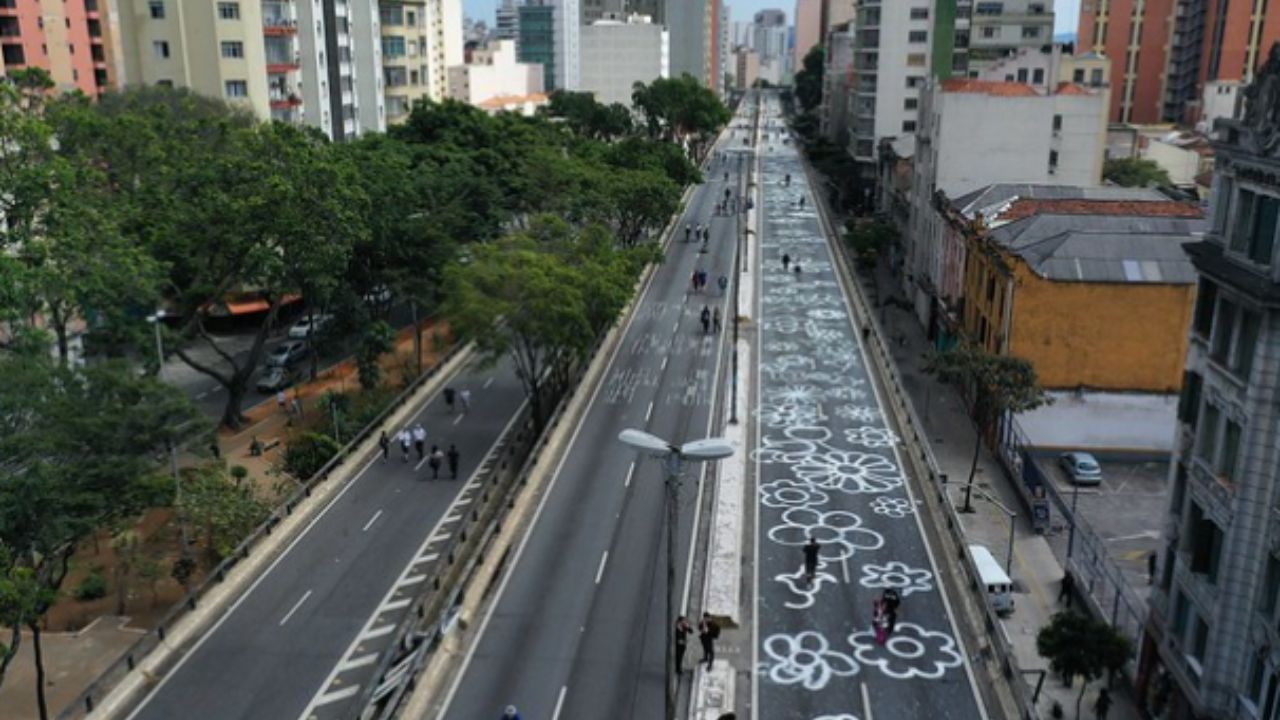
The importance of the park goes beyond leisure. A study cited by the Jornal da USP, conducted by the School of Physical Education and Sports of the university, brought an evidence-based perspective: the closure of the elevated road encourages physical activity among residents of the region. In a dense area lacking traditional parks, Minhocão offers a concrete and measurable benefit for local public health.
At the same time, Minhocão has become a vibrant cultural platform. The “blind walls” (the side walls of the buildings) have turned into a monumental open-air urban art gallery, with murals from renowned artists like Kobra. The most powerful re-signification occurred in 2016, when its official name changed from Elevado Costa e Silva (the dictator) to Elevado Presidente João Goulart (the president overthrown by the coup), transforming a symbol of authoritarianism into a landmark of the struggle for democracy.
The Crossroads of the Future: Permanent Park, Demolition, or Hybrid?
The Strategic Master Plan of 2014 determined the eventual deactivation of Minhocão for vehicles, but the final destiny of the structure still deeply divides the city. The most popular proposal is the transformation into a permanent linear park, inspired by successful international projects like the High Line in New York. Advocates see the chance to create an iconic space that addresses the critical lack of green areas in the central region.
However, critics see serious problems with this solution. Estado da Arte highlights opposing arguments, pointing out that the comparison with the High Line is superficial. The main criticism is that a park on top does not solve the chronic problem of the “baixio” (the degraded area at street level) and may actually worsen gentrification, raising costs and displacing low-income residents living nearby.
The second option is complete demolition, seen as the only way to “heal the urban scar”. However, this solution faces immense obstacles: the financial cost is prohibitive and the logistics of dismantling are a nightmare. A third way is to maintain the status quo hybrid, a functional compromise that, on the other hand, perpetuates the negative impacts of pollution and noise for neighboring residents.
Reconciling the Concrete Snake
Minhocão is the materialization of a flawed urban project that, against all expectations, was re-signified by the population and transformed into a successful public space. It is, simultaneously, a scar of authoritarianism and a symbol of popular appropriation. The future of the structure, whatever it may be, needs to reconcile this complex dual identity.
The decision on Minhocão directly affects the lives of thousands of people, balancing leisure, mobility, and the right to housing. And you, what do you think about this impasse? Are you in favor of the transformation into a permanent park, total demolition, or maintenance of the hybrid model? Leave your opinion in the comments, we want to know the views of those who live and know the city.





Be the first to react!