






 Portuguese
  Spanish
  5 min of reading
  0 comments


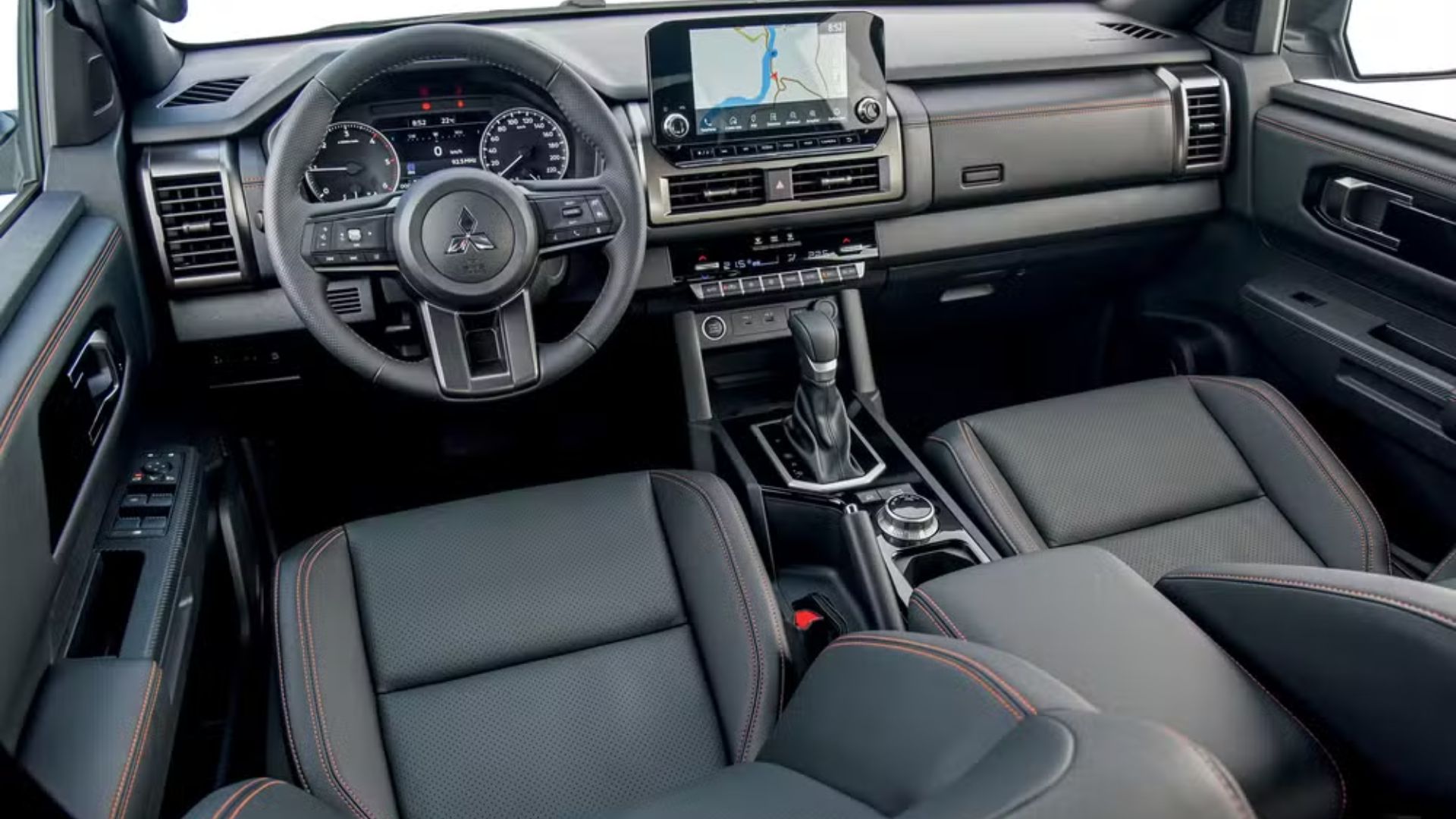
The New Generation Of The Medium Pickup Bets On A Stronger Turbodiesel Engine, Electric Steering, And Seven Off-Road Driving Modes, But It Keeps A Simple Interior Finish And An Outdated Multimedia Center, Contrasting With The Price Above R$ 300 Thousand.
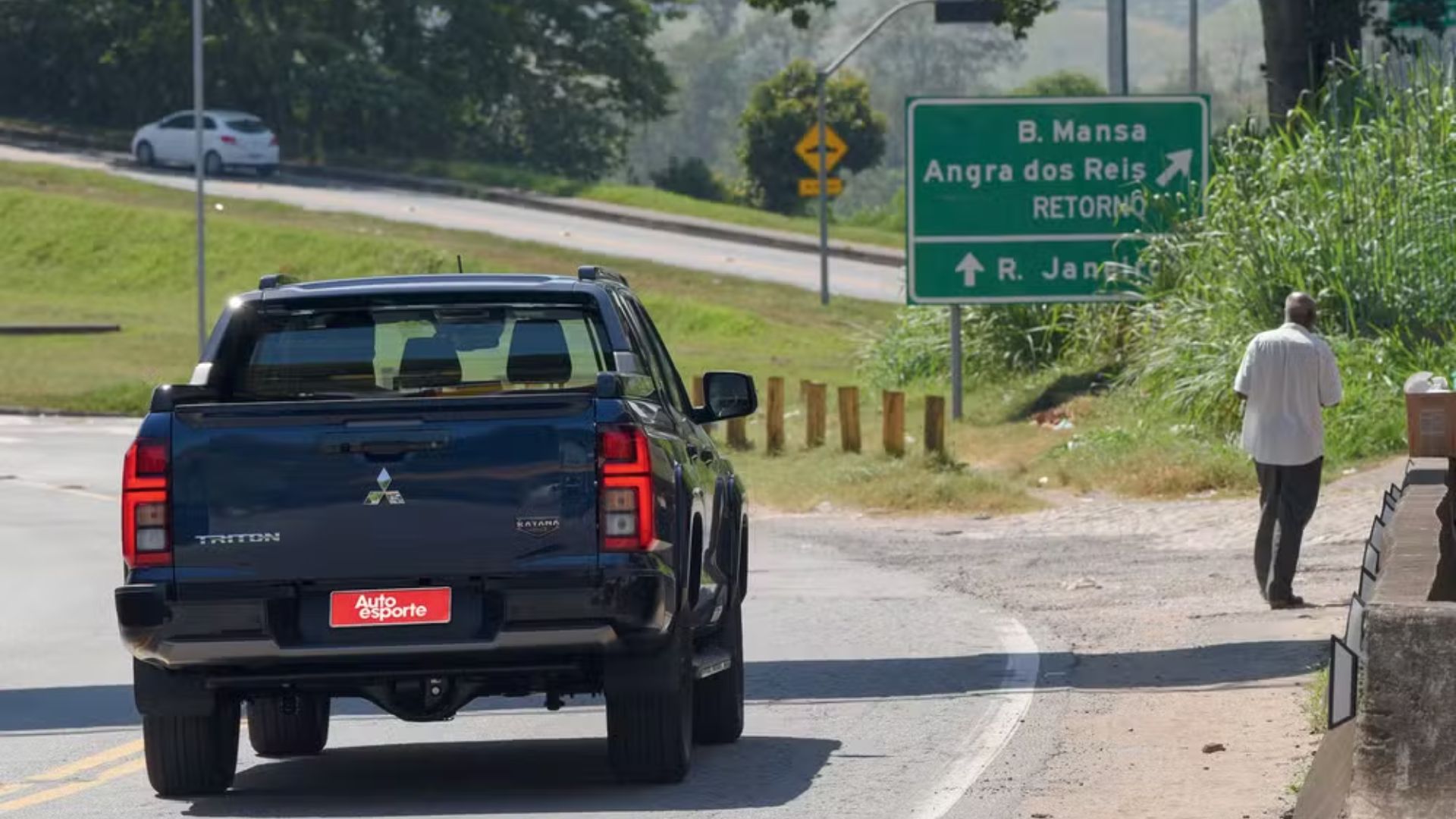
The sixth generation of the Mitsubishi medium pickup debuts in Brazil, retiring the name L200 and maintaining production in Catalão (GO) since 1998.
In the top-of-the-line version Katana, with a suggested price of R$ 335,990, the package includes a 2.4 turbodiesel engine with 205 hp and 47.9 kgfm, electric steering, and seven off-road driving modes.
The package brings clear advances in drivability and safety but coexists with a basic multimedia center and simple interior finish for the price range, raising the question posed in the title.
-
Uber Faces Shareholder Scrutiny as Board Accused of Ignoring Safety, Compliance, and Harassment Warnings Amid Over 3,500 U.S. Lawsuits

-
Ferrari’s First Electric Car Divides Fans, Priced at $630,000, Amid Concerns Over Limited Editions; Brand Clarifies It’s Not Just for Future Perks
-
BYD Dolphin Mini: The Electric Car That Defies Depreciation, Losing Only 3.58% in a Year and Becoming the Best-Selling Retail Model Under $22,000

-
Electric Car JAC E-JS4 Loses $19,000 in Value in One Year, Leading Record Depreciation of Used Cars in Brazil Due to Expensive Battery and New Models


In addition to the Katana, the lineup offers a total of six configurations.
The range starts with the GL manual at R$ 249,990, moves to GL (R$ 259,990), GLS (R$ 255,990), HPE (R$ 289,990), and HPE-S (R$ 315,990), before reaching the Katana.
Even with the generation and name change, the Triton remains among the good purchases in the segment and even won its category in the Qual Comprar 2025, recognition that reflects the balance of the project.
2.4 Turbodiesel Engine More Powerful And Smooth
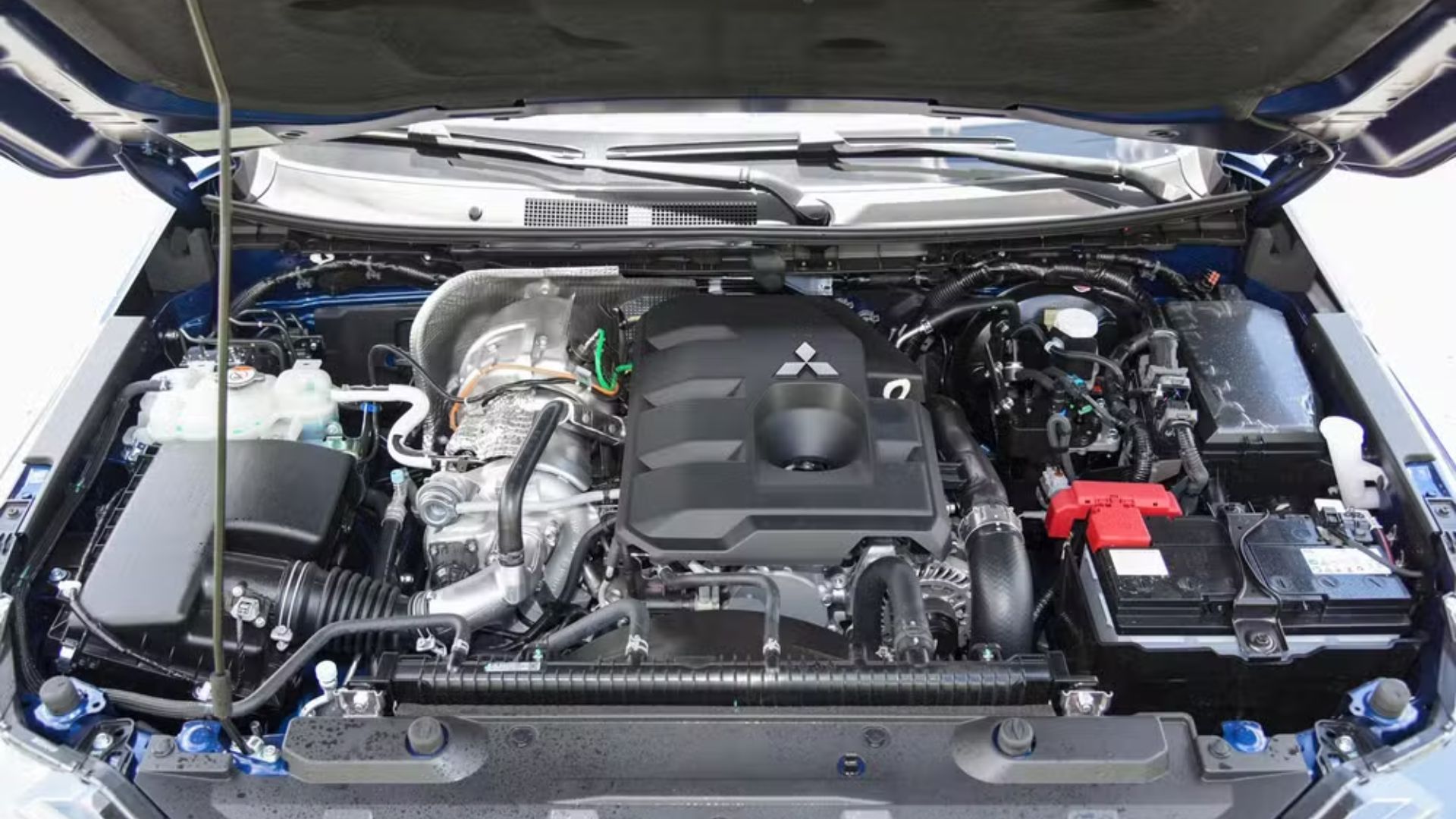
The well-known MIVEC 2.4 turbodiesel four-cylinder has been recalibrated.
It now delivers 205 hp at 3,500 rpm and 47.9 kgfm at 2,750 rpm, gains of 15 hp and 4.9 kgfm over previous configurations of 190 hp and 43 kgfm.
The block is new, made of aluminum, and the system is twin-turbo, with two identical turbochargers, a common solution in four-cylinder engines.
In practice, the accelerations are progressive and the response is uniform.
The six-speed automatic transmission works in harmony, avoiding jerks and efficiently utilizing the available torque.
Electric Steering And Improved Maneuverability
The adoption of electric steering replaces the hydraulic system and changes the behavior in urban use.
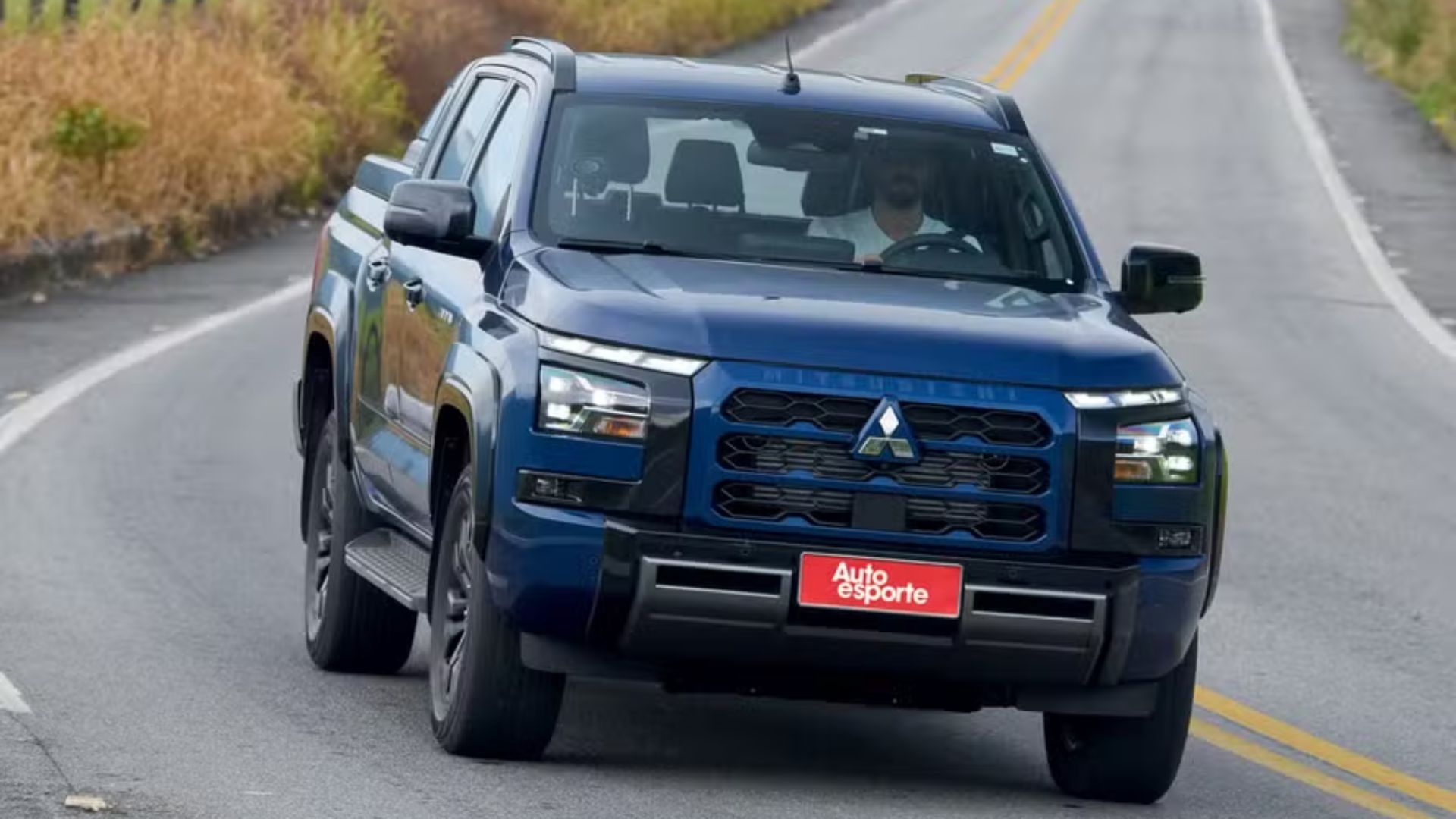
Although the pickup measures 5.36 m in length and weighs 2,130 kg, the steering wheel has a suitable weight and the steering makes maneuvers easier.
The turning diameter has dropped to 12.4 m compared to the previous 12.8 m, helping in tight parking spaces.
In the Katana, the 360° camera aids maneuvers, a feature that also adds safety by reducing blind spots.
Climate Comfort In Two Zones
From the HPE-S version, the air conditioning is digital and dual-zone, with vents for rear passengers.
Unlike the more common arrangement in the center console, the Triton distributes air through a duct in the ceiling for rear occupants, a solution that improves cooling efficiency in the cabin.
Competitive Safety Package
Even in the base version, there are seven airbags, emergency braking assistance, and Isofix anchors for child seats.
Starting from the HPE-S, features include hill descent control, lane departure warning, and adaptive cruise control (ACC).
In the Katana, the 360° camera adds convenience and protection, especially considering the naturally limited visibility of a medium pickup.
More Robust Structure And Focus On Work
Mitsubishi claims that the chassis of this generation is the most robust ever produced by the brand, with 60% gain in flexural rigidity and 40% in torsional rigidity compared to its predecessor.
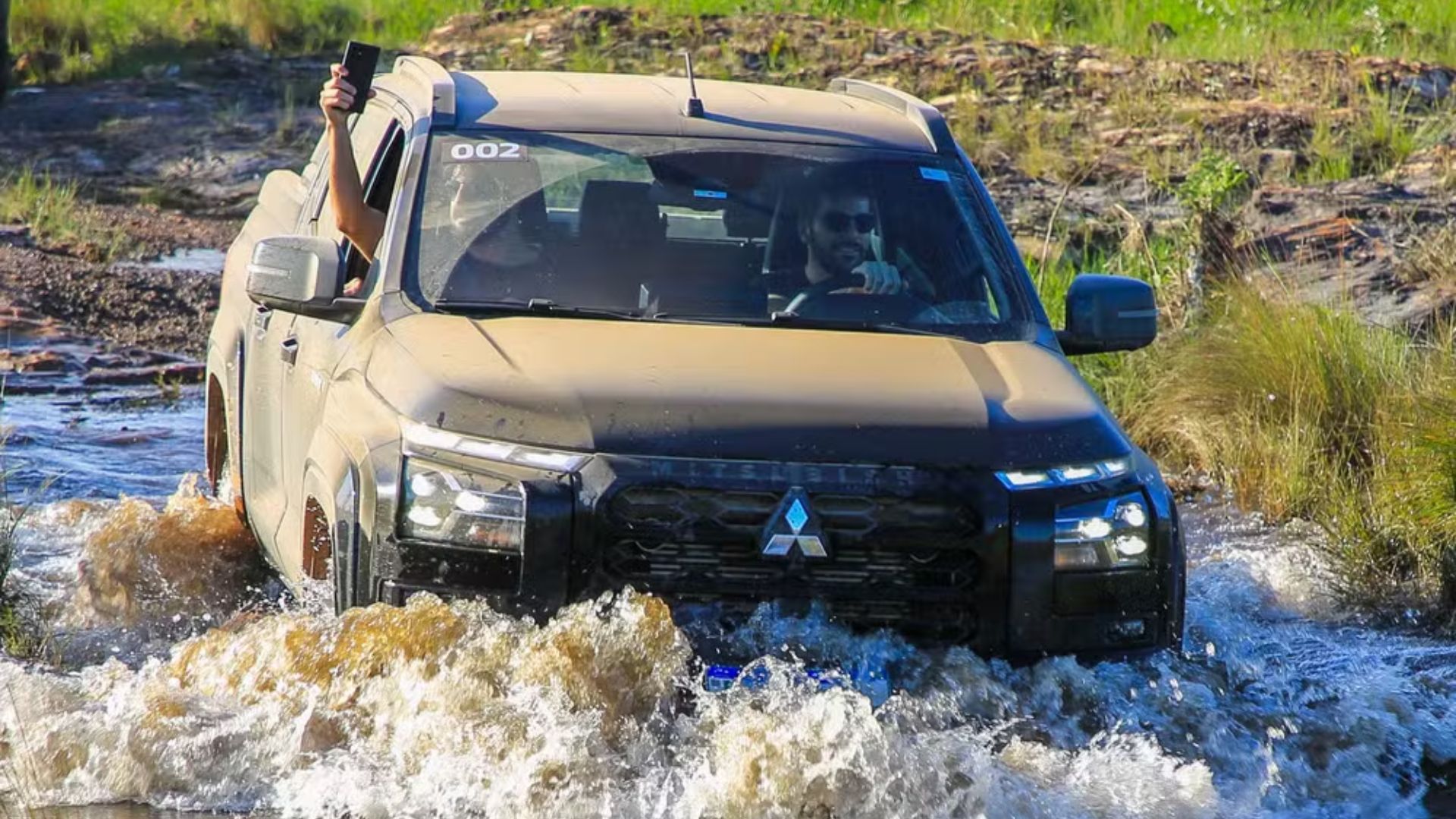
The traction selectors in the center console offer 2H, 4H, 4HLc, and 4LLc, with options for low range and locking the center differential to face severe surfaces.
The seven driving modes — Normal, Eco, Gravel, Snow, Mud, Sand, and Rock — adjust traction and powertrain response according to the terrain.
Dimensions, Capacity, And Off-Road Angles
The new Triton has grown and now measures 5.36 m in length, 1.93 m in width, 1.81 m in height, and 3.13 m in wheelbase.
The loading capacity is 1,080 kg and the towing capacity with brakes reaches 3,500 kg.
The reported angles are 31° of approach and 23° of departure, while the wading capacity is 70 cm — inferior only to the Ford Ranger, which supports 80 cm.
The exact volume of the cargo bed has not been disclosed by the manufacturer.
Multimedia And Dashboard Lag Behind Competition
If the mechanics have evolved, the multimedia center does not keep pace.
The 9-inch screen has wireless Apple CarPlay, but the Android Auto does not operate wirelessly.
The layout with two side rotary knobs and eight buttons at the base resembles older systems.
The resolution of the 360° camera is limited and, at night, the image noticeably drops in quality.
In the instrument panel, the central 7-inch screen displays simple graphics, with analog speedometer and tachometer.
The set is the same used in the Nissan Frontier, reinforcing the impression of a conservative project in this area.
Simple Finish For The Price
The interior design has been completely renewed, but the choice of materials favors plastics with different textures.
There are appliques that mimic carbon fiber, brushed steel, and piano black, but there are no rubberized surfaces.
Even considering the work-oriented nature of medium pickups, the perception of quality falls short of expectations in a vehicle that, at the top of the range, exceeds R$ 300,000.
Economies That Weigh In Everyday Life
Some absences stand out.
The electronic parking brake is not part of the package, a feature present in rivals like the Ford Ranger since 2023 and incorporated into the Fiat Titano in the 2026 lineup.
As night falls, it becomes apparent that the door buttons are not illuminated; only the mirror controls have illumination.
Furthermore, only the driver’s window has one-touch functionality; the others require holding the button until the end of the travel.
Less Torque Than Segment Leaders
Among its direct competitors, the Triton is the only one below 50 kgfm.
The Toyota Hilux delivers 204 hp and 50.9 kgfm with a 2.8 turbodiesel engine.
The Chevrolet S10 reaches 207 hp and 52 kgfm also with a 2.8.
On the other hand, the Ford Ranger, in versions with the 3.0 V6, reaches 250 hp and 60 kgfm.
In real use, this difference manifests mainly in accelerations and low-speed sections.
The Triton is not slow but requires a deeper accelerator during overtaking compared to the more powerful leaders.
Suspension Behavior With The Cargo Bed Empty
The new generation has improved comfort compared to the old L200, which bucked more.
Still, with the cargo bed empty, the pickup bounces over unevenness, an expected consequence of the chassis construction and the rear suspension with rigid axle and leaf springs.
Rivals like the Ranger and Amarok offer more comfortable tuning for riding without load, a point where Mitsubishi could have progressed further in this generation change.





-

-

-

10 people reacted to this.